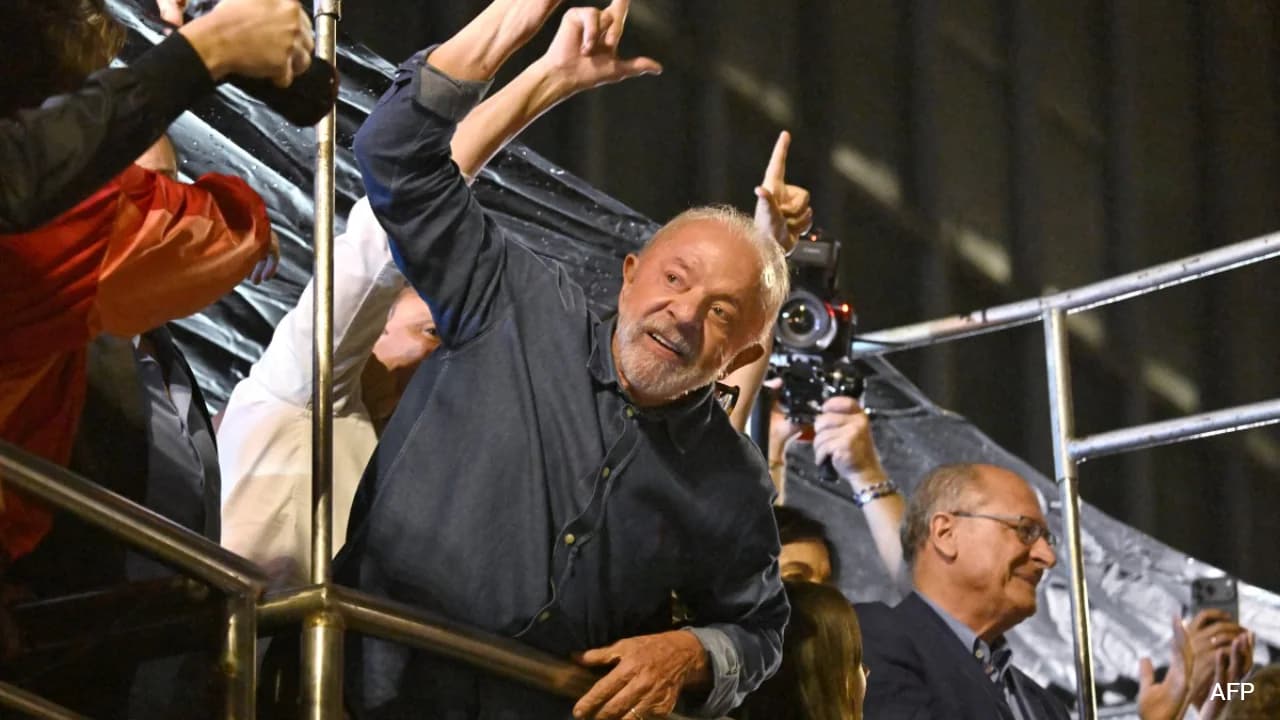
The confetti on Avenida Paulista barely had time to settle before the reality of governing a fractured nation set in. On the night of October 30, 2022, millions of Brazilians wept with relief, danced in the streets, and watched Luiz Inácio Lula da Silva claim a narrow, historic third term as president. By a margin of less than two percentage points—50.9 percent to Jair Bolsonaro’s 49.1 percent—the former metalworker and union leader completed one of the most improbable political comebacks in modern history, rising from a prison cell in Curitiba back to the Planalto Palace.
Victory, however, is merely the end of one battle and the abrupt beginning of four far more complicated wars.
When political analysts in Brasília, São Paulo, and Washington look at the post-election map of Brazil, they do not see a mandate for easy transformation. According to political scientists, economists, and legislative observers tracking the transition, Lula inherited a country walking a razor’s edge. The cold policy briefs usually boil his predicament down to four dry categories: a hostile Congress, a tight fiscal straitjacket, deep societal polarization, and the urgent demand to rescue the Amazon while reviving a sluggish economy.
On paper, those look like standard items on a presidential checklist. On the ground, inside the kitchens of working-class families in Recife and along the muddy frontier roads of Pará, they are matters of survival, dignity, and national identity.
A House Divided Against Itself
To understand the first storm waiting at the doors of the Planalto Palace, picture a hypothetical evening in Brasília—call it a composite of how legislative power actually moves in Brazil’s capital.
Imagine a senior advisor to the incoming administration sitting across from a veteran power broker of the Centrão, the loose, transactional bloc of center-right parties that holds the keys to passing any bill in the National Congress. The advisor brings a folder thick with campaign promises: expanded social welfare, new labor protections, funding for public universities. The broker does not even open the folder. He simply slides a single sheet of paper across the table showing the seat counts from the October legislative elections.
The numbers tell an unforgiving story. While Lula won the presidency, Bolsonaro’s Liberal Party emerged as the largest force in both the Chamber of Deputies and the Federal Senate. Conservative lawmakers, former ministers of the outgoing government, and staunch allies of agribusiness hold a commanding presence in both houses.
Political analysts at institutions like the Getulio Vargas Foundation and observers across the Brazilian press have pointed out that Brazil operates under a system often described as "coalitional presidentialism." A president cannot govern by decree alone. Passing a constitutional amendment—which is required to alter federal spending rules—demands a three-fifths supermajority in both chambers: 308 votes in the lower house and 49 in the Senate.
Without the support of the Centrão, legislative paralysis sets in immediately. Yet winning that support comes at a steep price, historically measured in cabinet ministries, control over state-owned enterprises, and access to discretionary budget funds. Every concession Lula makes to keep his legislative coalition intact risks alienating the progressive base that carried him to victory. Every time he stands firm on ideological purity, he risks watching his legislative agenda die in committee.
The Arithmetic of Hunger and Debt
Walk away from the marble halls of Brasília and step into a neighborhood grocery store on the outskirts of Belo Horizonte, and the second challenge takes on a human face.
Consider a hypothetical mother of three—let us call her Mariana—standing in the aisle holding a carton of eggs and a small bag of rice. During the campaign, Lula promised to keep the monthly welfare stipend, renamed Bolsa Família, at 600 reais, with an extra 150 reais for each child under six. For Mariana, that money is not an abstract macroeconomic line item. It is the difference between her children going to sleep full or going to sleep with stomach aches. It is the return of the picanha—the prized cut of beef Lula famously invoked on the campaign trail as a symbol of working-class dignity.
Now look at that same promise through the eyes of bond traders in São Paulo and economists at Brazil’s Central Bank.
To fund those social programs, exempt lower-income workers from income tax, and boost public investment, the government needed tens of billions of reais that simply did not fit inside Brazil’s constitutional spending cap, a fiscal rule enacted in 2016 that limited federal expenditure growth to the previous year’s inflation rate. According to economic reports from Reuters and financial analysts at firms like XP Investimentos, any move to punch a hole in that fiscal ceiling triggers immediate anxiety in financial markets.
Here lies the trap. If the government spends freely to fulfill its social promises without a credible plan to stabilize public debt, investors dump the Brazilian real and demand higher interest rates to hold government bonds. A weaker currency makes imports—including wheat, fuel, and fertilizers—more expensive, driving up inflation at the exact grocery store where Mariana is counting her coins. Higher inflation forces the Central Bank to keep benchmark interest rates punishingly high, which chokes off business loans, stalls job creation, and slows economic growth.
Economy. Debt. Relief.
Three forces pulling in opposite directions, where pulling too hard on any single rope risks snapping the other two. Navigating that tension requires convincing skeptical financial markets that fiscal responsibility and poverty reduction can coexist—a balancing act that tested even the most seasoned economic minds during Lula’s transition.
The Invisible Wall Between Neighbors
Some wounds cannot be healed with a budget bill or a congressional handshake.
During his previous presidencies from 2003 to 2010, Lula governed a country where political disagreements rarely tore families apart at Sunday lunch. He left office with an approval rating hovering near 87 percent. The Brazil he returned to in 2023 was barely recognizable.
Think of a hypothetical family dinner in Curitiba or Porto Alegre, a scene replicated in millions of homes across the country. An uncle who runs a small transport business wears the yellow-and-green jersey of the national soccer team—a symbol claimed by the conservative movement—and sees the election result as a threat to free enterprise, traditional values, and law and order. Across the table sits his niece, a public school teacher who marched against deforestation and sees the election as a narrow escape from authoritarianism. Neither trusts the news the other reads. Both view the other’s political identity not merely as a different opinion, but as a moral failing.
Data from polling institutes such as Datafolha and Ipec consistently showed a country split nearly down the middle, with intense rejection rates for both major political figures. In the weeks immediately following the runoff election, truckers and protesters blockaded hundreds of highways across Brazil, and encampments formed outside military barracks demanding intervention to overturn the results—culminating eventually in the January 8, 2023 storming of government buildings in Brasília.
Governing in that climate is like trying to repair a bridge while people are actively dismantling both ends. Lula pledged on election night to govern for all 215 million Brazilians, declaring that there are not "two Brazils." Yet turning that rhetoric into reality means lowering the political temperature in a society wired for perpetual outrage on WhatsApp and social media, while simultaneously holding accountable those who sought to undermine democratic institutions. Move too aggressively, and millions of conservative voters feel persecuted; move too softly, and supporters demand justice for democratic norms under siege.
The Burning Clock in the Canopy
Far to the north, thousands of kilometers from the trading floors of São Paulo and the protests of the south, the fourth challenge ticks away in silence—broken only by the whine of chainsaws and the crackle of brush fires.
Picture a hypothetical Indigenous leader along the Xingu River—we will name him Davi—waking at dawn to check the horizon for smoke. For decades, the Amazon rainforest has been treated by competing interests either as an untapped warehouse of timber, cattle pasture, and gold, or as the ecological lungs of the planet. Under the preceding administration, deforestation in the Brazilian Amazon surged to its highest annual levels in fifteen years, according to satellite monitoring data from Brazil’s National Institute for Space Research (INPE). Illegal wildcat gold miners invaded protected Indigenous territories, polluting rivers with mercury and bringing disease to isolated communities.
International leaders cheered Lula’s victory largely because he promised "zero deforestation" by 2030, pledged to create a Ministry of Indigenous Peoples, and vowed to restore Brazil’s leadership on global climate action. Wealthy nations, including Norway and Germany, swiftly moved to unfreeze hundreds of millions of dollars for the Amazon Fund.
Making that promise real on the forest floor, however, is vastly harder than announcing it at a United Nations climate summit.
The Amazon spans an area larger than Western Europe. Rebuilding environmental enforcement agencies like IBAMA and ICMBio—whose budgets and field staff had been hollowed out—takes time, money, and physical courage from inspectors who routinely face armed criminal syndicates. At the same time, tens of millions of Brazilians live in the Amazon region and need legitimate, sustainable ways to earn a living. Simply banning logging or mining without offering economic alternatives leaves local families vulnerable to the very criminal networks the state is trying to dismantle.
And looming over every environmental enforcement operation is the powerful agricultural caucus in Congress—the bancada ruralista—whose support Lula needs to pass economic legislation, and whose constituents often view strict environmental regulations as obstacles to agricultural expansion.
The Weight of the Second Act
History rarely gives leaders a chance to rewrite their legacy, and when it does, the sequel is never as simple as the original.
In 2003, Lula rode a global commodities boom fueled by Chinese demand for Brazilian iron ore, soy, and oil. Rising tax revenues allowed his government to lift tens of millions of Brazilians out of extreme poverty while keeping banks and business leaders content. Everyone felt as though the pie was growing fast enough for every table to get a larger slice.
In the post-pandemic world of the 2020s, there is no effortless commodities windfall waiting to rescue the federal budget. Global interest rates are higher, growth is slower, and the political room for error has shrunk to the width of a hairline.
Every morning in the Alvorada Palace, the choices collide. Spend enough to keep Mariana’s grocery cart full, without triggering the inflation that empties it again. Negotiate with a conservative Congress to pass vital bills, without trading away the soul of a progressive movement. Enforce the law in the Amazon to protect Davi’s river and the global climate, without sparking a legislative rebellion from the farm belt. Heal a divided nation, when nearly half the country woke up after the election feeling they had lost their voice.
A narrow victory does not buy a honeymoon; it buys a high-wire act without a net, performed in front of 215 million spectators waiting to see whether the man who once lifted Brazil can hold it together when the ground beneath it refuses to stand still.