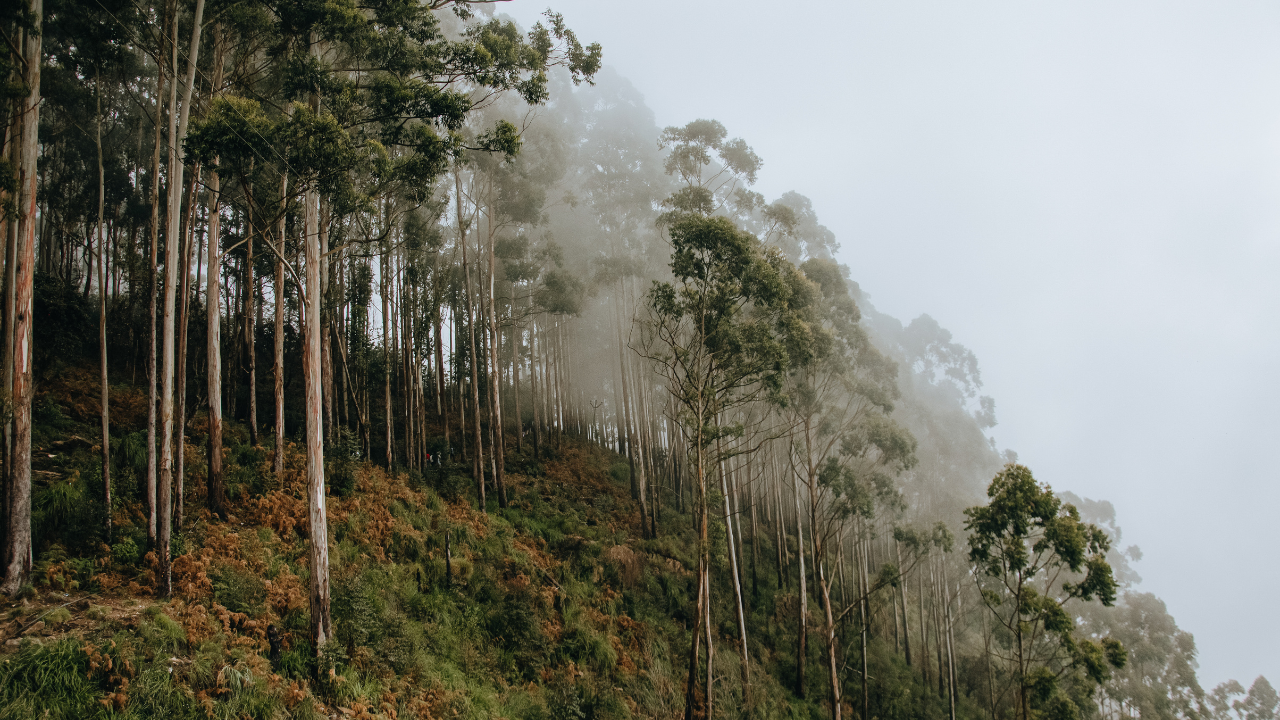
Forty-five years after commercial forestry companies began transforming vast tracts of the Brazilian countryside into orderly green rectangles of eucalyptus, the local water table has dropped by an average of 4.5 meters. That single metric tells a story of rapid industrial growth colliding with ecological reality. When Brazil aggressively expanded its pulp and paper sector decades ago, economists cheered the export numbers and rural employment figures. Hydrologists offered a quieter warning. Today, rural communities sitting adjacent to these massive plantations are digging deeper wells while watching traditional streams run dry during the dry season.
Understanding how an imported tree species native to Australia became the dominant thirsty driver of environmental change in South America requires looking past corporate sustainability reports. Industrial forestry operates on cycles measured in decades. Planted trees grow fast, drink heavily, and convert soil moisture into harvestable cellulose with terrifying efficiency. The consequences arrive slowly, making them easy to ignore until household taps sputter and stop.
The Hydrological Mechanics of Fast-Growing Monocultures
Eucalyptus does not behave like native Atlantic Forest vegetation or cerrado scrublands. Its root architecture goes deep, often plunging dozens of meters into the subsoil in search of moisture and nutrients. This biological superpower allowed the species to survive Australia's harsh, arid cycles. Transplanted to Brazil's high-rainfall regions, that same trait turns the trees into biological pumps.
A single mature eucalyptus tree consumes staggering volumes of water daily compared to native flora. When multiplied across millions of stems planted in dense, uniform grids, the cumulative extraction rate exceeds the natural recharge capacity of local aquifers.
Rainfall in regions like Espirito Santo or Bahia might look impressive on annual meteorological charts, but the timing matters. Downpours during the wet season do not automatically replenish deep water tables if the canopy intercepts precipitation and root systems vacuum up moisture before it percolates downward.
- Canopy Interception: Dense leaves catch a significant percentage of rainwater, causing it to evaporate before hitting the soil.
- Root Depth: Deep taproots access permanent water tables that native grasses and shrubs cannot reach.
- Transpiration Rates: High leaf area index drives constant water vapor release into the atmosphere year-round.
Farmers downstream notice the shift first. Irrigation canals that flowed year-round in the 1980s now turn into cracked mud paths by September. Cattle ranchers find their stock ponds dry up months earlier than historical averages predicted.
Economic Imperatives Versus Environmental Realities
The expansion of Brazil's pulp industry was never an accident. Government subsidies, cheap land, and global paper demand aligned during the late twentieth century to turn the country into a forestry powerhouse. Major multinational corporations invested billions in genetic breeding programs. They developed strains that grow taller and wider in shorter timeframes, slashing harvest rotations from decades down to six or seven years.
This hyper-efficiency created a corporate blind spot. If a tree grows twice as fast, it generally drinks twice as much in a compressed window. Environmental impact assessments from decades ago often relied on outdated models that treated all vegetation as roughly equal in water consumption.
Local economies now face a complex dilemma. The forestry sector provides stable formal employment, municipal tax revenue, and vital export dollars. Municipalities dependent on these tax receipts are often reluctant to challenge corporate land-use practices. Yet, the hidden subsidy paid by local residents—in the form of depleted wells, falling property values in rural zones, and municipal water trucking expenses—rarely appears on corporate balance sheets.
Externalizing these environmental costs allowed paper producers to keep consumer prices low while posting steady margins. Now, regulatory pressure is mounting as water scarcity threatens not just local communities, but the long-term viability of the plantations themselves. Stressed trees are more vulnerable to disease and fire, creating operational risks that company risk analysts can no longer dismiss as theoretical.
Mitigation Strategies and Alternative Land Management
Solving the 4.5-meter drop requires abandoning the idea that industrial forestry can continue business as usual. Forward-thinking operators are beginning to test mosaic planting models. Instead of wall-to-wall monoculture spanning thousands of contiguous hectares, these designs intersperse forestry blocks with wide corridors of native vegetation and riparian buffers.
Native trees serve a dual purpose. They restore biodiversity and possess root systems better adapted to local hydrological cycles, helping stabilize topsoil and improve rainwater infiltration rates.
Another operational shift involves intelligent zoning near water recharge zones. Restricting planting within a designated radius of springs and headwaters prevents industrial extraction from completely cutting off subterranean supply lines.
- Mosaic Layouts: Breaking up large blocks with native species corridors.
- Buffer Zones: Enforcing strict no-planting boundaries around natural springs and streams.
- Rotation Adjustments: Extending harvest timelines to reduce peak water demand spikes.
Critics point out that these measures add cost and reduce overall fiber yield per hectare. Corporate boards accustomed to maximum volumetric output resist voluntary reductions. However, voluntary compliance is giving way to mandatory watershed management laws as local courts begin entertaining lawsuits from affected agricultural cooperatives.
The drop in the water table is a physical ledger entry that cannot be negotiated away. Brazil's forestry sector reached its current scale by treating water as an infinite, free input. The next forty-five years will force a reckoning with the finite limits of the earth beneath those tall green rows.