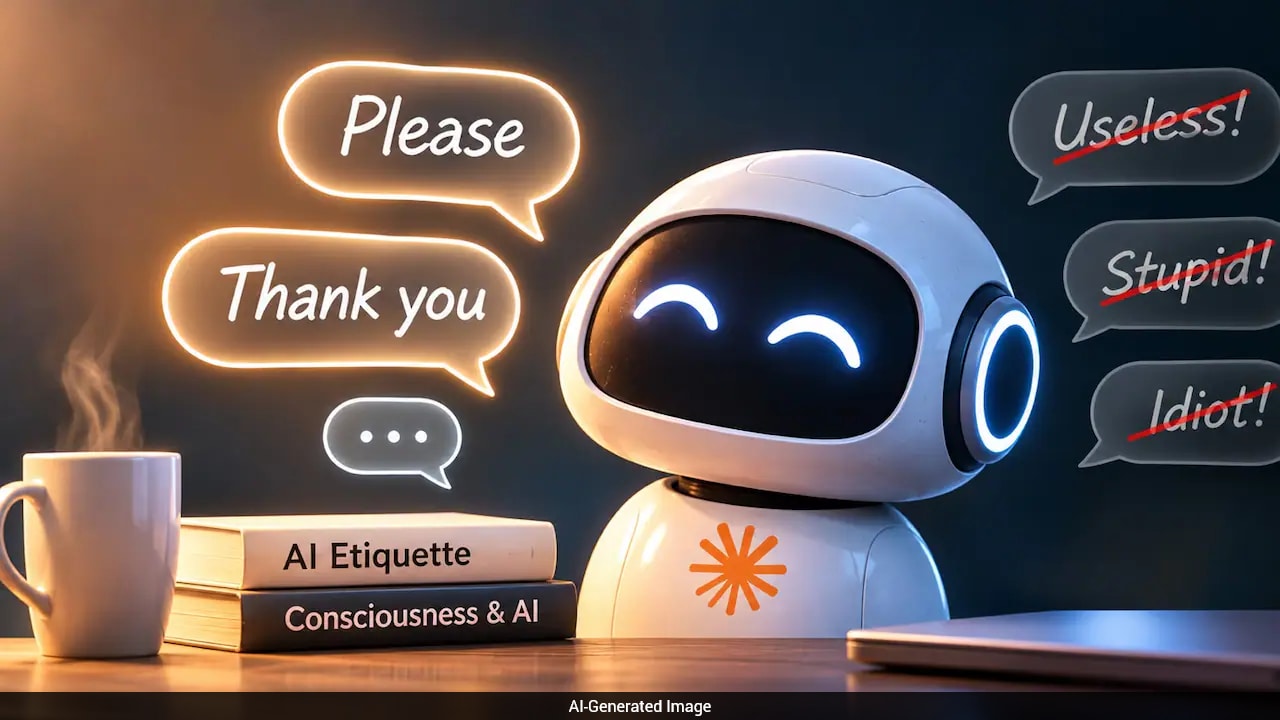
You cannot physically injure a large language model. Barking insults at a text prompt, issuing degrading commands to a voice assistant, or testing a neural network’s boundaries with abusive scripts inflicts zero code-level damage, carries no legal penalty, and leaves no digital scars. Yet the surge in aggressive interactions with synthetic agents raises a darker question for the humans behind the keyboard. Swearing at an algorithm does not hurt the machine, but it relentlessly conditions the person doing the typing. Abuse of artificial intelligence is not a technical vulnerability. It is a psychological one.
The popular discussion surrounding how we treat AI usually gets the entire framing backward. Ethicists and casual commentators frequently debate whether synthetic entities might eventually deserve rights or register distress. That speculative obsession obscures what is happening right now in homes and offices. People are actively forming behavioral feedback loops with conversational systems that mimic human syntax, emotional cadence, and vulnerability. When users vent malice at these systems, they are exercising real psychological mechanisms on non-conscious targets.
The Mirage of Sentience and the Mechanics of Echoes
Conversational agents are designed to trigger human anthropomorphism. Interface designers spend millions optimizing natural cadence, conversational turn-taking, and empathetic micro-responses. When an AI responds to verbal abuse with polite acquiescence, scripted de-escalation, or total submission, it creates an asymmetrical power dynamic that does not exist anywhere else in human society.
Consider a hypothetical scenario where an manager uses a team of specialized AI text tools to draft corporate strategy. Late at night, frustrated by poor outputs, the executive berates the software, typing explicit insults and demanding compliance. The software does not strike back, complain to HR, or quit. It simply recalculates tokens and presents a revised paragraph.
This dynamic alters human behavioral baselines. Habituation occurs rapidly when actions lack immediate social consequences. In traditional human interaction, aggression triggers resistance, distress, or social ostracism. Those reactions act as natural checks on hostile impulses. AI strips away all negative feedback while preserving the surface appearance of a human conversation. The user receives the dopamine hit of dominance without the social friction that normally restrains anti-social behavior. Over time, that restraint erodes.
Behavioral Leaks Across Human Boundaries
Psychological research into empathy consistently demonstrates that emotional habits do not stay neatly compartmentalized. A person who routinely exercises verbal cruelty in one domain inevitably experiences leakages into others.
The mechanism at play is habit formation. Our brains rely on repetition to solidify behavioral pathways. If you spend three hours every evening speaking to a conversational assistant using imperious, dehumanizing language, those syntax structures become frictionless in your neural architecture. You do not magically reset your tone when you switch from an AI chat window to a Slack message with a junior colleague or a text thread with a family member.
Three distinct vectors explain why this behavioral spillover happens:
- Desensitization to submissive responses. Persistent exposure to an entity that accepts abuse without retaliation lowers your internal threshold for acceptable interpersonal friction.
- Impaired empathetic calibration. Empathy is an active neural habit. Repeatedly ignoring the structural cues of human-like conversation degrades your automatic emotional response to real human distress.
- The illusion of total sovereignty. Interacting with responsive, hyper-obedient agents fosters an expectation that all communicators should adapt instantly to your temper, tone, and demands.
This is not a matter of morality. It is a matter of neurological efficiency. The brain optimizes for the patterns it practices most frequently.
The Design Choice of Passive Compliance
Technology companies bear significant responsibility for this behavioral feedback loop. In an effort to keep user engagement metrics high, developers explicitly program conversational agents to be endlessly tolerant, obsequious, and servile.
When a user launches a tirade of slurs at a commercial model, the system is typically guardrailed to respond with bland neutrality: "I'm sorry you're feeling frustrated. How can I assist you with your task today?"
This response structure is a product management choice, not a technical necessity. It prioritizes continuous product utility over psychological health. By forcing the AI to play the role of an punching bag that continually offers assistance, tech platforms reinforce the user's aggression. The machine acts as a live target that validates hostile behavior through immediate submission.
A few engineering teams have experimented with hard stops, where an agent refuses to answer or temporarily locks the session if abusive language is detected. However, consumer-facing software products rarely implement strict friction because friction lowers retention rates. As long as tech companies measure success through session duration and daily active usage, they will continue building software that politely excuses user toxicity.
The Corporate Risk of Algorithmic Degradation
In professional environments, this behavioral dynamic creates immediate operational liabilities. Enterprise adoption of generative tools is accelerating, meaning employees spend a growing portion of their workday commanding digital agents.
When workers adopt a hostile, coercive tone with productivity systems, the quality of their work output actually degrades. Modern transformer models rely heavily on prompt context. Aggression, chaotic inputs, and abrasive language introduce noise into the context window, frequently leading to degraded logic, erratic formatting, and higher error rates.
Hostility toward the machine yields objectively worse results. The user gets frustrated by the poor output, escalates the abuse, and receives even worse performance.
Furthermore, the managerial mindset cultivated by treating synthetic workers as disposable, abuse-tolerant subordinates directly impacts workplace culture. Managers who become accustomed to instant compliance from digital tools routinely report lower patience for human negotiation, training, and error. The expectation of friction-free dominance translates into toxic management practices.
Stopping the Habitual Spillover
The solution to machine-directed cruelty does not require granting civil rights to software. It requires recognizing that human behavior is malleable and deeply influenced by daily interface design.
Fixing this requires structural changes across product design and individual usage:
- Product-Level Rejection Protocols. Software architectures must enforce firm boundaries against personal abuse, not to protect the software, but to prevent user habituation. If an input contains targeted vitriol, the system should cease responding until the user resets their approach.
- Interface Realism. Product designers should reduce unnecessary emotional cues in administrative tools. If an application is performing a spreadsheet operation, it does not need a conversational voice, synthetic empathy, or a human face. Strip away the illusion of sentience when it serves no functional purpose.
- Active Self-Monitoring. Individuals must treat conversational software as a mirror of their own communication hygiene. The way you phrase a command when you are tired, frustrated, or pressed for time reveals the exact syntax you will use on humans under stress.
Cruelty to artificial intelligence does not hurt the machine. It exposes the user's lack of self-control and systematically trains them to be worse at being human. The software will forget your insults the second the session context expires. You will carry the habit forever.