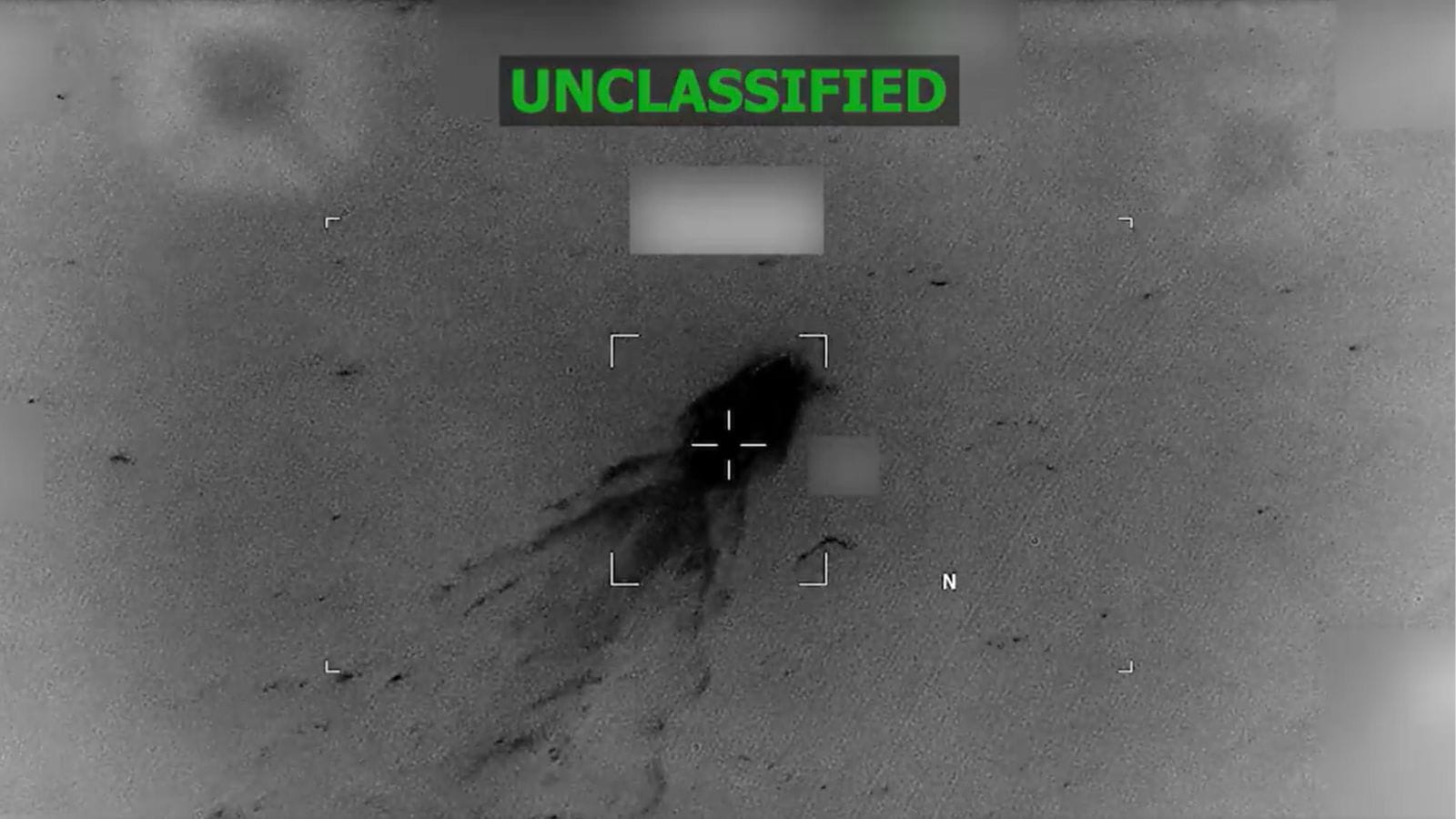
The rules of engagement in the Eastern Pacific just shifted from interdiction to elimination. Following a direct kinetic strike by U.S. forces on a low-profile vessel (LPV) that left two suspected traffickers dead, the Trump administration has signaled that the decades-old "cat-and-mouse" game with Latin American cartels is over. This wasn't a standard boarding gone wrong. It was a calculated application of the new "Cartel Strategy" which treats drug trafficking organizations not as criminal enterprises, but as hostile non-state military actors.
For years, the Coast Guard and Navy operated under a policy of "end-game" maneuvers designed to disable engines and take prisoners. The goal was intelligence and prosecution. That era has been replaced by a doctrine that prioritizes the destruction of logistical assets and the immediate neutralization of threats. When the smoke cleared from the latest encounter in international waters, the message to the Sinaloa and Jalisco New Generation (CJNG) cartels was unmistakable: the ocean is no longer a safe corridor for your product.
The Mechanics of Kinetic Interdiction
The shift to lethal force stems from a fundamental reassessment of the vessels used by cartels. These are no longer just "drug boats." Modern narco-subs and LPVs are engineered with stealth coatings and ballast systems that make them nearly invisible to standard radar. They are the frontline hardware of an insurgency.
Under the current directive, the U.S. military is leveraging Title 10 authorities to treat these vessels as "pirate craft" or "unidentified hostile threats." This legal pivot is crucial. By moving away from law enforcement protocols and toward military engagement rules, commanders on the water have broader latitude to use overwhelming force. The recent strike utilized precision-guided munitions from an unmanned aerial platform, coordinated with a surface combatant. It was surgical. It was final.
The tactical advantage of this approach is clear. Capturing traffickers and towing their half-sunken vessels back to port is an expensive, slow, and legally fraught process. Trials take years. Jails are full. By shifting to a strategy of destruction at sea, the administration is attempting to break the cartel’s financial back by making the cost of doing business—in both equipment and personnel—prohibitively high.
A Supply Chain Under Siege
The cartels have long viewed the loss of a multi-ton shipment as a mere line item, an expected "tax" on their massive profit margins. They simply build three more boats. However, the current administration’s strategy targets the one thing the cartels cannot easily replace: the specialized pilots and mechanics capable of navigating these death traps across thousands of miles of open ocean.
The Specialized Labor Crisis
Navigating a semi-submersible requires a specific set of skills that the average street-level enforcer doesn't possess. These pilots are often paid six-figure sums for a single run because the risk of mechanical failure or oxygen deprivation is so high. By moving to a "strike first" policy, the U.S. is depleting the cartels' pool of technical experts. If a trip to the Eastern Pacific carries a near-certainty of a missile strike rather than a courtroom appearance, the recruitment pool dries up.
Economic Attrition
Every LPV destroyed represents a loss of roughly $1.5 million to $2 million in construction costs, plus the value of the cargo—which can exceed $100 million depending on the purity and volume of the cocaine or fentanyl aboard. While the cartels are flush with cash, the cumulative effect of losing ten vessels in a single quarter creates a logistical bottleneck. You can't move product if you don't have the hulls, and you can't build hulls if the shipyards in the mangroves of Colombia and Ecuador are under constant surveillance and drone pressure.
The Geopolitical Fallout
This isn't happening in a vacuum. The decision to ramp up kinetic strikes has sent shockwaves through the capitals of Central and South America. Historically, nations like Colombia and Panama have been wary of U.S. military "overreach" in their backyard. They remember the Cold War. They remember the interventions.
The Trump administration, however, has discarded the diplomatic niceties of the past. The message to regional partners is blunt: either you police your waters with the same level of aggression, or we will do it for you. This "sovereignty second" approach has strained relations with some traditional allies while emboldening others who are tired of being outgunned by cartel paramilitaries.
There is also the question of China. Analysts have noted that the precursors for the fentanyl moving through these maritime routes often originate in Chinese chemical plants. By militarizing the transit zones, the U.S. is indirectly putting pressure on the entire global supply chain. If the maritime route becomes too hot, the cartels will be forced back onto land routes through the Darien Gap and Central America, areas where they are more vulnerable to local military pressure and U.S.-backed intelligence operations.
The Risk of Escalation
Critics of the new strategy argue that the cartels will not simply fold. They will adapt. We have already seen the introduction of "torpedo" containers—GPS-enabled pods bolted to the bottom of legitimate commercial tankers that can be dropped and recovered later. If the U.S. continues to use lethal force against LPVs, the cartels may begin to arm their vessels with surface-to-air missiles or utilize "swarm" tactics with cheap, disposable drones to distract Navy sensors.
We are entering a phase of the drug war where the distinction between a criminal organization and a rogue state is vanishing. The cartels have the budget of a mid-sized nation and the tactical flexibility of a guerrilla insurgent. When the U.S. military decides to treat a boat as a battlefield target, it invites the cartel to view the U.S. military as a direct combatant.
The Intelligence Gap
The danger of a strike-first policy is the potential for catastrophic error. In the vastness of the Eastern Pacific, distinguishing between a low-profile drug runner and a disabled fishing vessel or a legitimate research craft requires near-perfect intelligence. A single mistake—a strike on an innocent crew—would provide the cartels with a massive propaganda victory and potentially derail the entire maritime strategy.
Behind the Hardware
The success of the "Cartel Strategy" relies heavily on the Integrated Task Force (ITF), a multi-agency command that blends NSA signals intelligence with Coast Guard tactical expertise. They aren't just looking for boats; they are looking for the digital signatures of the satellite phones and encrypted radios used by the crews.
The kill chain looks like this:
- Detection: Long-range maritime patrol aircraft or high-altitude drones pick up a thermal signature in a known transit corridor.
- Identification: Signals intelligence intercepts a burst transmission from the vessel. The "voice print" or encryption style matches known cartel patterns.
- Authorization: Under the new rules, the "threat" is classified as a hostile non-state actor.
- Execution: A strike is authorized if the vessel ignores hails or attempts to scuttle (sink itself) to destroy evidence.
In the most recent incident, the two men killed were reportedly given no chance to scuttle. The strike was immediate. This prevents the environmental hazard of thousands of kilos of narcotics dissolving into the ocean, but it also eliminates the chance to flip the crew into informants. The administration has clearly decided that a dead trafficker is more valuable as a deterrent than a living one is as a witness.
The Financial Reality of the New Doctrine
War is expensive. Maintaining a carrier strike group or even a decentralized fleet of littoral combat ships and cutters in the Eastern Pacific costs billions. Proponents of the strategy argue that this is a "pay now or pay later" scenario. The cost of the fentanyl crisis in the U.S.—measured in healthcare, lost productivity, and over 100,000 deaths per year—dwarfs the military's fuel and ammunition budget.
By shifting the battleground to the high seas, the administration is attempting to create a "moat" around the United States. It is a return to a more primitive, direct form of power projection. No more extradition treaties. No more legal loopholes. Just the cold reality of a missile meeting a fiberglass hull in the middle of the night.
The cartels are currently re-evaluating their routes. Satellite imagery shows a decrease in LPV departures from traditional launch points over the last thirty days. This is a temporary lull. They are likely pivoting to even deeper water routes, perhaps swinging far west toward Hawaii before cutting back to the mainland, or integrating more deeply into commercial shipping lanes where the U.S. military cannot easily strike without risking collateral damage.
The "drug boat" strike wasn't an isolated event. It was a proof of concept. The U.S. has officially declared that the Eastern Pacific is a combat zone, and in a combat zone, there are no arrests—only targets. The administration is betting that by raising the stakes to the level of life and death, they can finally break the cycle of addiction and violence that has defined the border for forty years. Whether the cartels have the stomach for a shooting war with the world's most powerful military remains the million-dollar question.
The next move belongs to the syndicates in Culiacán. They can either find a new way to move their poison, or they can continue to send their men into a graveyard of deep water and high explosives.