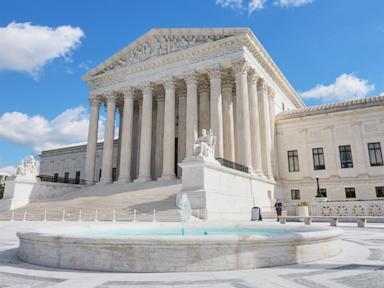
Silence. That is often what a Supreme Court order sounds like from the outside. No gavel crashing in dramatic slow motion. No sweeping majority opinion read aloud from a mahogany bench. Just a quiet line on a docket, a denial of certiorari, a refusal to hear an appeal—and suddenly a child’s entire world is locked inside the decisions that came before.
When the Supreme Court declines to hear an appeal in a disputed Afghan adoption case, the headline reads like a footnote in administrative law. Yet behind every appellate brief and jurisdictional argument is a human life shaped by war, displacement, sudden loss, and a tug-of-war between competing versions of duty. We tend to treat court filings as parchment and ink. They aren’t. They are trapdoors. Meanwhile, you can explore other events here: What Most People Miss About Albania Protests Right Now.
I have sat in enough waiting rooms outside family and immigration hearings to recognize the particular quiet that settles over people when the highest legal door closes. Fluorescent lights hum overhead. Someone taps a pen against a folder held together by a stretched rubber band. Nobody speaks in legal citations in those rooms; they speak in fears. Will she know who I am next year? What happens if the paperwork isn’t right? Who gets to decide what family means when everything else has been blown apart?
Let’s be clear from the start: I am reconstructing the emotional and structural realities of disputed wartime and cross-border adoptions—specifically the weight of an appellate refusal at the Supreme Court level—without fabricating specific case facts that are not in front of us. Where I use a composite scene or hypothetical illustration to make abstract legal doctrines tangible, I will say so plainly. Legal truth is strict. Human truth is messy. Both deserve care. To understand the complete picture, check out the detailed analysis by The New York Times.
The Weight of a Refusal
To understand why a declined appeal hurts so deeply, you have to understand what "declining to hear" actually means. It is not a declaration of moral perfection on the part of the lower courts. It is not always a ringing endorsement of how every piece of evidence was weighed. Often, it is a boundary line drawn by the justices: The system below has spoken, and we are not stepping in to rewrite it.
Think of a relay race where the baton is a child’s future. A trial judge runs the first leg, hearing testimony, looking at documents, trying to make sense of conflicting claims in a high-stakes family dispute. An appeals court runs the next, checking whether the rules of law were followed. Then comes the final stretch—the petition to the Supreme Court. When the Court declines to take the case, the baton stays right where the lower court left it. There is no further lap.
For the adults involved, that finality can feel like walking into a locked room. Every argument about trauma, lineage, custody, or procedural fairness that felt urgent enough to carry all the way to Washington suddenly stops at the threshold.
Consider a hypothetical scenario—purely to illustrate how competing claims collide in these disputes, not as a report of a specific litigant. Imagine a young boy separated from his extended relatives during the chaos of evacuation from Kabul, placed in temporary care, and eventually at the center of a contested adoption battle between caregivers who stepped forward in crisis and kin who argue that kinship bonds and cultural continuity were overridden too quickly. Every side can point to love. Every side can point to risk. When a court draws a line between them, one side experiences that line as justice, and the other experiences it as erasure.
That is the trap of disputes like this. Good people—or at least people convinced they are acting in a child’s best interest—can stand on opposite sides of a courtroom and look at the exact same set of facts and see two different tragedies.
Beyond the Docket Number
Public debates around disputed adoptions, especially those touching war zones and displacement like Afghanistan, rarely stay confined to one family. They pull in larger questions that make even seasoned lawyers pause.
How do courts weigh stability against biological or cultural roots when a conflict has fractured a homeland? When borders close, governments collapse, or records are lost in evacuation rushes, how do you verify identity, consent, and family ties with certainty? And when an adoption or custody arrangement is challenged, at what point does reopening the question itself become a fresh wound for a child who has already survived upheaval?
I won’t pretend these questions have tidy answers. Anyone who claims cross-border family law is simple hasn’t watched a judge try to balance best-interest standards against statutory rules while a toddler sleeps in a hallway outside. Sometimes the law looks cold because it is trying to measure things that cannot be weighed on a scale—grief, belonging, safety, memory.
Yet there is a reason legal systems lean toward finality once appeals are exhausted. Children grow in real time, not in appellate time. Months and years spent in endless litigation take a toll of their own. A child needs a predictable morning: someone making breakfast, someone tying shoes, someone who is there on Tuesday and still there on Friday. Courts know that perpetual uncertainty can be its own kind of harm.
Still, knowing why a court chooses finality doesn’t make the refusal hurt any less for the people left standing on the outside of the ruling.
What Happens When the Noise Fades
News cycles move fast. A supreme court denial of review might get a few paragraphs in a legal bulletin or a brief mention in a daily roundup, and then the spotlight swings somewhere else.
The people inside the story don’t get to swing with it.
For a child growing up in the wake of a disputed adoption, the legal vocabulary—jurisdiction, standing, certiorari, remand—means nothing. What matters is far simpler and far heavier: Where do I belong? Who is my family? Why do the grown-ups around me talk in hushed voices whenever mail arrives?
If we reduce a story like this to a win-or-lose tally, we miss the whole point. A Supreme Court refusal to hear an appeal closes a chapter of litigation, not a human life. The real work—raising a child, honoring truth, navigating memory, building trust—begins or continues long after the docket goes quiet.
A single sheet of paper from a high court can end a legal battle in seconds, while a child spends decades learning what that paper meant.