George Robertson doesn't look like a man prone to hysterics. At seventy-nine, the former NATO Secretary General carries the weary, measured gravity of someone who has spent decades staring at maps where the lines aren't drawn in ink, but in the potential for fire. When he stands at a lectern, people expect the polished, rhythmic cadences of a career diplomat. They expect "deep concern." They expect "strategic patience."
They did not expect what they got.
Robertson didn't just speak; he tore through the polite veneer of British defense policy like a man trying to wake a sleeping family in a burning house. He used a phrase that should make every citizen feel a cold prickle at the base of their neck: "corrosive complacency."
It is a quiet, terrifying term. It doesn't describe a sudden explosion or a visible wound. It describes the slow, rhythmic drip of neglect that eats away at the foundations of a structure until, one day, the roof simply ceases to be there. This is the story of how the United Kingdom's primary duty—the protection of its people—became a secondary line item in a budget spreadsheet, and why the bill for that decision is coming due.
The Ghost in the Hangar
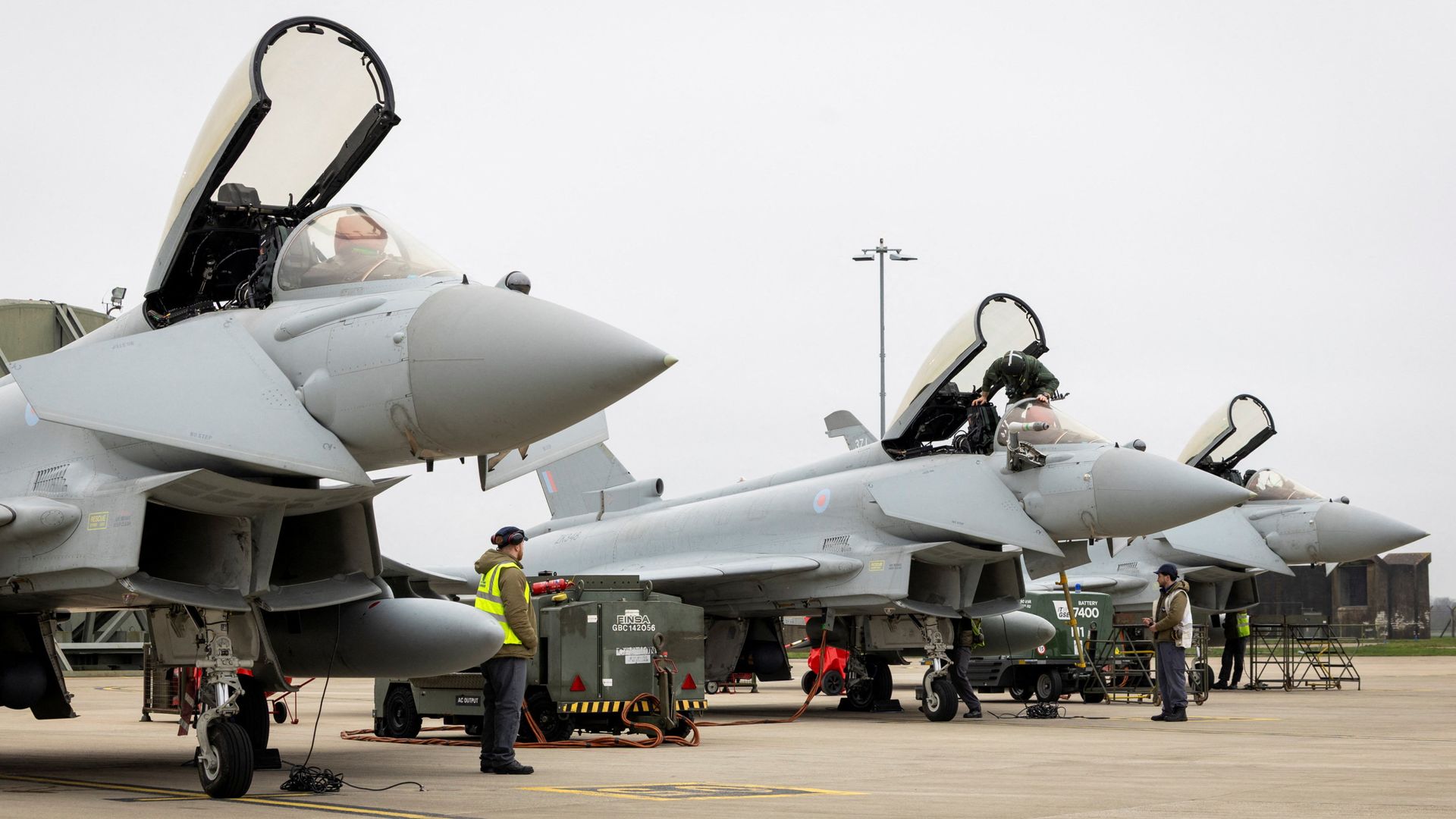
Consider a hypothetical young technician named Sarah. She works at an RAF base in the north of England. She is brilliant, patriotic, and increasingly frustrated. Her job is to keep a fleet of sophisticated aircraft ready for a world that is moving faster than ever. But Sarah spends half her shift cannibalizing parts from one multi-million-pound jet to keep another one in the air.
She isn't fighting a war; she is fighting a shortage.
When Lord Robertson stood up to challenge Prime Minister Keir Starmer and Chancellor Rachel Reeves, he was speaking for every Sarah in the armed forces. He was pointing out that while the government talks about a "triple lock" on nuclear deterrents and "unwavering commitment" to NATO, the actual reality on the ground is one of thinning ranks and aging steel.
The Strategic Defence Review, or SDR, is currently underway. On paper, it is a logical, methodical look at what the UK needs. In reality, Robertson fears it is a stalling tactic—a way to kick the most expensive and vital questions into the long grass of the next fiscal year.
Russia is not waiting for the review to finish. Iran is not waiting for a subcommittee to meet. China is not pausing its naval expansion to allow the Treasury to balance its books.
The Arithmetic of Survival
The debate often gets bogged down in a specific number: 2.5%. This is the percentage of Gross Domestic Product that the government has promised to spend on defense "when conditions allow."
Conditions never allow.
There is always a hospital that needs a new wing. There is always a school with a crumbling roof. There is always a political fire that needs the oxygen of immediate funding. This is the trap of the modern state. We treat defense like a luxury—a premium insurance policy we can skip this month because we haven't had a crash in a while.
But defense isn't a line item. It is the floor upon which the entire economy sits. Without the security of trade routes, undersea cables, and sovereign borders, that 2.5% becomes a meaningless fraction of a shrinking whole. Robertson’s "extraordinary intervention" was a reminder that you cannot build a wall while the enemy is already leaning against the gate.
He didn’t just criticize the lack of money; he criticized the lack of urgency. He described a government that seems to think it has time. It doesn't. We are living through what historians may one day call the "pre-war" era, yet our factories are running at peacetime speeds and our recruitment offices are half-empty.
The Invisible Stakes
Why does this matter to someone who will never step foot on a carrier deck or sit in a tank?
The stakes are invisible until they are absolute. We live in a world of "just-in-time" supply chains. Your morning coffee, the semiconductors in your phone, and the gas that heats your water all rely on a global order that is currently being tested by actors who do not share our interests.
When the Royal Navy is forced to retire ships early because there aren't enough sailors to man them, the world notices. Our allies notice a partner that is becoming a passenger. Our adversaries notice a target that is becoming soft.
Robertson’s anger stems from the fact that he has seen this movie before. He remembers the Cold War, where the peace was kept not by good intentions, but by a visible, undeniable capacity to resist. Today, that capacity is being hollowed out by a thousand tiny budget cuts. It’s a death by a thousand spreadsheets.
The Moral Hazard of "Later"
The Chancellor, Rachel Reeves, faces a brutal task. She inherited a fiscal landscape that looks like a minefield. But Robertson’s point is that defense is the one area where you cannot "fix it later."
If you underfund a transport project, the trains are late. If you underfund defense, you lose the ability to choose your own future.
The "corrosive complacency" he speaks of is a psychological condition. It is the belief that because we have been safe for so long, we are naturally entitled to safety. It is the assumption that the "liberal international order" is a law of nature rather than a fragile construction maintained by blood and treasure.
We have outsourced our security to the memory of past greatness. We talk as if we are still a global power while our ammunition stocks are reportedly so low they would be exhausted in weeks of high-intensity conflict. That gap between rhetoric and reality is where the danger lives.
The Sound of the Alarm
It is rare for a figure of Robertson’s stature to "tear into" his own party’s leadership. It suggests a level of private alarm that could no longer be contained. He isn't asking for a vanity project. He is asking for a recognition of reality.
The Strategic Defence Review cannot be a cost-cutting exercise disguised as an intellectual inquiry. If the conclusion is that we need more—more ships, more shells, more cyber-defense, more people—then the money must be found. To say "we can't afford it" is to say we are willing to gamble with the existence of the state itself.
We are currently watching a shift in the global tectonic plates. The era of the "peace dividend"—that wonderful period after 1989 when we thought history had ended and we could spend the defense budget on everything else—is over. It ended years ago, but we are still trying to live on the credit of that bygone era.
Robertson is the man at the end of the hallway, pointing at the cracks in the foundation. He isn't interested in the politics of the "black hole" in the finances. He is interested in the black hole of a nation that can no longer defend its interests or its allies.
The tragedy of complacency is that it feels comfortable right up until the moment it becomes catastrophic. You don't feel the corrosion. You don't hear the rust eating the iron. You only feel the snap when the weight becomes too much to bear.
The Prime Minister and the Chancellor now have a choice. They can listen to the man who has spent his life studying the mechanics of war and peace, or they can continue to manage the decline with polite words and delayed reviews.
The ships are waiting. The technicians like Sarah are waiting. The world is watching.
Somewhere in the North Sea, or in a server farm in a hostile capital, or in a missile silo halfway across the globe, the pressure is being applied. We will either reinforce the shield now, or we will learn exactly how much it costs to let it break.
George Robertson has rung the bell. The sound is still echoing in the halls of Westminster. The only question left is whether anyone is actually listening, or if the silence of the Treasury is the only answer he will get.