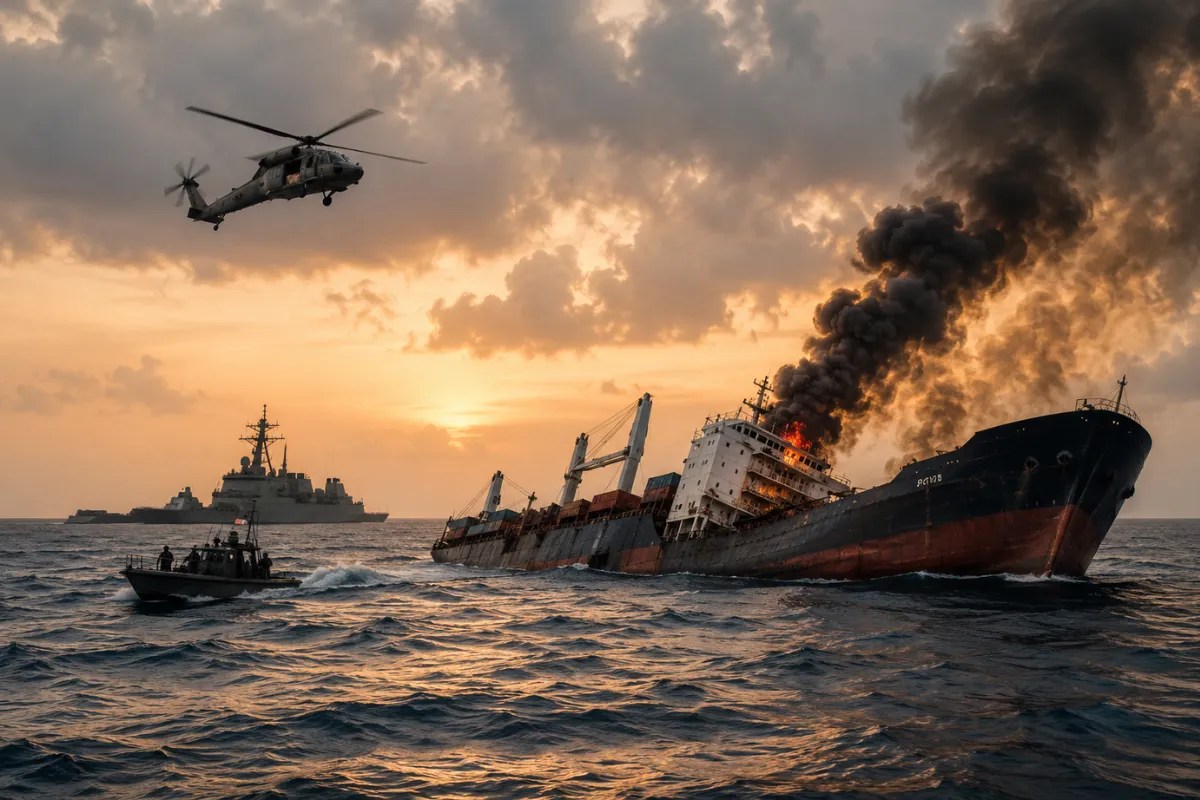
The headlines are screaming again. A ship seized near the UAE. An Indian cargo vessel sinking off the coast of Oman. The usual chorus of analysts is dusting off the same "Strait of Hormuz" playbook they’ve used since the 1980s. They want you to believe we are one drone strike away from a global energy collapse.
They are wrong.
The obsession with "war clouds" over the Persian Gulf is a lazy narrative fed to you by people who understand geography but fail to grasp modern logistics and energy shifts. While the media counts ship hulls and calculates insurance premiums, they are missing the real story: the Strait of Hormuz is becoming a strategic relic.
The Myth of the Global Chokepoint
The "chokepoint" narrative assumes that if you block the 21-mile-wide passage between Oman and Iran, the world stops turning. That was true in 1975. In 2026, it is a convenient fiction used to pump oil futures.
The reality? The world has spent thirty years building workarounds that the "war is coming" crowd ignores. Saudi Arabia’s East-West Pipeline can move five million barrels a day directly to the Red Sea. The UAE’s Habshan-Fujairah pipeline bypasses the Strait entirely, dumping crude straight into the Gulf of Oman.
When a ship sinks or a boarding party climbs a ladder, it isn't a prelude to World War III. It is a localized insurance event. Treating every skirmish like the end of global trade ignores the massive redundancy built into modern energy infrastructure.
Why Ships Actually Sink (It’s Not Just Missiles)
Let’s talk about the Indian cargo ship off Oman. The armchair generals want to link every maritime disaster to "regional tensions." I have spent years looking at shipping manifests and salvage reports. Ships sink for three reasons: poor maintenance, overloading, and human error.
The Indian Ocean is currently a graveyard of aging "shadow fleet" vessels—rust buckets carrying discounted oil or un-vetted cargo under flags of convenience. These ships are barely seaworthy. When one goes down, the media instantly looks for a geopolitical motive. Sometimes, a sinking ship is just a sinking ship. Attributing every mechanical failure to a "signal of war" is not just bad journalism; it’s a failure of logic.
The Iran "Threat" Is a Calculated Business Model
The seizure of vessels by Iranian forces is rarely about starting a war. It is about maritime litigation by other means.
Iran uses ship seizures as a lever in legal disputes over frozen assets or oil shipments. It is a brutal, high-stakes form of debt collection. If you look at the data, these incidents follow a pattern of "tit-for-tat" seizures that have a predictable beginning, middle, and end.
The market has already priced this in. Traders who have been in the trenches for decades don't panic when they see a "breaking news" alert about a seized tanker. They check the vessel's ownership and the previous week's court rulings in the Hague or London.
The India-Middle East Corridor: The Real Disruption
If you want to talk about "disruption," stop looking at the Strait and start looking at the land. The India-Middle East-Europe Economic Corridor (IMEC) is the actual threat to the status quo.
The real anxiety in the region isn't about whether a tanker can get through Hormuz. It’s about the fact that rail and pipeline networks are making the sea route less relevant every year. By the time a full-scale naval blockade could be coordinated, the cargo will already be moving via a multimodal rail network through Saudi Arabia and Jordan.
The "Hormuz Panic" is the dying gasp of a maritime-centric view of power. We are moving toward a terrestrial-energy era where geography is conquered by infrastructure, not navies.
The Insurance Scam No One Discusses
War Risk Surcharges (WRS) are a gold mine for underwriters. Every time a headline mentions "war clouds," insurance premiums for every vessel in the region skyrocket.
I’ve seen shipping companies pay 10x their normal rates based on a single unverified report of a "suspicious approach." This creates a perverse incentive for the industry to keep the tension high. If the Persian Gulf were truly "at peace," billions in premium revenue would vanish.
The "instability" is a feature of the shipping business, not a bug. It is a tax on global trade that feeds a specific sector of the financial world.
Your Tactical Error: Watching the Wrong Map
If you are tracking the coordinates of every seized tugboat, you are being distracted. The real shifts are happening in the following areas:
- De-dollarization of Energy: The currency the oil is traded in matters more than the route it takes. If India and the UAE settle trades in Dirhams or Rupees, the U.S. Navy’s role as the "guarantor" of the Strait becomes an expensive, unnecessary overhead.
- The Drone Asymmetry: A $20,000 drone can harass a $200 million destroyer. This isn't "war"—it’s a cost-imposition strategy. The goal isn't to win a naval battle; it's to make the cost of protection higher than the value of the cargo.
- Automated Salvage: We are seeing a rise in automated response vessels. The "human drama" of sailors being "held" is losing its political potency as more shipping becomes autonomous.
Stop Reading the Doom-Scrollers
The next time you see an article about "Hormuz on the Brink," ask yourself: who benefits from this fear?
- The Oil Speculator: Who needs a price spike to save a bad quarter.
- The Defense Contractor: Who needs a reason to sell more littoral combat ships.
- The Legacy Media: Which needs a "High Seas Drama" to get clicks.
The Strait of Hormuz isn't a powder keg. It’s a stage. The actors know their lines, the audience knows when to gasp, and the ticket prices (oil and insurance) keep going up.
If you want to understand the future of trade, look away from the water. Look at the pipelines, the rails, and the digital ledgers. The era of the "Chokepoint" is over. We are just waiting for the headlines to catch up.
The ship didn't sink because of a secret war. It sank because it was old, the sea was rough, and no one wanted to pay for the repairs. Welcome to the real world of maritime trade. It’s much more boring than the movies—and that’s why you’re being lied to.