Western technology firms spent decades operating under a comfortable assumption. If you wanted better computing power, you simply shrank the transistors. You made them denser, smaller, and packed more of them onto a single silicon die. But according to Huawei top semiconductor scientist Liao Heng, that entire playbook is running out of road.
In a rare, sprawling public interview, Liao laid out a stark warning for industry titans like Nvidia, TSMC, and Intel. The physical limits of transistor scaling are approaching fast. When the industry finally crosses that invisible line, the resulting bottleneck will trigger an avalanche of performance limits.
For years, working abroad taught Liao a specific brand of blind arrogance. Many engineers assumed true innovation only happened inside Western corporate labs. Reality hit hard once he returned to witness Huawei execution firsthand under the heavy boot of US export controls. Cut off from extreme ultraviolet lithography machines, Huawei couldn't just buy its way out of trouble. They had to rethink silicon architecture from the ground up.
Breaking Free From The Shrinkage Trap
Traditional foundries rely heavily on squeezing more microscopic gates onto a wafer. It works until quantum physics gets in the way. Electron leakage and thermal limits turn microscopic density into an engineering nightmare.
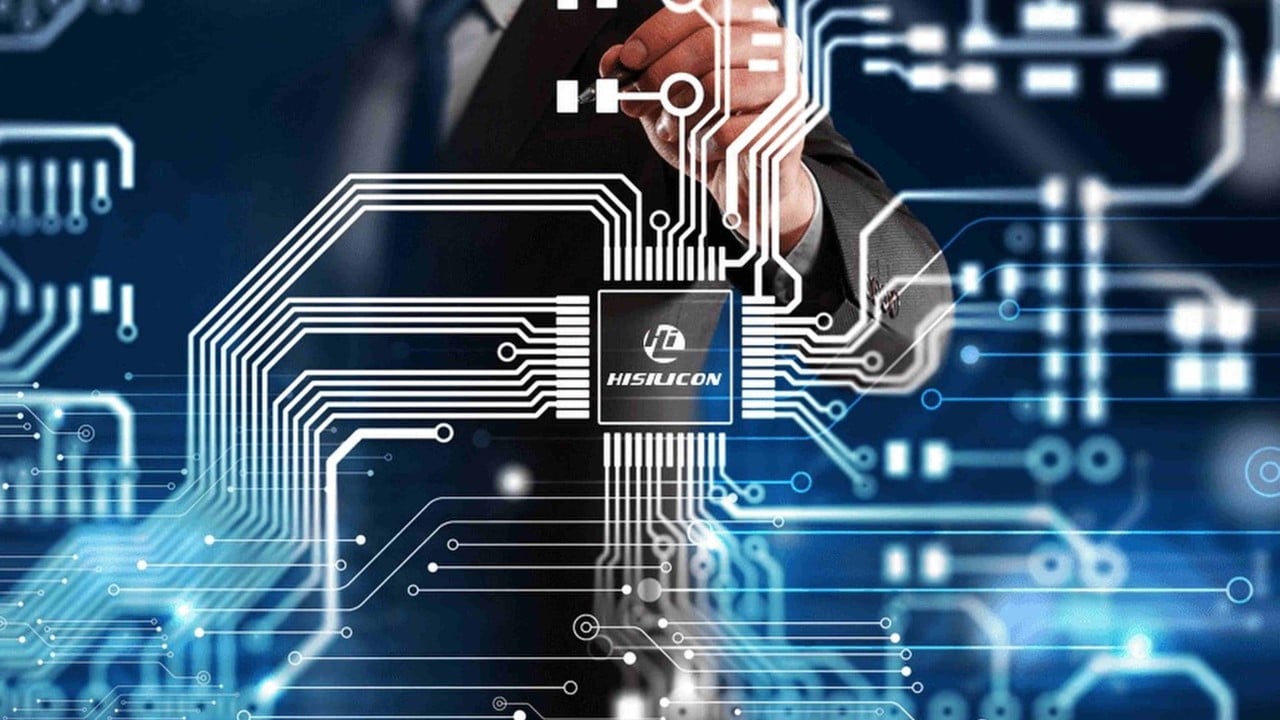
Huawei's answer is what Liao calls the Tau Scaling Law, executed through an architectural concept known as LogicFolding. Instead of obsessing over raw transistor shrinkage, this framework prioritizes how fast signals transmit across different parts of a computer system. You trade raw physical miniaturization for smarter system-level design.
Think of it like urban planning. Western giants keep building taller skyscrapers on tiny plots of land until traffic chokes the streets. Huawei is redesigning the transit system underneath to move people faster without needing a taller tower.
The War Hero Mindset And The Eighteen Level Pagoda
Sanctions didn't break Huawei. They forced a siege mentality that completely rewired their engineering culture. Liao describes a war-hero mindset where internal teams cannot afford comfortable silos.
During his broadcast appearance, Liao introduced a striking metaphor for the artificial intelligence supply chain. While Nvidia CEO Jensen Huang famously frames the AI stack like a layered cake, Liao envisions an eighteen-level pagoda. Every single tier of that pagoda must lock arms to survive external pressures.
This means chip designers and AI model developers in China are collaborating much closer than their Western counterparts. When you lack massive computing resources, you optimize the software to match the constrained hardware. Breakthroughs like DeepSeek proved that architectural cleverness can squeeze massive performance out of fewer chips. Huawei is baking that exact philosophy straight into its hardware roadmap.
What Comes Next For Global Silicon
Skeptics point out that marketing terms like LogicFolding still need to prove themselves in independent hardware teardowns. Semiconductor analysis firms will soon dissect Huawei newest smartphone processors to check the actual silicon. That evaluation will show whether design tricks can genuinely bridge a multi-year manufacturing gap.
Geopolitical tensions are splitting the global tech supply chain into two separate, competing ecosystems. One side relies on traditional lithography dominance. The other is forced into radical architectural efficiency.
If Huawei alternative design philosophy delivers real-world gains without advanced Western machinery, the entire global semiconductor playbook changes. Watch the upcoming hardware teardowns closely. They will tell you whether this war-hero strategy is a masterclass in survival or just expensive noise.