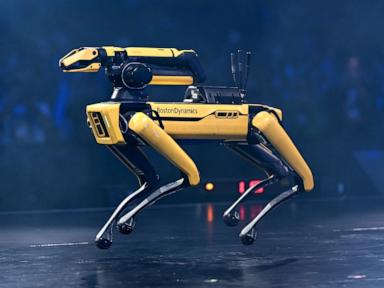
Immigration and Customs Enforcement is gearing up to spend millions on Boston Dynamics' quadruped machines, framing the purchase around officer safety. If you have been tracking federal procurement data, this move shouldn't come as a massive surprise. Federal agencies love expanding their tech stacks under the banner of modernization. But buying mechanical hounds to scout dangerous zones marks a strange escalation in domestic enforcement tools.
According to Department of Homeland Security announcements, the agency plans to spend between one and two million dollars on SPOT robots and accompanying accessories. With base units costing roughly $75,000 each, this budget points to a fleet rather than a solitary test unit. The stated goal is simple: hazard assessment, remote inspection, and situational awareness in cramped or unstable environments.
Why does a civilian immigration agency need mechanical dogs? The official line relies heavily on keeping human personnel out of harm's way. Enforcement operations often involve navigating hazardous industrial spaces, abandoned buildings, or tight quarters where hostile encounters might happen. Instead of sending human agents through a doorway first, ICE wants a remote-controlled camera platform with 360-degree views to take the initial risk.
Critics point out a glaring pattern in recent federal spending. This robot dog contract follows hot on the heels of another procurement record revealing a massive multi-million dollar purchase of electric shock gloves. When you stack these acquisitions together, you see an agency rapidly bulking up its physical enforcement capabilities. It is a familiar cycle of federal agencies adopting military-grade or industrial security hardware designed for high-stress tactical scenarios.
Local law enforcement agencies have walked down this road before, with wildly mixed results. Police departments in cities like Los Angeles have used similar robots to inspect suspicious packages or retrieve items remotely. Conversely, the New York Police Department faced intense public backlash and ultimately canceled its Boston Dynamics contract after community pushback labeled the technology dystopian. ICE operates outside the direct oversight of local city councils, meaning public outcry rarely halts federal procurement pipelines once the paperwork clears.
Boston Dynamics has long maintained ethical guidelines intended to prevent the weaponization of its platforms. Yet, putting these units into the hands of armed federal agents blurs the boundary between passive surveillance and active intimidation. Even if the robots carry only cameras and thermal sensors today, the hardware platform itself invites mission creep.
You have to look at the broader ecosystem of modern border and immigration control to understand the trajectory here. Automated towers, biometric tracking apps, and remote-controlled rovers form an increasingly digital wall. Adding quadrupedal robots to the mix gives field agents an agile tool capable of scrambling over rubble, climbing stairs, and squeezing into spaces wheels cannot reach.
The transition from industrial novelty to standard law enforcement gear happened much faster than most people expected. As these machines become routine fixtures for federal operations, expect the debate over automated oversight and civil liberties to intensify. For now, the contracts are signed, the funds are allocated, and mechanical hounds are officially joining the federal workforce.