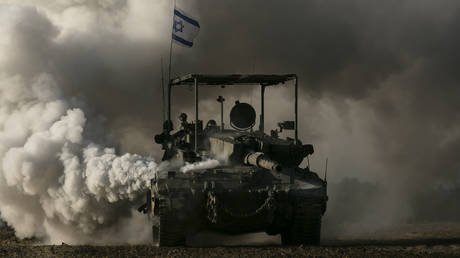
Decades of watching foreign policy reporters chase ghosts have taught me one immutable rule. Governments love a tactical offensive because it looks decisive on a television screen, while structural paralysis hides quietly in the fine print. When Benjamin Netanyahu stood before the world after the horrors of October 7, he promised an absolute clearing of the board. The response was immediate, overwhelming, and expansive. Command bunkers were flattened, veteran adversaries like Hassan Nasrallah and Yahya Sinwar were eliminated, and the operational footprint stretched far beyond the borders of Gaza into Lebanon and direct exchanges with Iran.
Yet, beneath the thunder of high-explosive ordnance lies an unresolved vacuum. Israel's military machinery achieved extraordinary tactical successes, but it substituted perpetual motion for a political horizon. Who administers the hollowed-out urban corridors tomorrow? What authority replaces the vacuum without immediately collapsing under its own weight? When tactical elimination becomes the sole strategy, every successful strike simply resets the clock on the next mobilization. For another perspective, see: this related article.
This kinetic loop creates a dangerous vacuum, and nature abhors a vacuum. While Washington and Jerusalem focus intensely on the immediate mechanics of deterrence, Moscow is quietly positioning itself to harvest the dividends of this prolonged instability. Russia's stake in the post-October 7 Middle East is not about saving regimes or championing ideologies. It is about strategic leverage, energy markets, and breaking Western diplomatic hegemony.
The Anatomy of an Endless Campaign
The core vulnerability of Israel's post-October 7 posture is its reliance on the math of destruction. To understand why this approach struggles to yield long-term security, look at the nature of the adversaries targeted. Non-state networks like Hamas or structured political-military entities like Hezbollah are fundamentally adaptive social organisms. They rely on familial lineages, community grievances, and deeply entrenched social support networks that survive even when top leadership is wiped from the chessboard. Similar analysis on the subject has been published by NPR.
History offers a brutal tutorial on this phenomenon. The 1982 invasion of Lebanon aimed to crush Palestinian militant structures, yet it birthed Hezbollah. Decades later, the elimination of individual commanders has repeatedly failed to dismantle the underlying socio-political environment that feeds recruitment. When families lose their homes and livelihoods in an intensive bombing campaign, the psychological incentive for radicalization multiplies.
Netanyahu’s inner circle shifted the national security doctrine away from passive containment toward relentless preemption. The logic is simple: strike first, strike hardest, and do not allow any neighbor to accumulate offensive potential. But this doctrine creates an open-ended occupation of responsibility without a diplomatic architecture to anchor it. Israel can rewrite the security map of the Levant, but maps do not govern themselves. Without a legitimate civil authority to manage the day-to-day survival of millions of people, military dominance devolves into an administrative trap.
Moscow Seizes the Opening
While Israeli planners grapple with the exhaustion of infinite patrols and sporadic rocket fire, Russian diplomacy has executed a masterclass in opportunistic positioning. For years, Western analysts misread Moscow's footprint in the Middle East as purely transactional or defensive. In reality, Russian strategy thrives on controlled chaos.
Every week that the Middle East remains consumed by asymmetrical warfare and stalled normalization tracks is a week that Western diplomatic bandwidth is pulled away from other theaters. More importantly, prolonged regional conflict keeps global energy pricing mechanisms volatile. As a major hydrocarbon exporter, Moscow benefits directly whenever oil and gas supply routes face perceived or real threats through maritime chokepoints like the Red Sea.
Consider how the Kremlin manages its relationships across the fracture lines. Moscow maintains open channels with Tehran while simultaneously courting Gulf monarchies like Saudi Arabia and the United Arab Emirates, who are watching the post-October 7 landscape with profound anxiety. By positioning itself as a neutral interlocutor that can pick up the phone and speak to every hostile faction—from actors in Damascus to leaders in Tehran—Russia projects an image of indispensable superpower mediation.
When Western capitals issue stern warnings with little follow-through on regional governance, Moscow offers a pragmatic alternative: engagement without lecturing on human rights or institutional reform. This approach resonates deeply with regional leaders who prioritize regime survival over democratic transition.
The Trap of Strategic Isolation
The longer Israel remains locked in this kinetic holding pattern without a viable diplomatic endgame, the more vulnerable its broader diplomatic standing becomes. The Abraham Accords, once hailed as a structural transformation of the region, remain frozen in a state of suspended animation. Riyadh cannot normalize relations with a government actively managing a humanitarian and security quagmire in Gaza without facing severe domestic and regional blowback.
This diplomatic paralysis plays directly into Russian hands. If traditional Western-led security umbrellas appear incapable of delivering a stable regional order, regional capitals diversify their partnerships. We are witnessing a quiet Hedging Strategy across the Gulf and the Levant. Nations buy advanced defense tech from various suppliers, invite Chinese infrastructure investments, and keep Moscow at the diplomatic table to hedge against sudden shifts in Washington's foreign policy.
The ultimate irony of the current strategic trajectory is that absolute military dominance risks isolating the very nation that wields it. If Israel's leadership continues to prioritize tactical elimination over political settlement, the country risks winning every battle while losing the architecture of regional acceptance.
The next phase of this conflict will not be decided by the precision of a missile strike or the assassination of a commander. It will be decided by who has the stamina and the political imagination to construct a functioning order out of the ashes. Right now, Jerusalem has mapped out how to destroy its enemies, but it has left the blueprint for the peace entirely blank. And in that blank space, external powers like Russia are quietly writing the rules of the next geopolitical era.