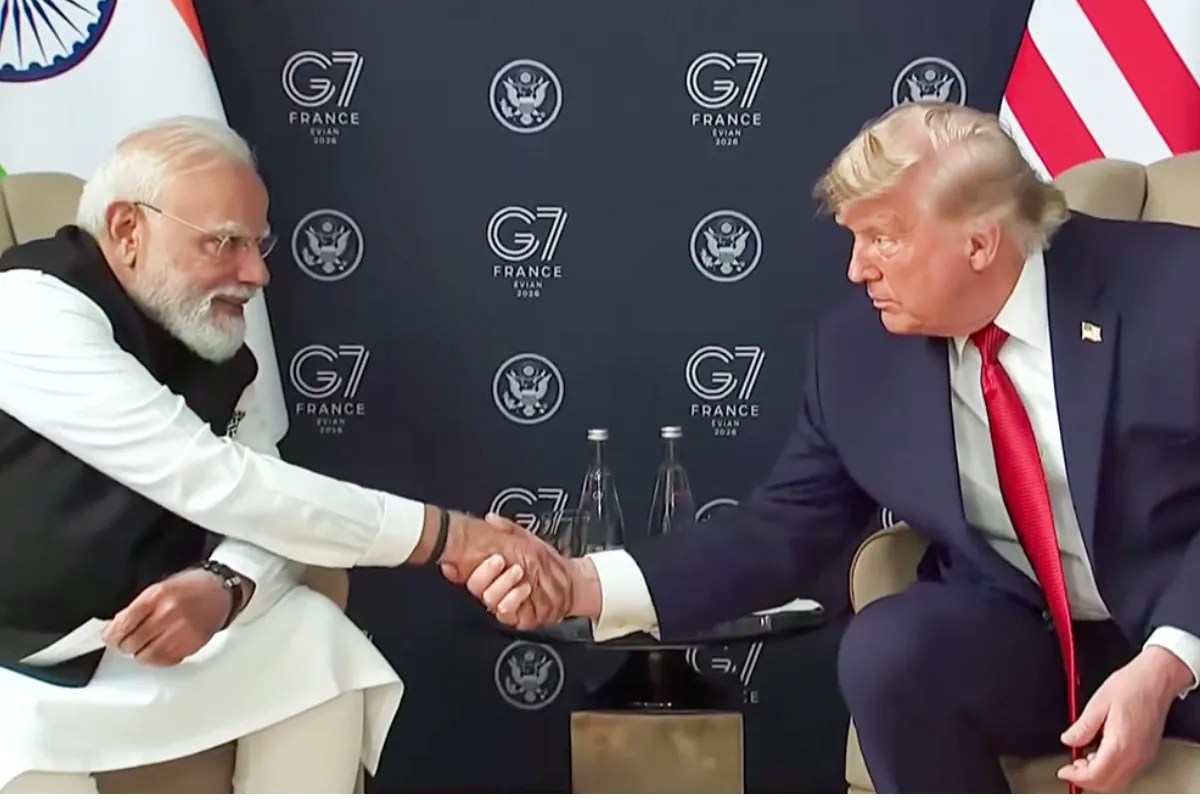
Donald Trump just offered New Delhi the ultimate geopolitical blank check. Speaking on the sidelines of the G7 summit in Evian-les-Bains, France, the US President declared that America would unconditionally defend India from any external aggression. The catch? The guarantee is explicitly tied to a single individual. "If anyone attacks that man, we’re going to be there," Trump said, pointing directly to Prime Minister Narendra Modi, before clarifying that a change in Indian leadership would instantly void the warranty.
Beneath the theater of alpha-male flattery lies a transactional trap. Trump's verbal security guarantee bypasses institutional statecraft, replacing decades of systematic, treaty-based diplomacy with a personalized pact. For a nation like India, which has fiercely guarded its strategic autonomy since independence, this impromptu shield is not an asset. It is a liability designed to extract concessions on punishing tariffs and a stalled bilateral trade agreement.
Personalizing the Pentagon
Geopolitical alliances are built on institutions, treaties, and deep bureaucratic alignment. They are not supposed to operate like a country club membership where privileges expire if the management changes. Trump’s rhetoric at the G7 fundamentally disrupts the architecture of international relations by replacing the concept of a state-to-state partnership with a leader-to-leader transaction.
The danger for South Asian stability is immediate. By framing American military intervention as a personal favor to Modi, Washington introduces an unpredictable variable into an already volatile region. If regional adversaries believe America’s commitment is tied solely to the political fortunes of one leader, the long-term deterrence value of the US-India partnership degrades.
True security cannot rely on the whim of a foreign executive. The United States and India do not share a formal mutual defense treaty like NATO. Attempts to substitute this institutional void with personal affection create a fragile illusion of safety.
The Blood in the Gulf and the Friction of Blockades
The warm words in France could not entirely obscure the cold reality of recent weeks. The Evian summit took place against the backdrop of immense friction following a US military strike in the Gulf of Oman. The operation, part of Washington's enforcement of a maritime blockade against Iranian ports, targeted commercial vessels and resulted in the deaths of three Indian sailors.
New Delhi was furious. External Affairs Minister S. Jaishankar took the rare step of publicly questioning the justification for lethal force against civilian maritime commerce. At the G7 press briefing, Modi forced the issue into the open, demanding accountability for the thousands of Indian seafarers manning global shipping lanes.
"We have always said that freedom of navigation should be ensured," Modi noted, a sharp critique wrapped in diplomatic boilerplate. "Thousands of Indian seafarers are on duty on the world's seas... I believe that their security is equally important."
Trump refused to apologize for the strike. Instead, he offered the verbal defense guarantee as a rhetorical offset, an attempt to erase the memory of dead Indian citizens with the promise of future American military protection. It is a classic diversionary tactic. Washington expects India to absorb collateral damage from American foreign policy in West Asia while remaining grateful for vague promises of security at home.
US-India Strategic Friction Points (2026)
┌───────────────────────────┬──────────────────────────────────────────┐
│ Issue                     │ Strategic Discord                        │
├───────────────────────────┼──────────────────────────────────────────┤
│ Maritime Blockades        │ US strikes in Gulf kill Indian seafarers │
├───────────────────────────┼──────────────────────────────────────────┤
│ Tariff Disputes           │ Stalled 18% vs 50% interim trade pact    │
├───────────────────────────┼──────────────────────────────────────────┤
│ Security Guarantees       │ Personalized rather than treaty-based    │
└───────────────────────────┴──────────────────────────────────────────┘
The Angel and the Extortionist
The real objective behind the praise is economic capitulation. While Trump referred to Modi as an "angel," he instantly qualified it by calling him "as tough as a killer" at the negotiating table. The theater of friendship is meant to soften India up for a highly lopsided trade agreement.
Negotiators are currently trying to patch together an interim trade deal that was derailed earlier this year when the US Supreme Court struck down Trump's reciprocal tariffs. Under the newly proposed arrangement, Indian exports to the US would face an 18% tariff, down from the catastrophic 50% penalty threatened by Washington last year.
To secure this 18% compromise, India is being pressured to lower its own import barriers on American agricultural goods and dairy, a move that could devastate domestic farmers. The dynamic is transparently transactional. Washington uses its massive domestic market and military leverage to squeeze concessions out of New Delhi, using the promise of a presidential visit and security assurances as sweeteners to seal the deal.
Shifting Safeties and the Sovereignty Cost
Relying on a personalized security guarantee requires a degree of geopolitical compliance that India cannot afford. If New Delhi accepts the premise that its defense is secured by a personalized American umbrella, it forfeits its ability to navigate a multipolar world independently.
What happens when American blockades in the Middle East choke off India’s energy supplies? What happens when Washington demands India completely sever its remaining defense procurement channels with traditional partners like Moscow?
Accepting Trump’s personalized shield means accepting his foreign policy agenda in its entirety. It turns an independent civilizational state into a junior partner in an ideological crusade. The history of American foreign policy is littered with regimes that mistook the personal affection of a sitting US president for a permanent geopolitical commitment.
The security of a nation of 1.4 billion people cannot be mortgaged on the transactional whims of a single bilateral meeting. India’s true deterrence lies not in verbal assurances delivered on the French riviera, but in its own domestic military industrial modernization, its independent maritime posture, and its refusal to be drawn into the strategic blockades of foreign powers.