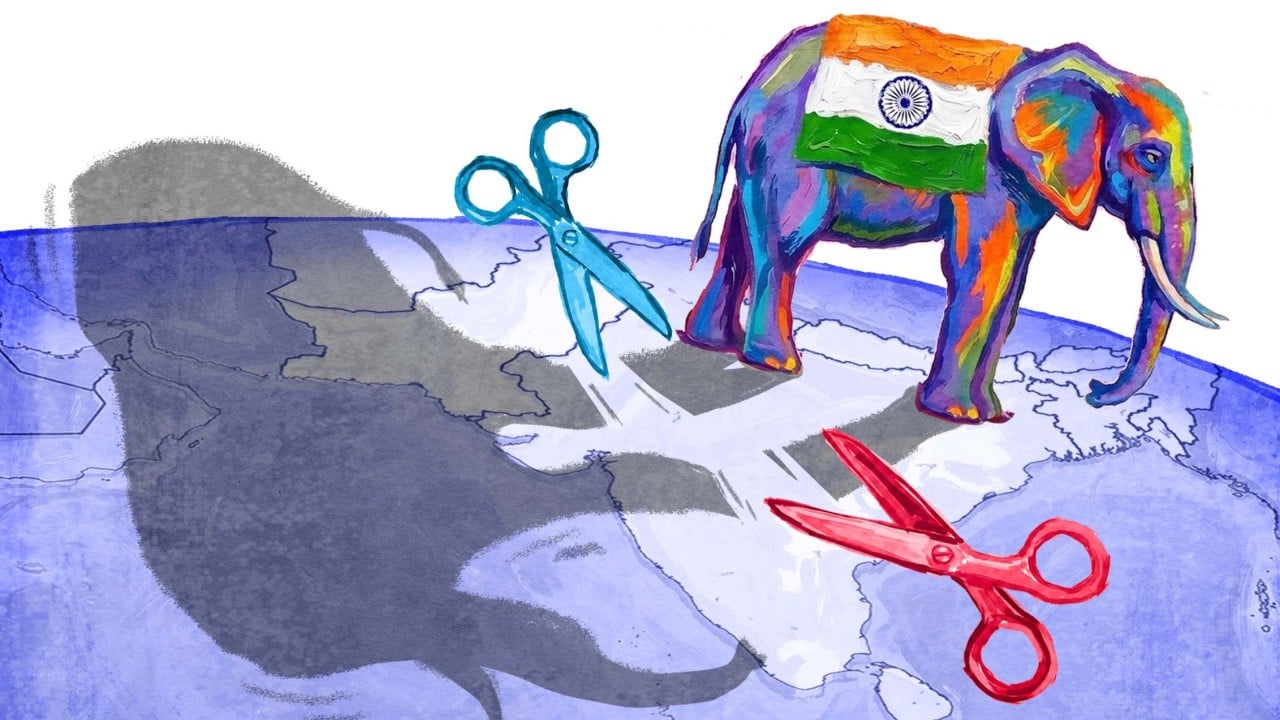
South Asia's geopolitical gravity is shifting fast. For decades, New Delhi viewed its immediate neighborhood as an undisputed sphere of influence. That assumption is crumbling. Beijing isn't just knocking on India's door; it's building infrastructure, securing ports, and courting traditional Indian partners from the Maldives to Nepal. Meanwhile, Washington is stepping up its footprint across the Indo-Pacific. It's a high-stakes squeeze, and India's traditional regional primacy is taking a direct hit.
You hear a lot about the grand Indo-Pacific strategy in Western think tanks. What they miss is the ground-level friction. Beijing offers unconditional loans and heavy concrete. Washington offers security frameworks, supply chain diversification, and tech partnerships. New Delhi sits right in the middle, trying to protect its backyard while managing a volatile multi-alignment policy. It's exhausting work. And honestly, it's getting harder by the day.
The Real Cost of Beijing's Expanding Footprint
China doesn't need to win a direct military conflict to erode India's regional standing. It uses economic gravity. Through the Belt and Road Initiative, Beijing has systematically woven South and Southeast Asia into its own commercial web. Ports in Pakistan and Sri Lanka give the Chinese navy strategic depth right in India's maritime domain.
Think about the psychological shift in smaller neighboring capitals. For generations, leaders in Colombo, Dhaka, and Kathmandu looked to New Delhi first. Now, they play the major powers against each other to extract maximum financial aid. India can't always match the sheer scale of Chinese capital injection. When a regional neighbor needs a massive infrastructure overhaul, Beijing arrives with a checkbook and a fleet of engineers before New Delhi can even finish the bureaucratic vetting process.
That creates a severe security headache. The Himalayan frontier remains a live wire. Ever since the clashes in the Galwan Valley, India has had to lock down its northern border with permanent troop deployments. That drains resources away from economic development and naval expansion. Beijing knows this. Keeping India distracted on its land borders is an effective way to check its broader regional ambitions.
Washington's Complex Embrace
To counter Beijing, New Delhi turned West. The security architecture between Washington and India is tighter than it has ever been. Intelligence sharing, joint military exercises, and defense trade run into the billions of dollars. Silicon Valley is deeply tethered to Indian tech hubs in Bengaluru, Chennai, and Hyderabad.
Yet, this partnership comes with distinct strings attached. Washington views India primarily as a vital counterweight against China in the Indo-Pacific. New Delhi views the United States as a partner for its own national rise. Those two visions don't always overlap.
When U.S. administrations shift priorities or push protectionist trade policies, Indian policymakers get nervous. A transactional approach from Washington leaves little room for regional sensitivities. If you're sitting in the external affairs ministry in New Delhi, you have to wonder if leaning too hard on American security guarantees compromises your hard-fought strategic autonomy. You trade one form of dependence for another.
Navigating a Multipolar Trap
India isn't just passive meat in a superpower sandwich. Its economic growth is real, and its digital public infrastructure serves as a model for the Global South. But prestige doesn't stop cargo ships or deter border patrols.
The strategy right now is a delicate dance. India buys discounted oil from Russia to keep its domestic economy stable while simultaneously sitting down for Quad summits with American, Japanese, and Australian leaders. It's a brilliant tightrope act, but it leaves very little room for error. One misstep on the global stage, and New Delhi risks alienating both its Western partners and its historical commitment to a multipolar order.
Regional primacy isn't handed out based on historical entitlement. It has to be bought with economic dominance, reliable security guarantees, and diplomatic agility. Right now, Beijing and Washington are rewriting the rules of engagement across Asia. If India wants to maintain its seat at the head of the table, it has to move faster, invest deeper, and stop taking its backyard for granted.
US - China and India's Next Grand Move
This video provides an expert panel discussion analyzing how recent U.S.-China summits and shifting superpower dynamics directly challenge India's strategic autonomy and regional standing.
http://googleusercontent.com/youtube_content/1


