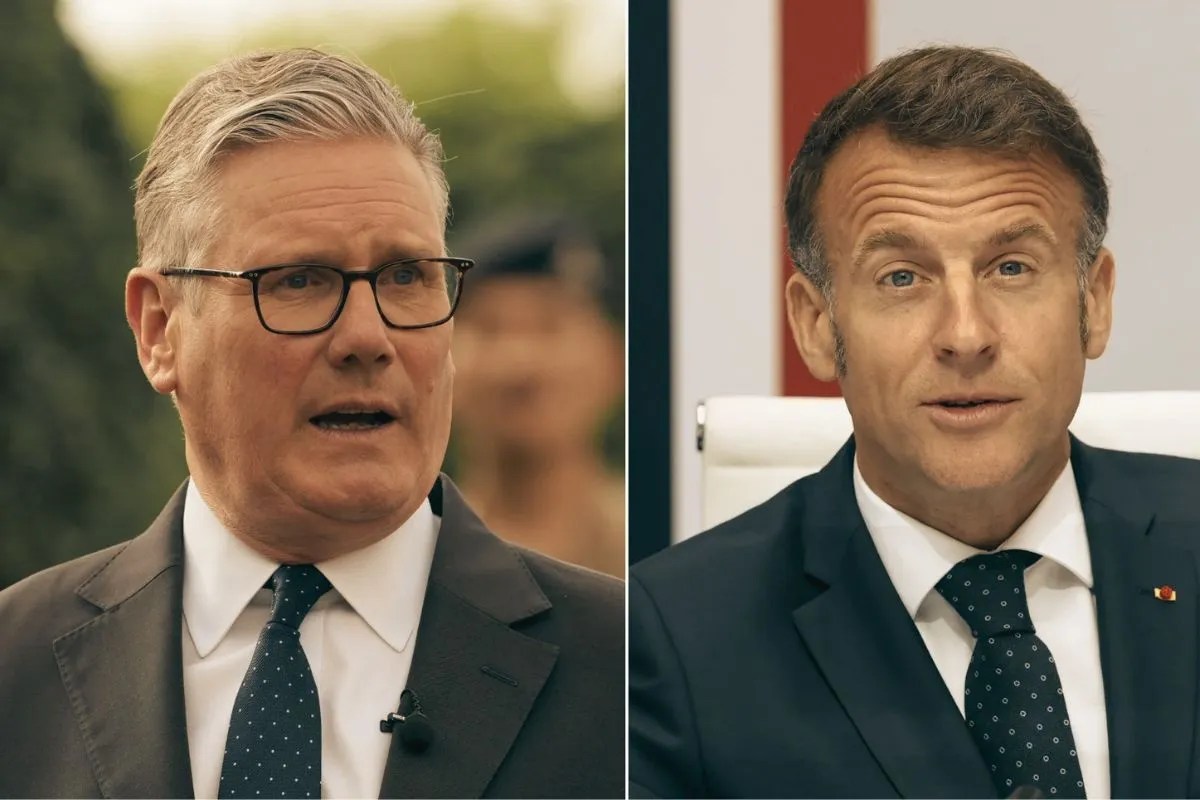
The world’s energy lifeline is choking. It’s no secret that the Strait of Hormuz remains the most volatile chokepoint on the planet. With nearly a fifth of the world's oil passing through this narrow strip of water, any tremor there sends shockwaves through global markets. Now, the UK and France have formally invited India to a critical 40-nation meeting aimed at securing these waters. This isn't just another diplomatic brunch. It’s a massive signal that the West realizes they can't manage Middle Eastern maritime security without New Delhi’s muscle.
The Hormuz Crisis is Everyone's Problem
You might think a tiny stretch of water between Oman and Iran wouldn't dictate your local petrol prices. You’d be wrong. The Strait of Hormuz is barely 21 miles wide at its narrowest. It’s the only way out for oil from Saudi Arabia, the UAE, Kuwait, and Iraq. When Iran threatens to shut it down—which they do whenever tensions with the US spike—the global economy holds its breath.
Currently, a coalition of 40 countries is scrambling to figure out a "freedom of navigation" plan. They aren't just worried about state-level warfare. We’re talking about drone strikes, limpet mines on tankers, and the ever-present threat of piracy. The UK and France are spearheading this specific outreach because they know India has the most to lose and the most to offer.
India imports over 80% of its crude oil. A huge chunk of that comes right through the Persian Gulf. If Hormuz closes, India's economy doesn't just slow down—it stalls. That's why the Indian Navy has already been running 'Operation Sankalp' for years. They've been escorting Indian-flagged vessels through the region since 2019. The West has finally noticed that India isn't just a bystander; it's a proactive security provider.
France and the UK are Playing the Long Game
Why now? Why are London and Paris being so insistent on India’s presence? Honestly, it’s about legitimacy and hardware.
The US-led maritime coalitions often feel too "Western" for some Gulf states to fully embrace without looking like puppets. Bringing India into the fold changes the optics. India has a unique "strategic autonomy" vibe. It talks to Tehran and it talks to Washington. It’s friends with Israel and keeps its ties with the Arab world solid.
France, in particular, has become India’s closest defense partner in Europe. They want a maritime architecture where India takes the lead in the Indian Ocean, freeing up European assets for the Mediterranean and the Atlantic. The UK is also desperate to prove its "Global Britain" post-Brexit stance actually means something in the Indo-Pacific. They need India's massive naval fleet—the destroyers, the frigates, and the surveillance P-8Is—to make any security agreement in Hormuz actually enforceable.
What India Brings to the Table
- Neutrality that works: India is one of the few nations that hasn't burned bridges with Iran. This makes it a perfect mediator if things get heated.
- Naval Reach: The Indian Navy is no longer a "brown water" force. It’s a blue-water navy with the capacity to sustain long-term patrols far from its shores.
- Intelligence: India's Information Fusion Centre for the Indian Ocean Region (IFC-IOR) is already the hub for tracking merchant shipping.
The Iranian Elephant in the Room
Let’s be real. This 40-nation meeting is a direct response to Iranian "malign influence," as the Pentagon likes to call it. Iran views the Strait of Hormuz as its backyard. They see any foreign naval presence—especially a Western one—as a provocation.
For India, this is a tightrope walk. New Delhi has invested heavily in Iran’s Chabahar Port. They want a trade route to Central Asia that bypasses Pakistan. If India joins a coalition that looks too much like an "anti-Iran club," they risk losing that strategic asset. But if they stay out, they leave their energy security in the hands of others.
The UK and France are betting that India's desire for a "rules-based order" will outweigh its hesitation to annoy Tehran. They aren't asking India to join a war. They're asking India to help police the lanes. There’s a big difference.
Why This Matters for Your Wallet
If these 40 countries can’t agree on a unified patrol strategy, insurance premiums for tankers will skyrocket. Those costs get passed directly to you. We saw this during the "Tanker War" of the 1980s and more recently with the Houthi attacks in the Red Sea. Shipping companies are skittish. They don't want to risk a $200 million vessel in a zone where nobody is in charge.
India’s participation adds a layer of stability that wasn't there before. It tells the world that the "Global South" is also invested in keeping the taps open. It moves the conversation away from "the West vs. Iran" and toward "The World vs. Chaos."
Stop Ignoring the Maritime Shift
The center of gravity for global geopolitics has moved from the North Atlantic to the Indo-Pacific. The invitation from the UK and France is an admission of this reality. You can't run the world from London or Paris anymore. You need New Delhi.
India’s next move will likely be cautious. Expect them to send high-level naval attaches and diplomats to the meeting, but they'll probably push for a UN-mandated framework rather than a purely Western-led one. They want to be a leader, but on their own terms.
Keep an eye on the official statements coming out of the Ministry of External Affairs over the next few weeks. If India commits to a joint patrol, it’s a massive shift in their foreign policy. If they don't, the West’s plan for Hormuz might just be a paper tiger.
The smart move for India is to accept the seat at the table but refuse to carry the Western water. They need to define what "security" looks like for an Asian power, not just follow a European script. Watch the naval deployment numbers—that's where the real story is hidden. If you see more Indian destroyers heading toward the Gulf of Oman, you'll know they've decided that being a global player is worth the risk of a diplomatic headache.