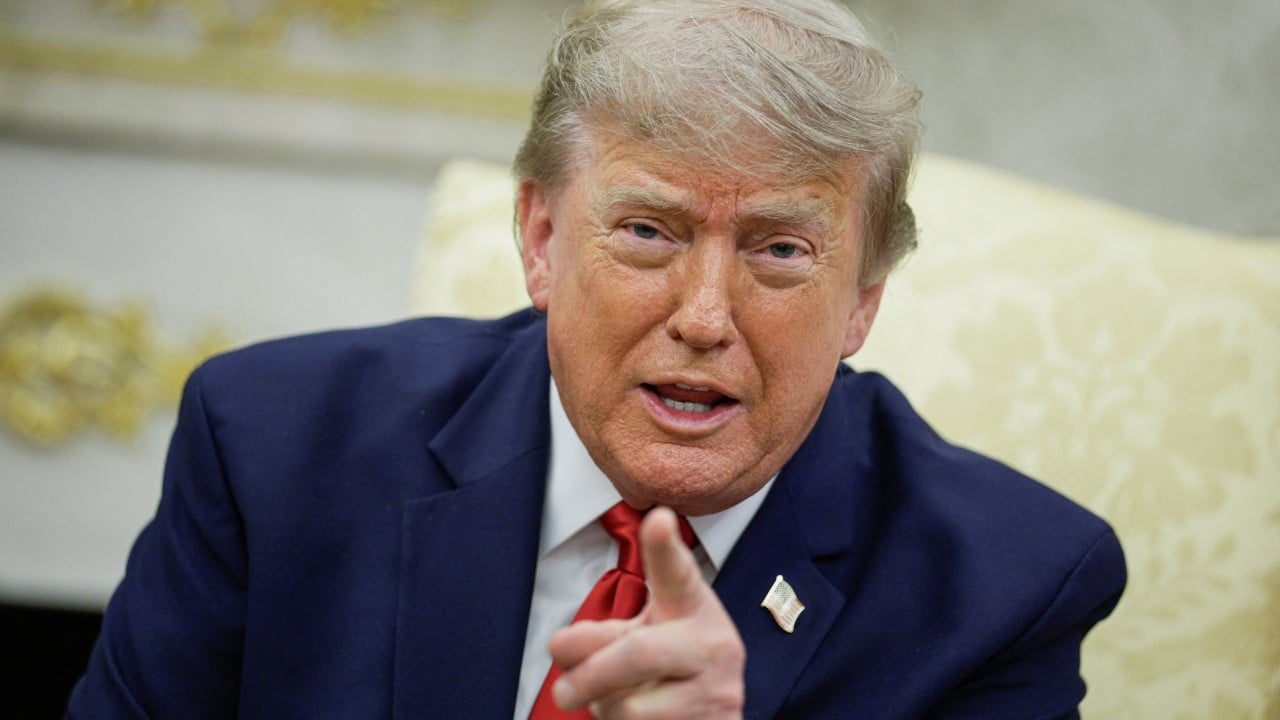
The physical manifestation of a presidential speech exists as text scrolling on a glass screen milliseconds before it is spoken aloud. In those critical moments of latency, a structural vulnerability in prediction markets was exposed.
The suspension of longtime White House teleprompter operator Gabriel Perez highlights a fundamental system design flaw in online prediction platforms. By leveraging advance access to draft remarks to execute trades on "mention markets" (structured contracts wagering on whether specific words or phrases will be spoken during a public address), a technical staffer extracted over $100,000 in risk-free profit on the Kalshi platform. While popular media frames this as a simple political scandal, a rigorous analysis reveals a classic market microstructure failure: the exploitation of temporal information asymmetry in an emerging asset class. Don't miss our earlier article on this related article.
The Mechanics of Mention Market Arbitrage
To understand how this arbitrage functioned, one must map the technical architecture of presidential communications against the structure of prediction market contracts. The process operates through three distinct structural phases.
[Drafting & Loading] ──> [The Latency Window] ──> [Execution & Ad-Libbing]
  (Drafts finalized       (Contracts mispriced;    (Operator monitors delivery;
   and loaded onto         insider places bet       hedges or exits position
    the prompter)           pre-speech)              if speaker veers off-script)
Phase 1: Information Origination and the Latency Window
Before any major address—such as the State of the Union or a policy speech—a text draft is finalized by speechwriters, approved by the Chief of Staff, and converted into a proprietary format compatible with teleprompter software. As the technical assistant responsible for loading, formatting, and scrolling this text, the teleprompter operator holds the definitive script minutes, and sometimes hours, before the public. If you want more about the history of this, The Motley Fool provides an informative breakdown.
This creates a high-conviction "latency window." During this period, prediction platforms like Kalshi or Polymarket list active, open contracts offering odds on whether specific words (e.g., "tariffs," "inflation," or specific country names) will be uttered. To the general public, these probabilities are priced based on historical speech patterns, political rhetoric, and macroeconomic indicators. To the operator, the outcome has already transitioned from a probability to a deterministic certainty.
Phase 2: Structural Market Mispricing
Because prediction markets operate as peer-to-peer order books, contracts are priced dynamically by liquidity providers and retail traders. If a contract for the word "tariffs" is trading at 25 cents (implying a 25% perceived probability of occurrence), an insider possessing the finalized script can purchase the contract. Upon the President speaking the word, the contract matures to a value of $1.00, yielding a 300% return on capital with zero market risk.
Phase 3: The Off-Script Risk Mitigation Loop
The primary variable disrupting a deterministic payout is the speaker's propensity to deviate from the prepared text. President Trump famously abandons teleprompter scripts, ad-libbing a significant percentage of his public remarks. This behavioral variance introduces a distinct risk parameter to the operator’s trading strategy.
Investigation data reveals that Perez did not merely place passive pre-speech bets; he actively managed his open positions in real time. When the President began to veer off-script and skip entire paragraphs, the operator executed real-time hedging maneuvers or liquidated active positions mid-speech to minimize capital loss before the market recognized the omission.
The Surveillance Failure: Why Market Makers Missed the Anomalies
The detection of these trades did not occur through automated government oversight, but rather through the internal risk-monitoring systems of the exchange itself. Prediction market operators rely on automated market makers (AMMs) and institutional liquidity providers to maintain orderly order books.
In a highly liquid market (such as the outcome of a presidential election), large trades are easily absorbed. However, "mention markets" are notoriously illiquid, niche instruments. When an account repeatedly takes highly concentrated, directional positions on low-volume contracts—and consistently resolves those contracts at a 100% win rate—it triggers statistical anomalies in the platform's surveillance algorithms.
Kalshi’s compliance team flagged the trades in March after observing transaction patterns that diverged sharply from standard retail behavior. Typical traders in mention markets scale into positions gradually or trade based on news sentiment. The flagged account consistently executed high-volume buy orders immediately prior to the lock-up periods of specific speeches, displaying an mathematically impossible degree of predictive precision.
Regulatory Grey Zones: The CFTC vs. SEC Jurisdictional Divide
The legal classification of prediction market insider trading remains highly ambiguous under current federal frameworks. While the Securities and Exchange Commission (SEC) has decades of established case law defining insider trading for equities and debt instruments, the Commodity Futures Trading Commission (CFTC)—which regulates event contracts—operates under a different statutory mandate.
The legal challenge in prosecuting "insider trading" in prediction markets hinges on two primary structural bottlenecks:
- The Definition of a Security: Traditional insider trading requires a breach of fiduciary duty owed to the issuer of a security or the source of the material, non-public information (MNPI) regarding a tradable asset. Prediction market contracts are legally classified as "event contracts" or "binary options" regulated under the Commodity Exchange Act (CEA).
- The Misappropriation Theory: To prosecute under CFTC Rule 180.1 (the anti-fraud and anti-manipulation provision), regulators must prove that the trader employed a "manipulative device" or breached a duty of trust and confidence owed to their employer to obtain and trade on the information. While the White House issued an explicit internal directive in March warning staff against using nonpublic information to trade on prediction markets, earlier trades may fall into an enforcement grey area where explicit, documented prohibitions on event trading were absent from standard federal employment contracts.
This regulatory friction is why federal prosecutors in Manhattan ultimately declined to open a criminal insider trading investigation, leaving the matter as an administrative and civil enforcement action led by the CFTC.
Strategic Implications for the Prediction Market Industry
The teleprompter arbitrage incident exposes a systemic vulnerability that threatens the institutional viability of prediction markets. If retail participants believe that market insiders can systematically front-run outcomes with zero downside, liquidity will dry up, and bid-ask spreads will widen to prohibitive levels.
To preserve market integrity, platforms cannot rely solely on retrospective regulatory enforcement. Instead, they must deploy architectural solutions to insulate their order books from information leakage.
Implementation of Hard Lock-Up Windows
Currently, mention markets often remain open for trading up to the moment the speaker takes the podium, or even during the initial minutes of an address. Platforms must implement a mandatory trading freeze at least two hours prior to any scheduled event. This neutralizes the advantage of final draft distribution, as speech text is rarely locked or loaded onto prompting systems that far in advance.
Shift to High-Dimensional Macro Contracts
Platforms should deprecate hyper-specific "mention markets" in favor of broad, aggregate outcomes. While wagering on whether a politician says a single word is highly vulnerable to local insider access, wagering on broader legislative outcomes, economic data releases, or geopolitical events involves too many independent variables for a single technical staffer to control or predict.
Mandatory Identity and Employment Verification
Following this breach, Kalshi instituted policies requiring high-volume traders to disclose their employers. To scale this defense, platforms must integrate automated Know Your Customer (KYC) workflows with government and corporate employment databases to automatically restrict individuals from trading in categories where they hold operational proximity to the source of the event resolution.