The numbers look like a typographical error. With estimated sales surging past $2.3 billion, Grand Theft Auto 6 has shattered every opening entertainment record on the books, outpacing blockbuster film openings, stadium concert tours, and its own historic predecessor in a fraction of the time. For Take-Two Interactive and Rockstar Games, this is an unprecedented financial triumph. For almost everyone else working in interactive entertainment, that staggering figure represents an existential crisis.
A single video game has just vacuumed up a massive percentage of global discretionary gaming spend. When one title commands this level of cultural and financial gravity, it does not lift all boats. It drains the harbor.
For decades, Wall Street analysts and publishing executives treated mega-hits as proof of an expanding pie. The logic was simple. A massive release brings lapsed players back into the ecosystem, drives hardware adoption, and creates a rising tide that benefits mid-tier and independent studios alike. That theory relies on a consumer base with elastic time and elastic wallets. Neither condition exists anymore.
The Gravity Well of Modern Attention
Time is the real currency in modern entertainment, and it is strictly finite. Look at the consumption habits of the average player today. They are not browsing digital storefronts every Friday looking for a new twelve-hour single-player experience. They are entrenched in forever games. Fortnite, Roblox, Counter-Strike, and Grand Theft Auto Online have spent the last decade conditioning players to treat video games less like books you finish and more like digital neighborhoods where you hang out with friends.
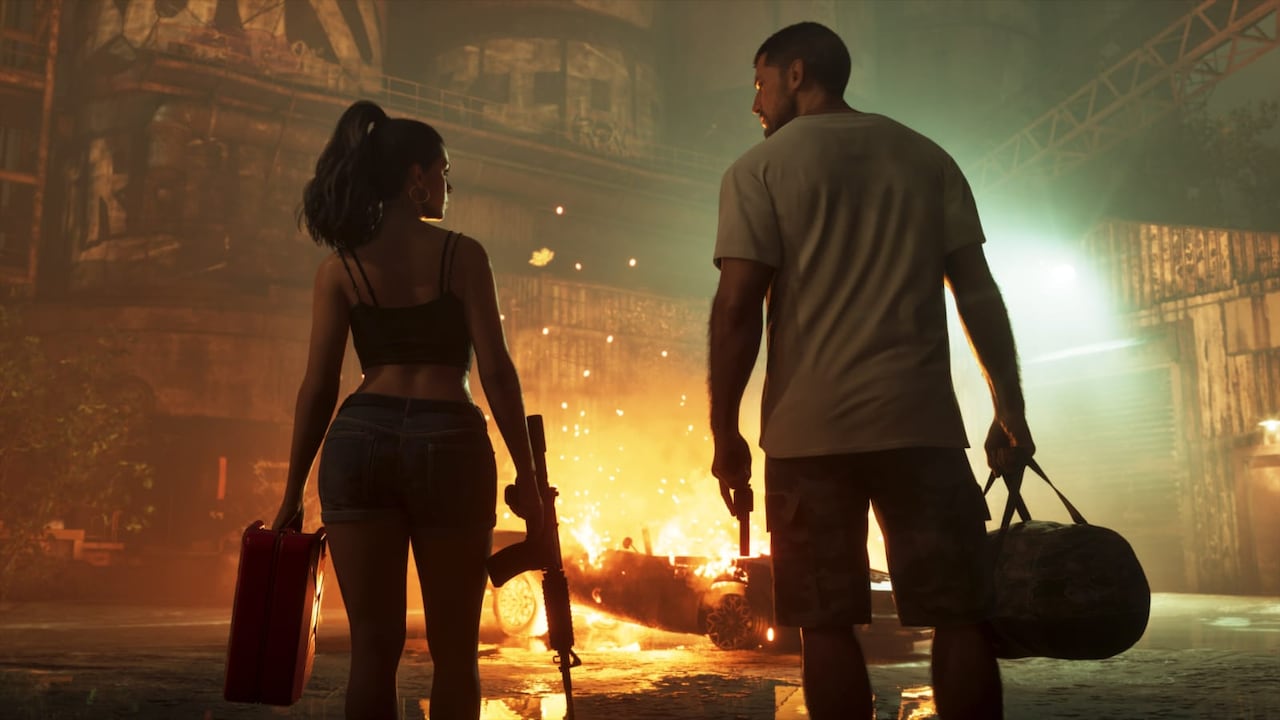
GTA 6 enters this environment not merely as a sequel, but as the ultimate destination. When millions of players dedicate their evenings to exploring Vice City and building lives inside its online ecosystem, every other publisher loses out. You cannot play a new RPG from a mid-sized European studio while you are running heists with your crew in Leonida.
The financial math is equally brutal.
A standard AAA title now retails at $70, with deluxe editions routinely pushing past the $100 mark. In an economy where household budgets remain tight, a consumer dropping triple digits on a single franchise is effectively taking themselves out of the software market for months. Retailers and digital storefronts are already seeing the collateral damage. Pre-order numbers for titles launching within a sixty-day window of Rockstar’s juggernaut have historically cratered, forcing publishers to play a frantic game of calendar Tetris just to survive.
Why Publishing Schedules Are Breaking
Moving a release date sounds easy on paper. In reality, delaying a major video game costs millions of dollars in burned marketing spend, extended payroll, and lost momentum. Yet publishers have been quietly clearing the runway for GTA 6 for over a year.
- Marketing blackouts become unavoidable when one brand dominates every algorithm on YouTube, TikTok, and Twitch. Buying ad space during a Rockstar launch window is like trying to light a match during a solar flare.
- Platform holder dependency shifts overnight. Sony and Microsoft rely heavily on third-party royalties, and a massive spike in console bundles driven by a single game distorts their quarterly projections while masking underlying weaknesses in their own first-party pipelines.
- Retail shelf space and digital storefront placement are finite. Algorithms naturally prioritize what is already selling, creating a feedback loop where the biggest winner takes every ounce of organic visibility.
Mid-tier publishers are trapped in a pincer movement. If they launch too close to GTA 6, they get buried alive. If they delay their games by six months to find breathing room, they blow past their fiscal year targets and face the wrath of institutional investors who care about quarterly earnings, not creative survival.
The Illusion of the $2.3 Billion Blueprint
Whenever a piece of entertainment crosses the two-billion-dollar threshold, corporate boardrooms immediately demand their own version of it. We saw it after World of Warcraft redefined PC gaming. We saw it after Fortnite turned free-to-play battle royales into money-printing machines. Every major executive suddenly wants their own "GTA-sized" bet.
That impulse is poison.
Rockstar Games operates under conditions that cannot be replicated by throwing venture capital or corporate restructuring at a traditional studio. To understand why, you have to look at the sheer timeline and capital expenditure required to build a modern open-world sandbox of this scale. Rockstar spent over a decade iterating on technology, funding thousands of developers across multiple global studios, and absorbing development costs that likely eclipse the GDP of small island nations.
Most publicly traded publishers lack the stomach for that kind of patience.
When an executive tries to force a three-year development cycle to produce the depth, reactivity, and polish of a ten-year Rockstar production, the result is almost always a broken launch. We have watched this exact scenario play out repeatedly over the last five years. High-profile sci-fi shooters and bloated open-world RPGs have stumbled out of the gate with missing features, crashing servers, and furious fanbases, leading to studio closures and massive write-downs.
The Hidden Economics of Mega-Productions
To see why the $2.3 billion headline is misleading as an industry health metric, look at the margin compression happening behind the scenes. Revenue is vanity. Profit is sanity.
Consider a hypothetical example of a traditional AAA publisher attempting to chase this tier of production. If a studio spends $400 million on development and another $200 million on global marketing, they need to sell roughly ten million copies at full price just to break even after platform holders like Sony, Microsoft, and Valve take their standard 30% cut. Ten million units used to be a generational triumph. Today, for an ultra-budget project, it is merely the baseline to avoid layoffs.
Rockstar bypasses much of this risk because Grand Theft Auto operates as a cultural monopoly. Their customer acquisition cost is virtually zero. A single trailer drop generates hundreds of millions of organic views in twenty-four hours without a dime spent on traditional media buys. Furthermore, because the franchise prints billions through recurring digital spending long after the initial box sale, Take-Two can afford to treat the upfront development budget as a long-term infrastructure investment rather than a gamble.
Competitors do not have that safety net. When they swing for the fences and miss, people lose their jobs.
What Happens to the Middle Class of Gaming
Every healthy ecosystem needs a vibrant middle class. In the video game industry, that means AA studios—teams of fifty to two hundred developers creating innovative, tightly focused games with budgets between $15 million and $50 million. These are the studios that take mechanical risks, invent new genres, and train the next generation of creative directors.
Right now, that middle class is being hollowed out.
Venture capital and traditional publishing funds have bifurcated. Money is flowing either into hyper-lean indie teams where five people can build a viral hit in a basement, or into massive, risk-averse franchises designed to generate recurring revenue. The middle ground—games that cost too much to fail quietly, yet lack the brand recognition to survive a marketing war against a $2.3 billion titan—is starving for capital.
Subscription services like Xbox Game Pass and PlayStation Plus were initially pitched as the salvation for these mid-tier titles. The pitch was compelling. Put your game in the catalog, take an upfront check from the platform holder, and let players discover your work without the friction of a $60 purchase decision.
Reality proved far messier.
While upfront licensing fees kept several studios afloat, subscription models have subtly trained millions of consumers to stop buying games altogether. If a title does not launch on a subscription service, players simply wait. And when a cultural juggernaut like GTA 6 arrives—a game that will never launch day-and-date on a subscription tier—players happily open their wallets for the big event while ignoring everything else that requires a direct purchase.
The Labor Paradox Behind the Record Books
There is a grim irony sitting right beneath the celebratory press releases about record-breaking sales. The video game industry has spent the last twenty-four months enduring the worst wave of layoffs in its history. Tens of thousands of engineers, artists, designers, and quality assurance testers have been handed pink slips while corporate earnings reports boast about record consumer engagement.
How can an industry generate more money than ever while simultaneously shrinking its workforce?
Consolidation is the answer. When consumer spending concentrates into fewer, larger buckets, you simply need fewer studios to capture the market. Why fund ten experimental projects that might generate $50 million each when you can funnel all your resources into maintaining one live-service ecosystem that generates $2 billion?
This concentration of capital creates a terrifyingly brittle market.
If a massive live-service bet stumbles—and we have seen several high-profile $200 million projects shut down within weeks of launch—there are no smaller, profitable mid-tier hits left on the balance sheet to cushion the blow. The entire company absorbs a catastrophic shock, triggering another round of studio closures and asset sales.
The Wall Street Distortion
Institutional investors love predictability. A traditional game studio operates like a movie studio; every release is a high-stakes roll of the dice where years of work can vanish over a single weekend of bad reviews. Live-service ecosystems turn gaming into a software-as-a-service business model. Predictable monthly active users. Reliable quarterly microtransaction yields. High barriers to entry.
GTA 6 represents the pinnacle of this financialization. Analysts are not just valuing the initial $2.3 billion surge in upfront unit sales. They are modeling ten years of sustained cash flow from the inevitable online component. That valuation metric forces every rival CEO to answer uncomfortable questions on earnings calls about why their company does not own a comparable digital real estate empire.
The Consumer Blowback Nobody Wants to Admit
For players, the short-term reality is fantastic. They have a massive, intricately detailed world to explore, packed with technical achievements that push current-generation hardware to its absolute limits. The craftsmanship on display is undeniable.
Look five years down the road, however, and the picture darkens.
When a handful of mega-franchises capture the lion's share of industry profits, creative stagnation becomes inevitable. Risk aversion sets in at the highest levels of corporate leadership. Sequels, remakes, and safe licensed properties crowd out original intellectual property. Why greenlight a weird, original narrative game when the data clearly shows players want to spend another thousand hours in the same familiar sandbox?
We have already seen this play out in Hollywood. The rise of the $250 million superhero tentpole effectively killed the mid-budget theatrical drama and comedy. Movie theaters became dependent on four or five massive releases a year to keep the lights on, leaving audiences with fewer choices and forcing independent cinema onto the margins of streaming platforms.
Gaming is walking straight into that exact trap, only faster.
The difference is that a movie only asks for two hours of your Friday night. A modern blockbuster video game demands two hundred hours of your life, plus ongoing financial micro-commitments to keep pace with your social circle.
Breaking the Monopoly on Attention
Surviving in the shadow of a $2.3 billion juggernaut requires publishers and developers to stop playing Rockstar's game. Nobody is going to out-spend Take-Two on world-building. Nobody is going to out-market a franchise that commands mainstream news coverage every time a rumor leaks on a message board.
The studios thriving in this environment are the ones embracing radical asymmetry.
Look at the independent titles that have broken through over the past two years. They did not win by offering bigger maps, higher polygon counts, or hundred-hour campaigns. They won by offering mechanical novelty, tight social hooks, and price points that make impulse buying painless. A $15 or $25 co-op game that respects a player's time can easily coexist alongside a massive AAA open-world title. A $70 clone trying to beat Rockstar at its own game is dead on arrival.
Smart publishers are also rethinking how they scale teams. Instead of bloated, 500-person production pipelines bogged down by middle management and endless focus testing, agile teams are leaning on modern development tools to ship focused, distinct experiences in under three years. When your break-even point is one million units instead of ten million, you do not need to conquer the entire global market to turn a healthy profit. You just need to serve a passionate niche exceptionally well.
The Real Cost of the Crown
Take-Two and Rockstar earned their victory lap. Pulling off a launch of this magnitude requires an almost impossible combination of technical execution, creative vision, and logistical discipline. The $2.3 billion milestone will stand as a benchmark in entertainment history for years to come.
Yet as the champagne corks pop in executive suites, the rest of the business is staring at a stark new reality. The ceiling for what a single video game can earn has never been higher, while the floor beneath everyone else has never felt shakier. In an attention economy governed by winner-take-all physics, Grand Theft Auto 6 didn't just break the industry's sales records—it proved that there is barely any room left at the top for anyone else.