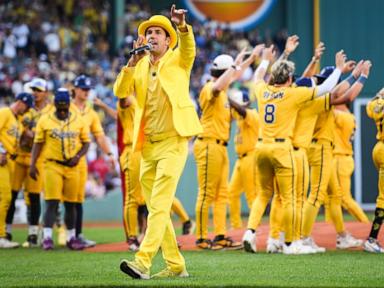
The Savannah Bananas are no longer a minor league novelty act playing for cheap laughs in Georgia. They are an independent, multi-million-dollar sports entertainment empire out-selling, out-packing, and out-maneuvering Major League Baseball at its own game.
In May 2026, more than 102,000 screaming fans packed Kyle Field in College Station, Texas, to watch a game of Banana Ball. To put that in perspective, that single-game crowd dwarfs the weekend attendance of almost every Major League Baseball series played this year. Jesse Cole, the team’s yellow-tuxedo-clad owner, recently confirmed he has walked away from acquisition offers valuing his company at one billion dollars. By eliminating corporate sponsors, banning dynamic ticket pricing, and treating the traditional rulebook like scrap paper, this barnstorming collective has built a sports asset that operates at a higher profit margin than nearly a dozen MLB franchises.
Traditional baseball executives like to dismiss Banana Ball as an exhibition sideshow. They are wrong. It is a calculated, highly efficient liquidation of everything that makes modern sports miserable for consumers.
The Margin Machine Built on No Fees and Cheap Tickets
To understand why traditional baseball is terrified of this model, you have to look at the balance sheet. Major League Baseball relies on a bloated apparatus of regional sports networks, variable ticket algorithms, and heavy corporate underwriting to break even. In 2025, eleven MLB teams lost money.
The Bananas ran a completely inverted play. Tickets are priced at a flat, non-negotiable rate of $35 to $40 depending on the venue size. There are no convenience fees. There is no Ticketmaster integration. The team runs its own ticketing system to bypass the predatory pricing structures that define modern live entertainment.
Because the organization refuses to alienate its fan base with structural upsells, the financial velocity shifts entirely to volume and merchandise.
| Revenue Metric | Major League Baseball Average | Savannah Bananas Model |
|---|---|---|
| Ticket Pricing Strategy | Dynamic algorithm based on demand | Flat $35-$40, zero added platform fees |
| Primary Distribution | Third-party conglomerates (Ticketmaster) | Proprietary, closed-loop system |
| Corporate Sponsorships | Stadium naming rights, jersey patches, ad breaks | Zero stadium ads, select equipment only |
| Broadcast Strategy | Regional cable blackouts, paid streaming apps | Free global YouTube streaming, licensed TV |
| Roster Overhead | Multi-million dollar luxury tax payrolls | Base player salaries averaging $100,000 |
The efficiency lies in the operational costs. While an MLB franchise carries hundreds of millions of dollars in guaranteed contract liabilities, the newly formed Banana Ball Championship League caps player salaries around $100,000. It is a highly competitive living wage for athletes who would otherwise be grinding out $50,000 seasons in standard minor league obscurity, yet it keeps the structural overhead of the league microscopic compared to the majors.
By operating entirely outside the Major League Baseball ecosystem, the Bananas don't share revenue with a centralized league office or bow to the whims of television network programming executives. They produce their own broadcasts, control their own licensing agreements with networks like ESPN and The CW, and stream every single game live on YouTube for free. In 2025 alone, those free streams captured 16 million views. That digital footprint has translated into an aggregate social media following of over 35 million users, an audience metrics pool that beats the digital reach of the New York Yankees and Los Angeles Dodgers combined.
The Structural Elimination of Dead Time
The true disruption of Banana Ball isn't the choreographed dancing or the players performing on stilts. It is the ruthless optimization of time. The average Major League Baseball game still hovers around two hours and forty minutes, even with the structural aid of the 2023 pitch clock implementation.
Banana Ball has a hard two-hour time limit. No new inning can start after 120 minutes have elapsed.
To achieve this frantic pacing, the rules strip away the structural dead zones that purists defend but casual viewers abandon.
- The Ball-Four Sprint: There are no standard walks. When a pitcher throws a fourth ball, the batter doesn't leisurely stroll to first base. They sprint around the diamond. The ball remains live, and the defense must throw the ball sequentially to every single fielder on the grass before an out can be recorded. A simple walk routinely transforms into a chaotic race to second or third base.
- No Mound Visits: Coaches, catchers, and infielders are legally barred from congregating on the mound to talk strategy. The game does not pause for psychological management.
- Stealing First Base: If a pitcher throws a wild pitch or a passed ball at any point during an at-bat, the hitter can drop the bat and sprint to first.
- The Fan Out: If a foul ball flies into the grandstands and a spectator catches it on the fly, the batter is out.
These rules weaponize the crowd, transforming the passive viewer into an active defensive participant. If you sit in the front row, you are in play.
The Illusion of Accessibility vs. The Ticket Lottery Crisis
Despite the populist rhetoric of "Fans First," the meteoric growth of the brand has exposed a significant structural vulnerability: hyper-scarcity. Because the ticket prices are capped far below market value, demand has completely detached from supply.
The Savannah Bananas do not sell tickets on an open market; they operate a lottery system. For the 2026 tour across 75 stadiums, millions of fans entered the drawing for a fraction of available seats. This artificial cap creates a booming, uncontrollable secondary black market. Scalpers routinely pull tickets from the lottery and flip them on unauthorized secondary sites for four to five times the face value.
The organization aggressively cancels accounts caught reselling, but the sheer volume makes total enforcement impossible. It is the ultimate irony of the model. By trying to save fans from the financial extraction of modern sports ticketing, the extreme popularity of the product has created an environment where everyday families still have to rely on luck or back-alley markups just to get through the gate.
Furthermore, critics argue that the competitive integrity of the Banana Ball Championship League is fundamentally compromised by its entertainment mandates. This is not purely meritocratic sport. It is highly structured physical theater designed to fit inside a two-hour window. The introduction of rules like the Golden Batter—allowing a manager to sub in their best hitter at any moment in the game regardless of the lineup order—pushes the product closer to professional wrestling than traditional professional baseball.
Why the Majors Cannot Duplicate the Circus
Major League Baseball has watched the Bananas sell out major league stadiums with intense envy. But the league cannot simply copy the rules of Banana Ball to solve its persistent youth demographic problem.
The entire economic engine of traditional professional sports is built on the monetization of dead time. Television networks pay billions of dollars for commercial space between half-innings, during pitching changes, and throughout individual at-bats. If MLB instituted a hard two-hour clock and eliminated administrative delays, it would wipe out hundreds of millions of dollars in broadcast advertisement inventory. The sport is financially trapped by its own structure.
The Savannah Bananas succeeded because they didn't try to fix baseball. They built a parallel entertainment ecosystem that treats the game merely as a canvas for rapid-fire physical content. They proved that modern audiences don't hate baseball; they hate the corporate friction, the systemic delays, and the financial exploitation that has crawled into modern sports culture. Jesse Cole didn't fix a broken game. He realized that in an attention economy, speed and unadulterated spectacle will always beat a century of tradition.