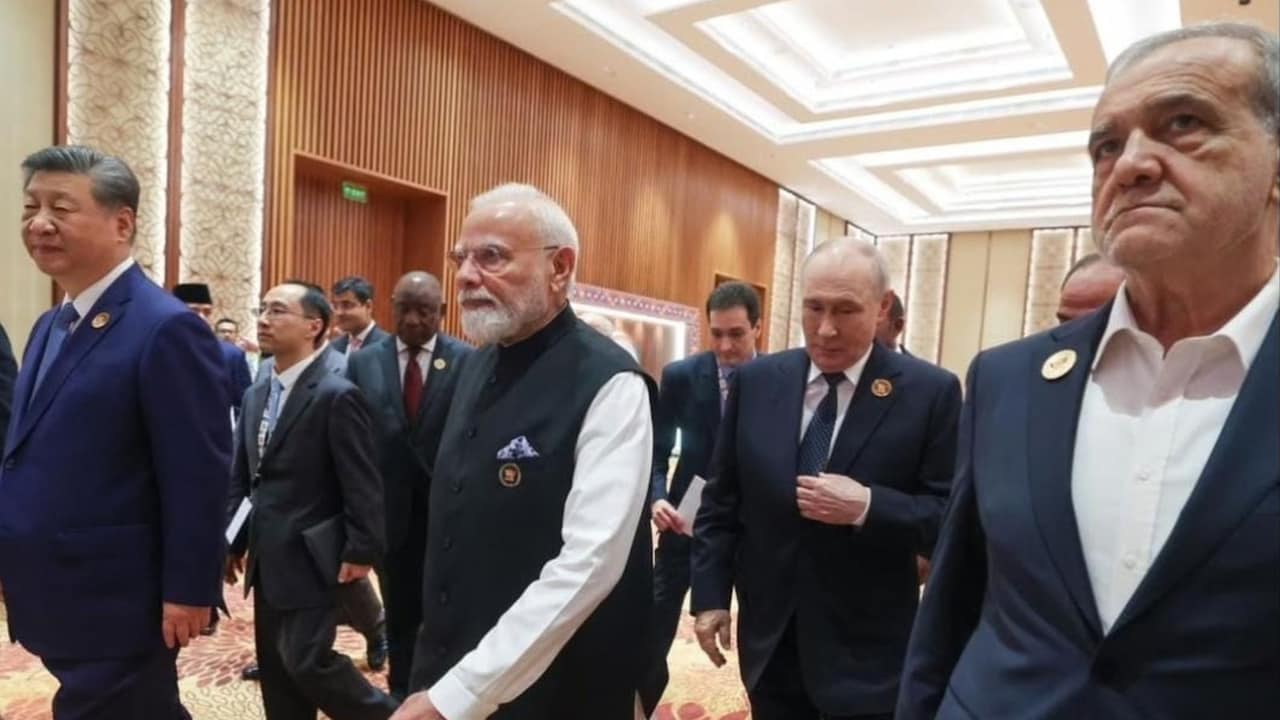
The ink on the BRICS New Delhi Declaration dried only after exhaustive, all-night negotiations that pushed tired delegates to their absolute limits. At the heart of the 18th BRICS Summit lies a direct, unyielding challenge to Western economic dominance, specifically targeting the weaponization of unilateral tariffs and the systematic fracturing of global trade rules. When leaders from emerging economic powerhouses gathered at Bharat Mandapam, they were not simply engaging in diplomatic posturing. They were drawing a hard line against protectionism, secondary sanctions, and the unchecked use of economic coercion as an instrument of foreign policy.
Understanding why this declaration matters requires looking past the polished rhetoric and examining the raw mechanics of modern commerce. Trade policy has transformed from a tool of mutual enrichment into an arena of open economic warfare. Over the past few years, major economies have increasingly relied on custom duties, non-tariff barriers, and sudden regulatory exclusions to punish geopolitical rivals and coerce unaligned states. For the nations constituting the expanded BRICS bloc, these punitive measures are not abstract policy disagreements. They are direct threats to domestic development, food security, and national sovereignty.
The Tariff Trap and the WTO Paralysis
For decades, the World Trade Organization functioned as the supreme arbiter of international commerce. Today, that institution sits in a state of engineered paralysis. By blocking the appointment of new members to the WTO Appellate Body, powerful Western states have effectively neutered the organization's binding dispute-settlement mechanism.
This institutional breakdown leaves developing nations with zero recourse when arbitrary customs duties are slapped on their exports. The New Delhi Declaration explicitly takes aim at this vulnerability. By demanding the immediate restoration of a fully functioning, two-tier dispute resolution system, the bloc is attempting to resuscitate the rule of law in global commerce.
Consider a hypothetical example to understand the mechanism at play. A developing nation builds a thriving export industry in solar technology or agricultural goods, operating entirely within recognized international guidelines. Suddenly, a dominant superpower imposes a fifty percent unilateral tariff under the guise of national security, bypassing multilateral oversight entirely. Without a functioning WTO appellate system, the targeted nation has no legal forum to challenge the protectionist measure. They either absorb the catastrophic economic damage or capitulate to foreign political demands. The BRICS declaration calls this dynamic out for what it is: an assault on predictability and trust in global supply chains.
Bridging Deep Fractures Within the Bloc
Reaching a consensus document was no small diplomatic feat. Diplomatic sources in New Delhi noted that fierce divisions over active conflicts—particularly involving members like Iran and the United Arab Emirates—threatened to derail the summit entirely. That India managed to broker a unified text after negotiations bled into the early morning hours demonstrates the shifting center of gravity in international diplomacy.
The compromise text condemns unilateral actions of war while simultaneously addressing the localized humanitarian crises in West Asia and Ukraine. Yet, the true glue holding the declaration together was not shared sentiment on every regional conflict. It was shared frustration with financial hegemony.
Western financial infrastructure, anchored by the dominant role of the US dollar and swift payment networks, provides governments with the ability to cut entire nations off from the global economy overnight. Secondary sanctions penalize third-party countries simply for trading with blacklisted entities. Within the New Delhi framework, member states renewed their commitment to bypass these vulnerabilities. By expanding local currency settlements and carving out alternative financial messaging channels, the bloc is methodically insulating its members against future coercive shocks.
The Real Intent Behind De-Dollarization
Skeptics in Western capitals frequently dismiss BRICS currency initiatives as empty talk. They point to the structural dominance of greenback-denominated debt and deep capital markets as insurmountable barriers.
That perspective misses the evolutionary nature of monetary shifts. Empires do not lose their reserve currency status overnight. Instead, trade partners slowly bleed away bilateral dependency by settling accounts in local units like the yuan, rupee, or dirham. When China extends zero-tariff treatment to dozens of African partner nations while simultaneously denominating resource extraction deals in non-dollar currencies, the foundation of monetary hegemony erodes quietly.
The New Delhi text signals that this trend is accelerating. Unilateral economic sanctions act as a powerful accelerator for de-dollarization. Every time a government weaponizes its currency or payment network to enforce compliance, it hands its rivals a masterclass in why alternative systems are necessary. The nations gathered in India are building those alternatives not out of ideological zeal, but out of defensive necessity.
Navigating Strategic Ambiguity
Managing internal contradictions remains the primary challenge for the expanded coalition. India maintains deep defense and strategic ties with Western nations through frameworks like the Quad while simultaneously sitting down with Russia and Iran at BRICS tables.
This strategic balancing act allows New Delhi to act as an effective bridge builder, but it also highlights the inherent friction within the group. Not every member shares an identical vision of a post-Western world. Some view BRICS as a revisionist vehicle to overthrow existing institutions, while others see it merely as an insurance policy to extract better terms from traditional Western partners.
Despite these internal divergences, the economic reality of the marketplace binds them together. Protectionist trade policies, punitive tariffs, and weaponized supply chains affect them all equally. The New Delhi Declaration proves that when pushed by external economic coercion, nations with vastly different governance models and regional ambitions can still forge a formidable, unified front against unilateralism.
The architecture of global trade is shifting away from centralized, unipolar control toward fragmented, multipolar realities. How traditional Western powers respond to this realignment will determine whether the coming decades are defined by collaborative adaptation or destructive trade wars