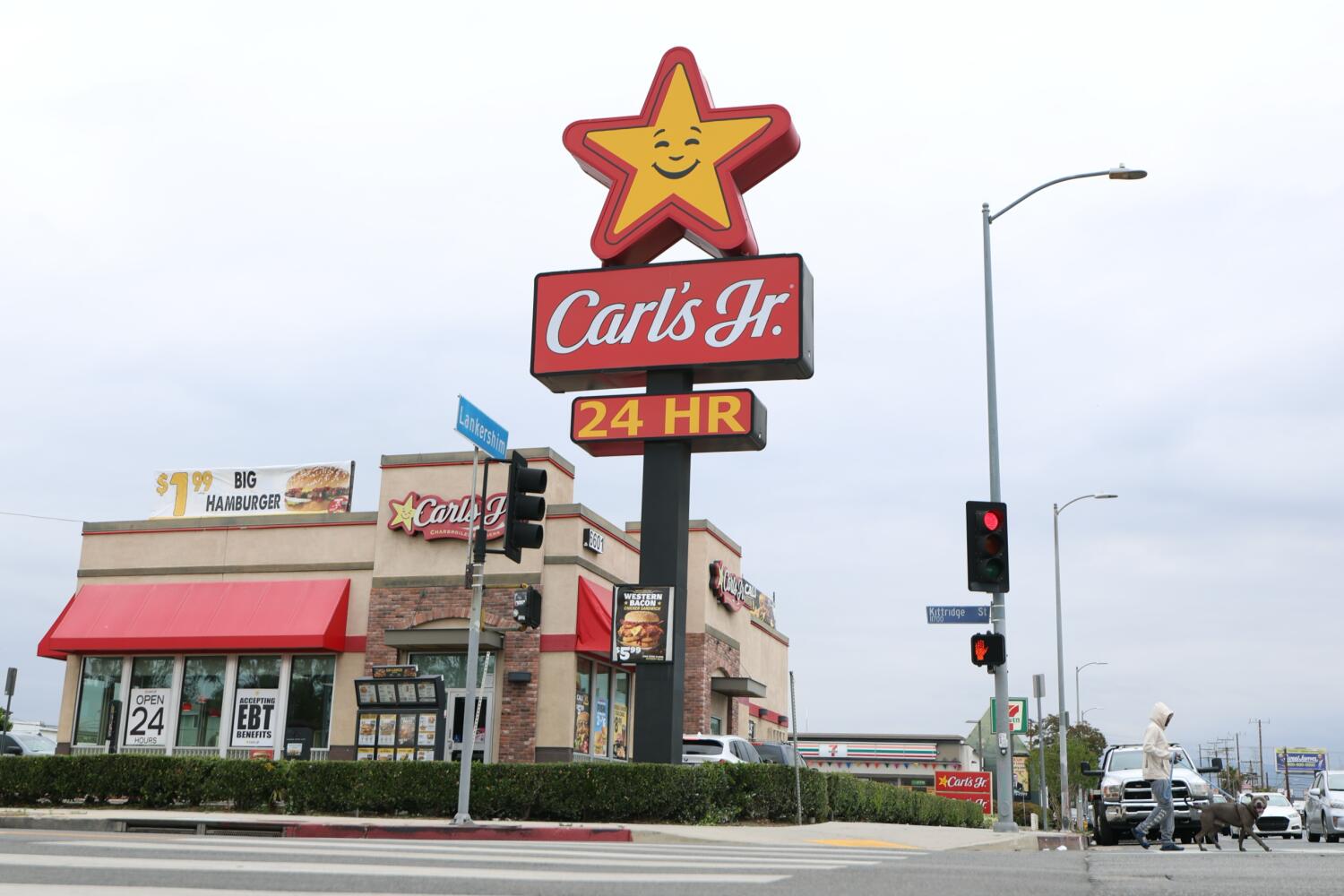
The corporate playbook for handling a franchise meltdown is entirely predictable. When Sun Gir Inc. and its parent organization, Friendly Franchisees Corporation, plunged into Chapter 11 bankruptcy, CKE Restaurants—the corporate owner of Carl's Jr.—issued a swift, sanitized public statement. They asserted that the financial failure of their largest California operator was merely an isolated situation, specific to an individual franchisee's business circumstances, assuring the market that the broader brand remained entirely unblemished.
That narrative is a comforting fiction. The harsh economic reality revealed in federal court documents tells a completely different story. Sun Gir, an operator that controlled dozens of Carl's Jr. locations across the Golden State for more than two decades, is systematically abandoning its footprint. The company has petitioned a bankruptcy judge to reject commercial leases at 10 underperforming properties while simultaneously retaining National Franchise Sales to liquidate 49 remaining locations. For a closer look into similar topics, we recommend: this related article.
This is not a minor operational hiccup. It is a structural warning sign for the entire quick-service restaurant industry. While corporate executives try to frame this as an isolated case of local mismanagement, the cold, hard numbers exposed in the bankruptcy filings demonstrate that the traditional fast-food business model is breaking under the weight of escalating labor expenses, shifting consumer behaviors, and aggressive corporate demands.
The Mathematical Implosion of a Fast Food Empire
To understand how a massive fast-food footprint crumbles, one must look directly at the cash flow statement. Sun Gir's operational portfolio was generating a substantial $6 million in monthly revenue. Under normal economic conditions, that level of top-line performance should guarantee a highly profitable enterprise. For broader details on this issue, extensive analysis is available at Forbes.
Instead, the debtor admitted in court filings that its restaurant operations were bleeding more than $600,000 in net losses every single month.
When a restaurant group loses ten cents on every single dollar it brings in across dozens of units, the collapse is systemic, not situational. The financial damage at specific locations highlights a profound mismatch between local revenue generation and fixed operational expenses.
- An older Carl's Jr. restaurant in Arcadia suffered a net operating loss of $403,003 over a two-year period ending in March.
- A long-standing location in North Hollywood was quietly shut down long before the bankruptcy petition was formalized because it had become an unsustainable cash drain.
- Properties across Southern California, from Tarzana to Pasadena, have been designated by the franchisee as unnecessary financial burdens that yield no viable economic benefit.
The immediate culprit identified by the franchisee's leadership is the recent implementation of California’s sector-specific legislation, which mandated a $20 hourly minimum wage for fast-food workers. For a high-volume restaurant operator employing roughly 1,000 workers across the state, an overnight spike in payroll costs presents an immediate threat to liquidity.
Blaming the wage increase entirely is an oversimplification that ignores the deeper, more structural vulnerabilities within the franchise system. Wage laws apply uniformly to every competitor in the marketplace, yet certain brands weather the storm while others end up in bankruptcy court.
The Vicious Cycle of Price Hikes and Traffic Attrition
When labor costs rise, the standard corporate solution is straightforward: increase menu prices to protect profit margins. However, this strategy assumes that consumer demand is inelastic. In reality, fast-food consumers have a hard breaking point, and the industry has finally crossed it.
Over the past several years, quick-service brands across the United States aggressively raised prices to shield their bottom lines from inflation. Carl's Jr. was no exception. This pricing strategy has triggered a severe consumer backlash. Low- and middle-income diners, who once viewed the drive-thru as an affordable, everyday convenience, are actively pulling back on discretionary spending.
Carl's Jr. National Performance Metric Decline
┌───────────────────────────────┬──────────────┐
│ Metric Area                   │ Drop Rate    │
├───────────────────────────────┼──────────────┤
│ Domestic System Sales         │ Down 6.0%    │
│ Average Unit Volume (AUV)     │ Down 2.7%    │
│ Overall Consumer Spending     │ Down 4.0%    │
│ Total Store Count             │ Down 3.0%    │
└───────────────────────────────┴──────────────┘
The national performance indicators for Carl's Jr. reveal a clear downward trend. According to industry data from Technomic and Circana, domestic system sales dropped by 6%, dragging total brand revenue down to $1.4 billion. The brand's average unit volume slipped to $1.4 million per store. When store-level traffic drops while fixed operating expenses rise, a restaurant's financial viability vanishes.
This creates an incredibly dangerous operational dynamic for a distressed franchisee. To cover the shortfall from declining foot traffic, the operator raises prices again. This further alienates the core customer base, resulting in even fewer transactions.
The financial damage is clearly reflected in the brand's physical footprint. In its home state of California, the total number of operational Carl's Jr. locations fell from 613 units down to 588 units over a brief two-year window. The Sun Gir bankruptcy puts another 11% of the state's remaining store base in immediate jeopardy, proving that this is a broad contraction rather than an isolated incident.
The Friction Between Franchisees and Corporate Brands
The underlying tension in any franchise model stems from a fundamental misalignment of financial incentives. Corporate franchisors, like CKE Restaurants, generate their revenue primarily through top-line royalties—taking a percentage of gross sales regardless of whether the individual store turns a profit. Franchisees, by contrast, operate entirely on the bottom line. They are responsible for paying food costs, labor, rent, utilities, insurance, and local taxes out of whatever money is left over.
This structural divide becomes highly visible during an economic downturn. Court records indicate that Sun Gir fell into default across multiple locations due to a persistent failure to pay rent, royalties, and other required corporate fees. When an operator stops paying royalties, the corporate office frequently threatens to terminate the franchise agreement entirely.
In a standard business environment, a franchisor holds nearly all the leverage. They can pull the brand trademarks, cut off supply chains, and reclaim the real estate. However, the Western legal landscape introduces a unique layer of complexity. Because California sits within the jurisdiction of the Ninth Circuit Court of Appeals, federal bankruptcy laws provide distinct protections for distressed operators. A bankrupt franchisee can use the court system to prevent immediate contract termination, keeping the doors open while looking for a buyer to acquire the assets.
This explains why Sun Gir is moving aggressively to sell 49 of its locations through a structured, court-supervised auction managed by National Franchise Sales. The goal is to package these stores as a clustered, multi-unit portfolio that might appeal to an outside investment firm or a well-capitalized competitor.
Whether an outside buyer will actually step forward to purchase dozens of financially distressed fast-food locations in a high-cost regulatory market remains an open question. A new owner will face the exact same $20 minimum wage laws, the exact same declining customer traffic, and the exact same corporate royalty structures that drove the previous operator to financial ruin.
The Cost Cutting Trap and Declining Restaurant Standards
When a franchise group faces extreme financial pressure, it almost always resorts to aggressive, short-term cost-cutting measures to preserve cash. This strategy frequently triggers an operational downward spiral that degrades the overall customer experience.
To minimize payroll expenses, struggling operators often run shifts with skeleton crews, forcing two or three employees to handle roles that normally require five or six people. This leads to slower drive-thru times, longer lines at the counter, and a noticeable decline in basic restaurant cleanliness.
The consequences of this operational strain go far beyond slow service. In Southern California, employees at several Carl's Jr. locations have publicly raised serious concerns regarding understaffing, minimal operational training, and deteriorating workplace safety.
Without adequate staff or security personnel on-site, workers reported feeling increasingly vulnerable to hostile customer interactions, late-night robberies, and physical confrontations. When cost-cutting measures begin to compromise basic worker safety, employee turnover skyrockets. This forces management to constantly hire and train inexperienced staff, further damaging service quality and driving away the remaining customer base.
A Broken Legacy Business Model
The ongoing collapse of California’s largest Carl's Jr. franchisee is a clear sign that the fast-food industry’s legacy growth model is no longer viable in high-cost environments. For decades, the industry relied on a simple formula: cheap labor, affordable real estate, and low-cost ingredients allowed brands to sell cheap food at high volumes.
That environment no longer exists. Real estate costs remain elevated, commodity supply chains are volatile, and labor is no longer cheap. The fast-food brands that survive this transition will have to abandon the old playbook of chasing raw volume through aggressive price discounting and endless geographic expansion.
Instead, operators must find ways to significantly increase efficiency, redesign kitchen layouts to reduce labor dependencies, and offer a level of food quality that genuinely justifies higher menu prices to the consumer. For legacy brands weighed down by aging infrastructure and declining national traffic, making that shift will be an incredibly difficult challenge. The empty drive-thru lanes and corporate sale listings scattered across California show that time is rapidly running out.