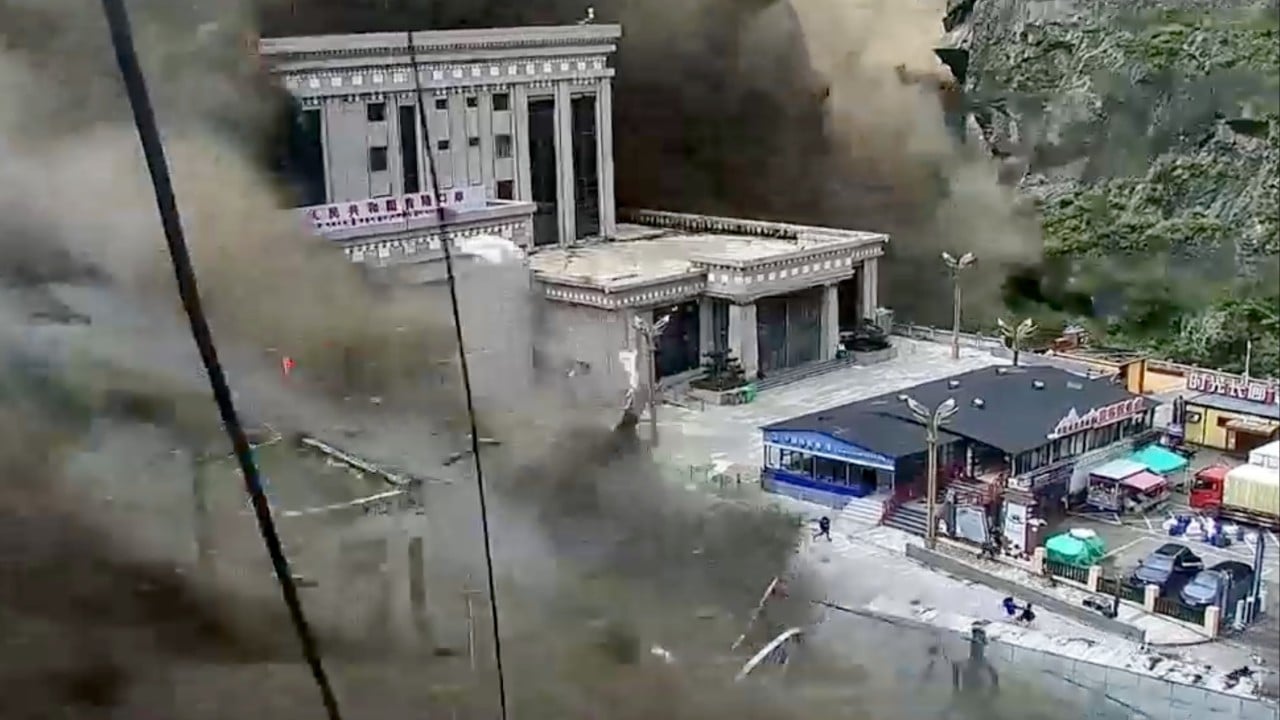
A towering wall of mud, rock, and raging water obliterated the Gyirong Port checkpoint on the China-Nepal border. Witnesses say it looked like a doomsday movie. In a matter of seconds, buildings vanished, vehicles were tossed like toys, and hundreds of travelers went missing.
State media reports confirmed major casualties on both sides of the Himalayan frontier. If you want to understand how fragile modern trade corridors are in the shadow of climate change, look right here.
What Actually Happened at Gyirong Port
The disaster unfolded rapidly. Around mid-morning, a catastrophic rock-ice avalanche triggered massive flash floods along the border river in Nepal. The debris choked the Lhende river, creating a temporary natural dam that eventually burst.
That sudden release sent a destructive wall of slurry downstream into Tibet's Gyirong county. Gyirong Port is not just a random mountain pass. It serves as Tibet's primary foreign trade gateway and handles the bulk of commercial traffic between China and Nepal.
Footage captured on security cameras and cell phones shows people scrambling for higher ground as torrents tore through structures. Power lines snapped. Communications dropped instantly. Roads were reduced to jagged ribbons of mud.
Nepal's Tourism Board reported that hundreds of travelers were initially unaccounted for, including nearly three hundred foreign nationals and over a hundred Indian tourists. Local authorities recovered multiple bodies in the initial hours, but rescue teams warn that the final toll will take days to calculate.
Why This Himalayan Corridor is a Disaster Waiting to Happen
Himalayan border crossings face unique geographical pressures. Monsoon rains lash the region from June through September, destabilizing steep slopes already fractured by seismic activity.
Experts from the Kathmandu-based International Centre for Integrated Mountain Development point out that warming temperatures are accelerating glacial melt. This creates unstable moraine dams and sudden outbursts. When a rock-ice avalanche blocks a narrow gorge, the resulting water accumulation behaves like a ticking time bomb.
Trade between China and Nepal has boomed since COVID-19 restrictions lifted, with electric vehicles and heavy cargo moving through Gyirong daily. This economic integration creates concentrated hubs of people, trucks, and warehouses in narrow river valleys. These valleys offer flat ground for logistics, but they are natural funnels for flash floods.
The Race Against Time for Emergency Responders
Beijing ordered an all-out search and rescue operation, dispatching hundreds of specialists including geologists, engineers, and medical personnel. Teams brought heavy excavation machinery, reconnaissance drones, 3D laser scanners, and life-detection equipment to pierce through deep layers of mud.
Yet the danger hasn't passed. Geologists monitoring the site warn that upstream blockages remain unstable. Another breach could trigger secondary floods down the valley. Authorities closed regional highways for at least a week, isolating mountain communities and stalling cross-border logistics indefinitely.
The disaster exposes the severe limits of infrastructure against extreme geological events. Building resilient trade routes across the roof of the world requires confronting a changing climate that renders historical safety margins obsolete.