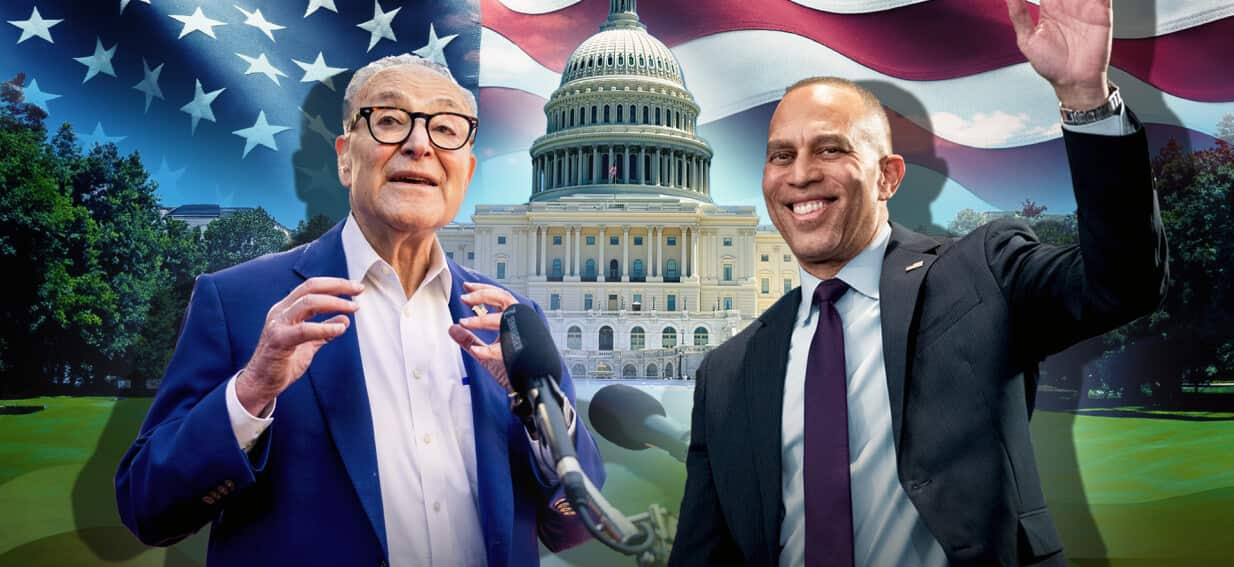
Senate Majority Leader Chuck Schumer has laid down a clear legislative marker following the midterm elections, declaring that Democrats will prioritize lowering the cost of living and winding down military conflict with Iran—with or without the cooperation of President Donald Trump. The strategy relies on constitutional leverage, specifically the congressional power of the purse and war powers oversight, to force policy shifts despite a divided government. While the rhetoric projects unilateral legislative momentum, the practical execution faces steep procedural hurdles, Senate filibuster math, and the reality of presidential veto power.
Politics is the art of the possible. In Washington, however, it is frequently the art of positioning for an inevitable stalemate. When Schumer announced his caucus's twin priorities—tackling household expenses and extricating the United States from military entanglement with Iran—he was speaking to an electorate exhausted by both inflationary pressure at the grocery store and the spiraling costs of Middle Eastern intervention. For a closer look into similar topics, we recommend: this related article.
Yet veteran observers of Capitol Hill recognize the gap between a post-election victory lap and actual statutory change. You cannot simply pass a resolution declaring groceries cheaper, nor can you easily strip a commander-in-chief of tactical authority without a veto-proof supermajority. To understand what Schumer is actually attempting, one must look past the podium soundbites and examine the mechanics of congressional leverage.
The Architecture of Legislative Leverage
The United States Constitution grants Congress two formidable weapons when facing a recalcitrant executive branch. The first is Article I, Section 9, which dictates that no money shall be drawn from the Treasury except through appropriations made by law. The second is the War Powers Resolution of 1973, designed to check the president's ability to commit American forces to armed conflict without legislative consent. For further details on this development, comprehensive coverage can also be found on The New York Times.
Schumer’s "with or without Trump" framing is a direct nod to these institutional tools. If the White House refuses to sign standalone bills aimed at curbing corporate price gouging, expanding housing subsidies, or restricting military deployments in the Persian Gulf, Senate leadership can attach those provisions to must-pass legislation.
Government funding bills and the annual National Defense Authorization Act serve as the primary vehicles for this kind of legislative hardball. By embedding policy riders into essential spending packages, the majority party forces the president into a binary choice. Sign the bill and accept the Democratic policy priorities, or veto the package and trigger a government shutdown or a lapse in military pay.
It is a high-stakes game of chicken. History shows that shutdowns rarely produce clean ideological victories, and presidents routinely use the bully pulpit to blame Congress for legislative gridlock. Furthermore, Senate rules complicate matters before a bill ever reaches the Resolute Desk. Unless Democrats hold sixty seats—a mathematical improbability in modern polarized politics—almost every major piece of legislation remains subject to the legislative filibuster.
The Filibuster Bottleneck
Without sixty votes, Schumer cannot force regular legislation through the upper chamber over unified Republican opposition. This structural reality forces leadership to rely on two alternative pathways, neither of which is a silver bullet.
The first pathway is budget reconciliation, a specialized parliamentary procedure that allows tax, spending, and debt-limit bills to pass with a simple majority of fifty-one votes. Reconciliation is how major domestic packages are typicallymuscled through a divided Senate. However, the Byrd Rule strictly limits what can be included. Provisions must have a direct, non-incidental impact on federal outlays or revenues. You can use reconciliation to alter tax credits or subsidize energy costs, but you cannot use it to rewrite foreign policy or impose regulatory caps on consumer prices.
The second pathway involves privileged resolutions under the War Powers Resolution. Unlike standard bills, resolutions directing the removal of U.S. armed forces from unauthorized hostilities cannot be filibustered. They require only a simple majority to reach the floor and pass.
The Iran Calculus and War Powers Reality
Linking the cost of living to the conflict with Iran is not merely a rhetorical flourish; it is an economic argument. Instability in the Middle East directly impacts global energy markets, particularly shipping lanes through the Strait of Hormuz. When crude oil prices spike due to regional escalation, those costs cascade through the American economy, raising the price of diesel, freight shipping, manufacturing, and ultimately consumer goods.
By framing an end to the Iran conflict as an anti-inflation measure, Democrats are attempting to bridge the divide between domestic pocketbook issues and foreign policy. Voters rarely cast ballots based on abstract diplomatic doctrine, but they react viscerally to the price of gasoline.
The Veto Wall
Even if Schumer secures a simple majority in the Senate and aligns with the House of Representatives to pass a War Powers resolution halting operations against Iran, the measure still requires presidential signature to become law. A president is virtually guaranteed to veto any legislation that curtails executive war-making authority.
Overriding a presidential veto requires a two-thirds majority in both the House and the Senate. In an era of rigid party discipline, assembling sixty-seven Senate votes against a sitting president of the opposing party is a monumental task. It requires peeling away a significant bloc of the president's own party—a scenario that only occurs when a military conflict has become catastrophically unpopular or when fiscal conservatives revolt over deficit spending.
| Legislative Mechanism | Vote Threshold | Subject to Filibuster | Vulnerable to Presidential Veto |
|---|---|---|---|
| Standard Legislation | 60 Votes (Cloture) | Yes | Yes |
| Budget Reconciliation | 51 Votes | No | Yes |
| War Powers Resolution | 51 Votes | No | Yes |
| Appropriations Riders | 60 Votes (Cloture) | Yes | Yes |
| Veto Override | 67 Votes | No | No |
Consequently, congressional efforts to end foreign interventions usually succeed not through a single dramatic vote, but through attrition. Congress uses public hearings, subpoena power, and incremental funding restrictions to raise the political cost of war until the executive branch chooses to de-escalate on its own terms.
The Cost of Living Dilemma
While foreign policy offers clear constitutional levers, addressing the cost of living through federal legislation is far messier. Inflation and high consumer prices are driven by a complex web of global supply chains, monetary policy set by the independent Federal Reserve, labor market dynamics, and corporate pricing strategies.
Congress cannot wave a legislative wand to lower interest rates or force supermarkets to roll back prices to pre-pandemic levels. When lawmakers talk about tackling the cost of living, they generally mean deploying targeted subsidies or tax relief to offset expenses in specific sectors.
- Healthcare and Prescription Drugs: Expanding caps on out-of-pocket costs for medications and extending subsidies for health insurance exchanges.
- Housing Affordability: Increasing funding for low-income housing tax credits or offering down-payment assistance to first-time homebuyers.
- Childcare and Family Expenses: Restoring expanded child tax credits or subsidizing care facilities to reduce monthly household overhead.
- Energy Costs: Offering tax incentives for domestic energy production, grid modernization, or consumer rebates for home efficiency upgrades.
Each of these measures requires substantial federal spending or tax revenue reductions. In an environment characterized by high national debt and elevated borrowing costs, injecting hundreds of billions of dollars in new subsidies into the economy carries a distinct risk. Economists routinely warn that fiscal stimulus during periods of tight supply can inadvertently fuel the very inflation lawmakers are trying to cure.
The Corporate Pricing Debate
A central pillar of the Democratic economic message involves targeting what the party terms corporate price gouging. Proponents argue that conglomerates have used global disruptions as cover to pad profit margins, keeping prices artificially elevated even after supply chain bottlenecks eased.
Critics, including mainstream market economists and business coalitions, counter that federal price controls or windfall profit taxes distort market signals, discourage investment, and lead to supply shortages. Furthermore, proving illegal price gouging in court—as opposed to standard profit maximization in a tight market—is notoriously difficult under existing antitrust statutes.
Without bipartisan consensus, standalone bills creating new federal price-gouging authorities will stall in the Senate. Schumer knows this. The legislative push serves a dual purpose: pass what can be squeezed through reconciliation or bipartisan compromises, and force Republicans to cast difficult votes against popular consumer relief measures ahead of the next presidential cycle.
Oversight as a Governing Tool
When the path to passing new laws is blocked by a presidential veto, the majority party in the Senate turns to its investigative apparatus. Committee chairs wield the power to issue subpoenas, compel testimony from administration officials and corporate executives, and declassify internal government assessments.
In the context of the Iran conflict, Senate Foreign Relations and Armed Services committees can demand a full accounting of military expenditures, rules of engagement, and long-term strategic objectives. Exposing the financial and human toll of an open-ended conflict through televised hearings shifts public opinion far more effectively than floor speeches.
Similarly, on the economic front, Senate panels can haul executives from major food producers, pharmaceutical companies, and energy firms before cameras to justify their pricing models and stock buybacks. Even if no bill reaches the president's desk, public scrutiny often prompts corporate boards to moderate price hikes to avoid regulatory backlash.
The Trap of Overpromising
The greatest danger in Schumer’s post-midterm declaration lies in managing voter expectations. Midterm elections are frequently won by the opposition party capitalizing on frustration with the status quo. Once the celebration ends, however, voters expect tangible results.
If Democrats promise to lower the cost of living and end an unpopular foreign conflict "with or without" the president, they assume partial ownership of outcomes they do not fully control. If gas prices remain volatile, housing stays unaffordable, and American troops remain deployed in the Middle East two years later, the electorate rarely rewards lawmakers for valiant procedural efforts that died on the Senate floor.
Governance in a divided Washington requires separating campaign slogans from legislative reality. Schumer holds the gavel, the floor schedule, and the subpoena pen, giving him immense power to dictate what the country debates and where federal dollars flow—yet the signature required to turn those ambitions into the law of the land still sits at the other end of Pennsylvania Avenue.