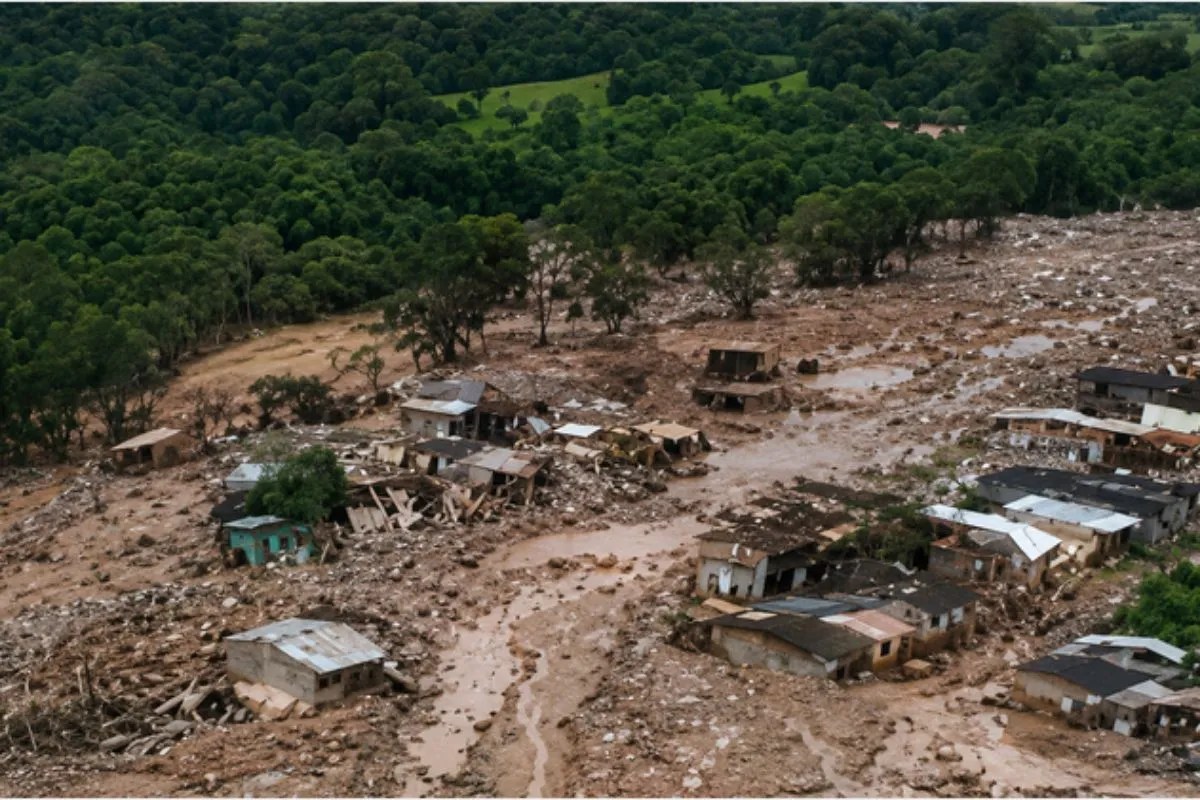
Thirteen workers died beneath tons of mud and fractured rock when a gold mine collapsed in western Colombia, turning a routine extraction site into a mass grave. The disaster struck a rural municipality in the department of Caldas, catching miners underground without an escape route as heavy seasonal rains triggered a catastrophic slope failure. Rescue teams worked for days through unstable terrain and persistent downpours, pulling bodies from the saturated debris while grieving families kept vigil at the perimeter. This tragedy is not an isolated weather anomaly. It is the predictable outcome of an unregulated extraction economy that treats human lives as cheap overhead.
When global markets demand precious metals, remote Andean communities bear the immediate brunt of the extraction cycle. Colombia stands as one of South America's primary mineral producers, yet its mining corridors operate under a fractured framework of legal concessions, illegal wildcat operations, and chronic state neglect. The site in Caldas highlights a systemic failure where informal mining persists out of sheer economic desperation, operating completely outside safety compliance parameters. Without basic geotechnical surveys, reinforced tunnels, or emergency ventilation, these underground networks function as vertical lottery systems where miners trade their safety for daily wages.
The Economics of Informal Extraction
Poverty drives the shovel. In regions historically dependent on agriculture, the collapse of traditional crop prices leaves rural populations with few viable income streams. Underground mineral deposits offer immediate cash returns, attracting thousands of informal workers who lack training, capital, and institutional protection. These operations rarely resemble the massive, mechanized open-pit complexes owned by multinational corporations. Instead, they rely on hand tools, makeshift timber supports, and high-pressure water hoses that destabilize entire hillsides long before a formal landslide occurs.
Local authorities face a difficult enforcement dilemma. Shutting down illegal tunnels deprives entire municipalities of their sole economic engine, sparking civil unrest and pushing desperate workers into even deeper, more clandestine operations. Meanwhile, formalizing these small-scale operations requires bureaucratic hurdles and capital investments that ordinary miners cannot afford. This regulatory gap creates a permanent underworld of extraction where safety equipment is viewed as an unnecessary luxury and structural integrity is ignored until disaster strikes.
Environmental Degradation and Climate Pressures
Rainfall patterns in the Andean cordillera have grown increasingly erratic, compounding the physical risks of sub-surface mining. Deforestation caused by wildcat digging strips hillsides of root systems that otherwise anchor loose topsoil during heavy precipitation. When torrential storms hit saturated ground, entire slopes shear away with terrifying speed.
The environmental toll extends far beyond sudden landslides. Mining operations frequently discharge untreated mercury and sediment into local river basins, poisoning aquatic ecosystems and contaminating the agricultural water supplies used by neighboring villages. The interaction between aggressive extraction techniques and vulnerable mountain topographies creates an ongoing environmental crisis that local governments lack the resources to monitor or mitigate.
Structural Reforms and the Path Ahead
Preventing future fatalities requires more than sending rescue brigades after a collapse occurs. Real change demands comprehensive land-use planning, targeted economic diversification for mining-dependent towns, and accessible pathways for informal operators to achieve legal status and safety compliance. State agencies must provide technical assistance and micro-loans for basic structural reinforcement, replacing punitive crackdowns with functional safety infrastructure. Until the structural drivers of poverty and lax enforcement are addressed, the hills of Caldas and surrounding regions will remain burial grounds for the workers who feed the global appetite for gold.