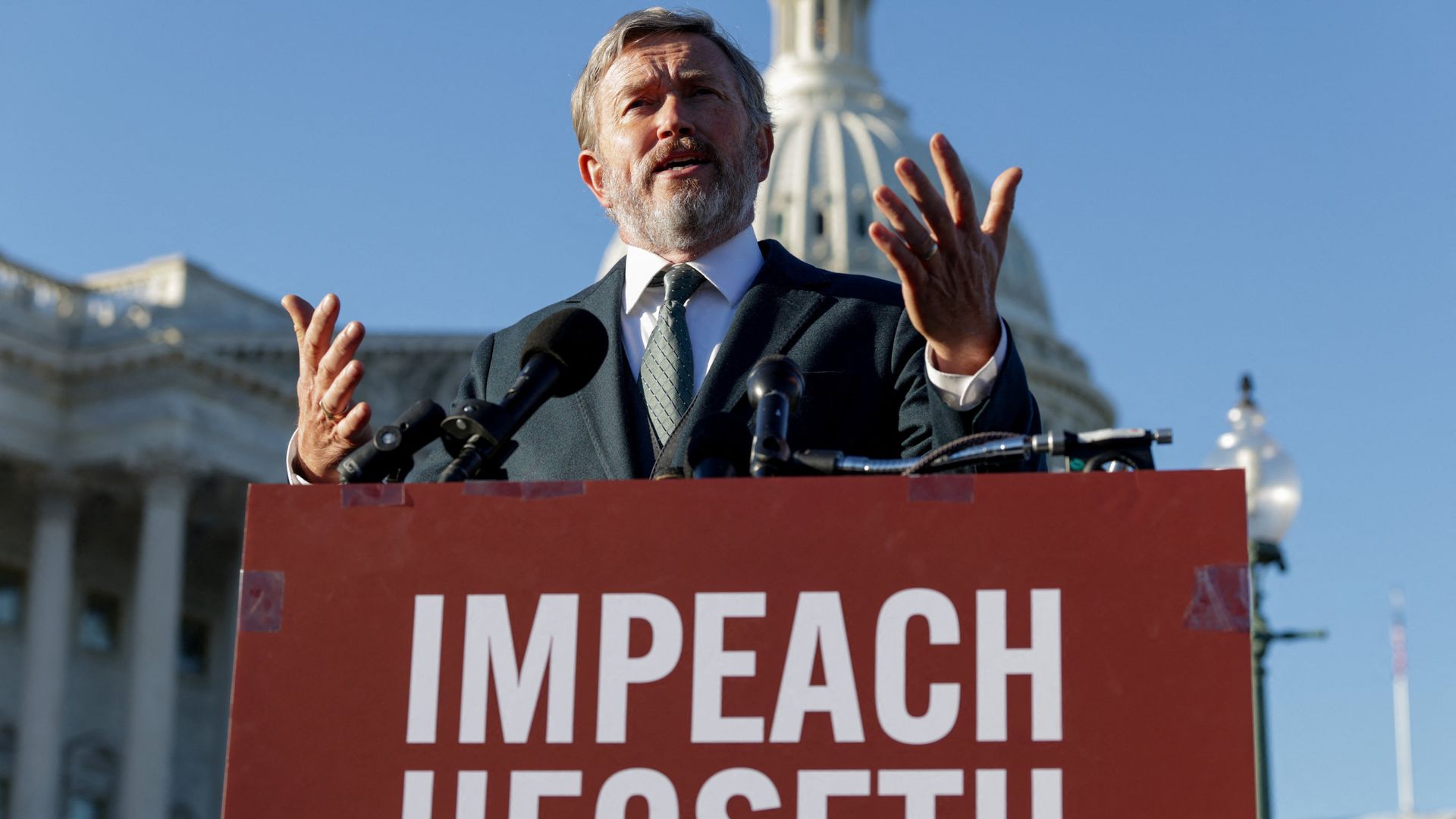
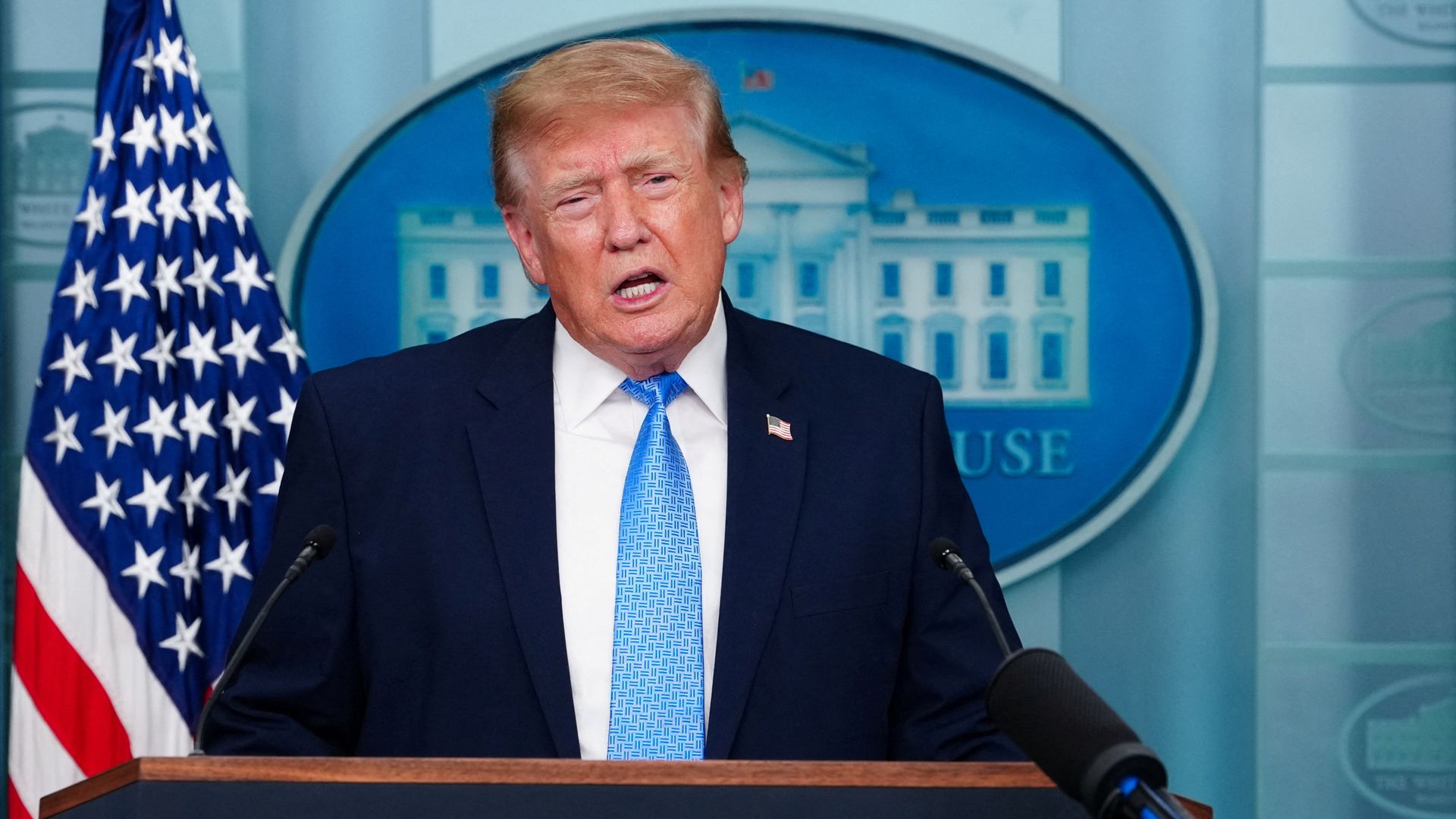
Washington is running a familiar playbook. As articles of impeachment against Defense Secretary Pete Hegseth edge closer to a formal floor vote, President Donald Trump and Secretary of State Marco Rubio have stepped forward to form a public firewall around the Pentagon chief. The core reality behind their defense is straightforward. Neither Trump nor Rubio is merely protecting an individual cabinet member; they are defending the executive branch's authority to install ideological outsiders without bowing to legislative pressure or institutional pushback from inside the defense establishment.
To understand why this confrontation matters, you have to look past the daily cable news cycle and examine the mechanics of modern executive power. Impeachment of a cabinet official is extraordinarily rare in American history. In fact, it has only happened twice—Secretary of War William Belknap in 1876 and Homeland Security Secretary Alejandro Mayorkas in 2024. Neither resulted in a Senate conviction. Yet the threat alone acts as a political battering ram, designed to paralyze an agency's leadership and force a resignation before a trial ever begins. If you enjoyed this piece, you should read: this related article.
Trump knows this script intimately. Having survived two impeachment trials of his own, the president views any legislative move to oust a top lieutenant as an extension of partisan warfare rather than a legitimate constitutional check. By throwing his full political weight behind Hegseth early, Trump is signaling to wavering lawmakers in his own party that breaking ranks carries a steep electoral price.
The Anatomy of a Coordinated Firewall
When a cabinet secretary faces removal, the White House usually goes quiet first. Press secretaries offer tepid statements about "ongoing reviews" while behind-the-scenes operatives gauge whether the nominee has become a terminal liability. That is not happening here. For another look on this event, check out the recent update from Associated Press.
Instead, the administration has deployed two distinct voices to frame the narrative. Trump provides the blunt force, dismissing the impeachment push as a politically motivated witch hunt orchestrated by entrenched bureaucrats and partisan opponents. Rubio provides the institutional polish. As the nation's top diplomat, Rubio carries credibility with traditional foreign policy hawks on Capitol Hill—the exact bloc of legislators whose votes could decide whether an impeachment inquiry gains bipartisan traction or dies in committee.
Rubio’s involvement is calculated. Foreign policy and defense strategy do not operate in vacuums, and a crippled Defense Secretary complicates negotiations from Eastern Europe to the Indo-Pacific. By aligning the State Department publicly with the Pentagon, Rubio is sending a message to both domestic critics and foreign adversaries that the national security apparatus remains unified. If lawmakers want to take down Hegseth, they will have to argue against the sitting Secretary of State who claims the Pentagon is functioning effectively under current leadership.
This two-pronged defense exposes a sharp divide in how Washington views the role of the Secretary of Defense. Traditionalists argue the job requires decades of experience managing massive defense contractors, navigating complex procurement budgets, and maintaining smooth relations with the Joint Chiefs of Staff. Populists argue those exact qualifications are the problem, contending that an insider will inevitably protect the status quo rather than reform a sprawling bureaucracy that repeatedly fails financial audits.
Why Cabinet Impeachment Rarely Succeeds
Strip away the heated rhetoric on Capitol Hill, and the constitutional math becomes clear. The House of Representatives holds the sole power of impeachment, requiring only a simple majority to pass articles against a civil officer. The Senate holds the sole power to try all impeachments, requiring a two-thirds supermajority to convict and remove.
That two-thirds threshold is virtually insurmountable in a polarized legislature. Even when one party controls both chambers, securing sixty-seven votes in the Senate demands significant defections from the president's own party. History proves how difficult that bar is to clear.
Consider the two historical precedents. In 1876, William Belknap resigned hours before the House voted to impeach him over a kickback scheme involving trading posts in Indian Territory. The Senate held a trial anyway, and while a majority voted to convict, the tally fell short of the required two-thirds because several senators believed they lacked jurisdiction over a private citizen. Nearly a century and a half later, in February 2024, the House impeached Alejandro Mayorkas by a razor-thin margin over border enforcement policies. Two months later, the Senate dismissed both articles without holding a full trial, ruling they failed to meet the constitutional standard of high crimes and misdemeanors.
Lawmakers pushing the current effort against Hegseth know the Senate math does not favor removal. The objective is rarely conviction. Instead, the process serves three practical political functions:
- Discovery and Subpoena Power: An active impeachment inquiry grants congressional committees broader legal standing to demand internal Pentagon communications, travel logs, and personnel records that might otherwise be shielded by executive privilege.
- Administrative Paralysis: Senior defense officials spend hundreds of hours preparing legal defenses, sitting for depositions, and managing crisis communications instead of focusing on force readiness or budget execution.
- Campaign Framing: Putting vulnerable members of Congress on the record forces them to take a binary vote that can be weaponized in primary or general election advertisements.
The Friction Inside the E-Ring
While Trump and Rubio present a united front externally, the real pressure on any embattled Defense Secretary comes from inside the Pentagon's E-Ring—the outermost corridor housing the department's top brass. The Department of Defense is the largest employer in the world, managing a budget approaching a trillion dollars and overseeing millions of active-duty troops, reservists, and civilian employees.
Running that machine requires trust between civilian leadership and uniformed officers. When a secretary is fighting for political survival, that trust frays. Career officials become hesitant to execute controversial policy directives if they suspect the person issuing the orders might be gone within six months. They slow-walk implementation, bury initiatives in procedural reviews, and leak internal disagreements to friendly reporters on the Pentagon beat.
Hegseth entered the building with an explicit mandate to shake up personnel policies, rethink military recruitment strategies, and challenge entrenched defense contracting norms. Those priorities naturally generate friction with career civil servants and retired flag officers who built their careers within the existing system. An impeachment drive amplifies every internal grievance, turning routine policy disputes into potential exhibits for congressional investigators.
To counter this internal drag, the White House has leaned heavily on political appointees across the defense agencies to enforce discipline. Yet loyalty alone cannot sign off on weapons procurement contracts or coordinate joint military exercises with treaty allies. The longer the impeachment cloud lingers, the harder it becomes for the Pentagon's top floor to maintain momentum on long-term strategic shifts.
The Constitutional Gray Area of High Crimes
At the center of every impeachment battle lies a foundational ambiguity left behind by the framers of the Constitution. Article II, Section 4 states that the president, vice president, and all civil officers shall be removed from office on impeachment for, and conviction of, treason, bribery, or other high crimes and misdemeanors.
Constitutional scholars have debated the exact boundaries of "high crimes and misdemeanors" for more than two centuries. Does the phrase require an actual violation of the criminal code, or does it encompass severe maladministration, abuse of power, and gross negligence in office?
Gerald Ford, then House Minority Leader, famously offered a blunt assessment in 1970 while attempting to impeach Supreme Court Justice William O. Douglas. An impeachable offense, Ford said, is whatever a majority of the House of Representatives considers it to be at a given moment in history. While politically accurate, that definition terrifies institutionalists who warn that lowering the bar turns impeachment into a routine vote of no confidence, effectively transforming the American presidential system into a parliamentary one.
Critics of the push against Hegseth argue that policy disagreements, management controversies, or contentious rhetoric do not rise to the level of constitutional offenses. They contend that the remedy for a cabinet secretary whose policies are unpopular is the ballot box every four years, not a legislative trial. Conversely, proponents of the inquiry maintain that when a cabinet official's conduct undermines military readiness or violates statutory reporting requirements to Congress, lawmakers have an affirmative duty to intervene before irreversible damage occurs.
How Foreign Capitals Read Washington's Dysfunction
Domestic political battles rarely stay contained within the Beltway. Allies and adversaries alike watch congressional oversight hearings closely, looking for signs of American distraction or internal division.
When Marco Rubio steps in to defend Hegseth, he is performing damage control for an international audience. Foreign ministries in Europe and Asia monitor whether the Secretary of Defense speaks with the full backing of the Oval Office. If foreign leaders believe a Pentagon chief is a lame duck facing imminent ouster, they delay major security agreements, hedge their diplomatic bets, and wait to see who takes the chair next.
Adversaries exploit the same dynamic. State-controlled media in Beijing, Moscow, and Tehran routinely amplify congressional dysfunction as proof that American governance is unstable and unreliable. A protracted impeachment fight consumes the bandwidth of the national security team at precisely the moment global flashpoints demand uninterrupted focus.
Yet there is a counter-argument that defenders of aggressive oversight often make. Transparent accountability, even when messy and publicly divisive, demonstrates that no official in the American system sits above legislative scrutiny. Authoritarian regimes hide their internal purges behind closed doors; democracies argue them out on live television. Whether that transparency projects strength or weakness depends entirely on how quickly the legislature resolves the dispute.
The Stakes for the Rest of the Term
The immediate battle over articles of impeachment will test the discipline of the congressional majority and the durability of Trump's grip on his party. If the House leadership brings the measure to the floor and it fails, the White House will claim total vindication, effectively neutralizing congressional oversight of the Pentagon for the remainder of the term. Lawmakers who backed the failed effort will look weak, having expended massive political capital with nothing to show for it.
If the articles pass the House, the fight shifts to the Senate, where the political calculus changes entirely. Senators serve six-year terms and answer to entire states rather than gerrymandered districts. They are historically far less eager to entertain cabinet impeachments that lack clear evidence of statutory crimes. A swift dismissal in the upper chamber would mirror the Mayorkas outcome, reducing a historic constitutional weapon to a symbolic protest vote.
Either way, the precedent is being cemented. Impeachment is no longer an extraordinary measure reserved for once-in-a-century crises. It has become a standard instrument of modern political combat, deployed whenever legislative frustration collides with executive defiance. For Donald Trump and Marco Rubio, defending Pete Hegseth is about holding the line against that new reality—and ensuring that the president, not Congress, decides who runs the United States military.