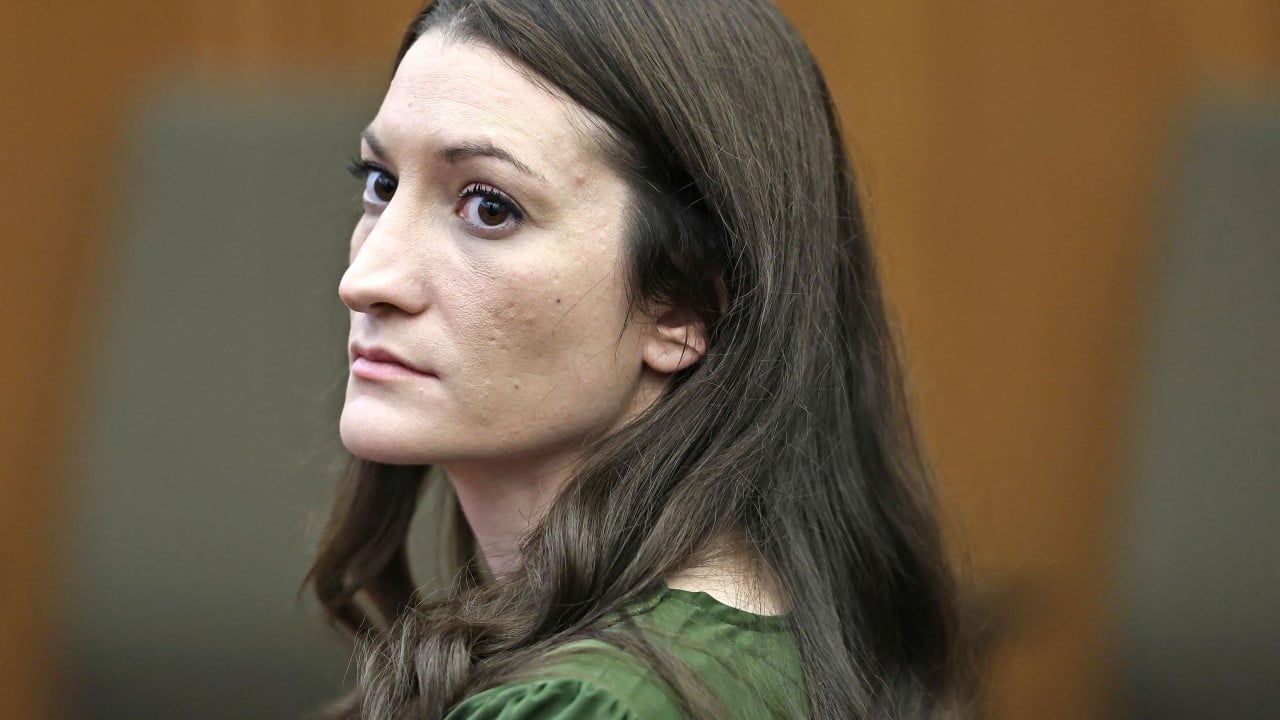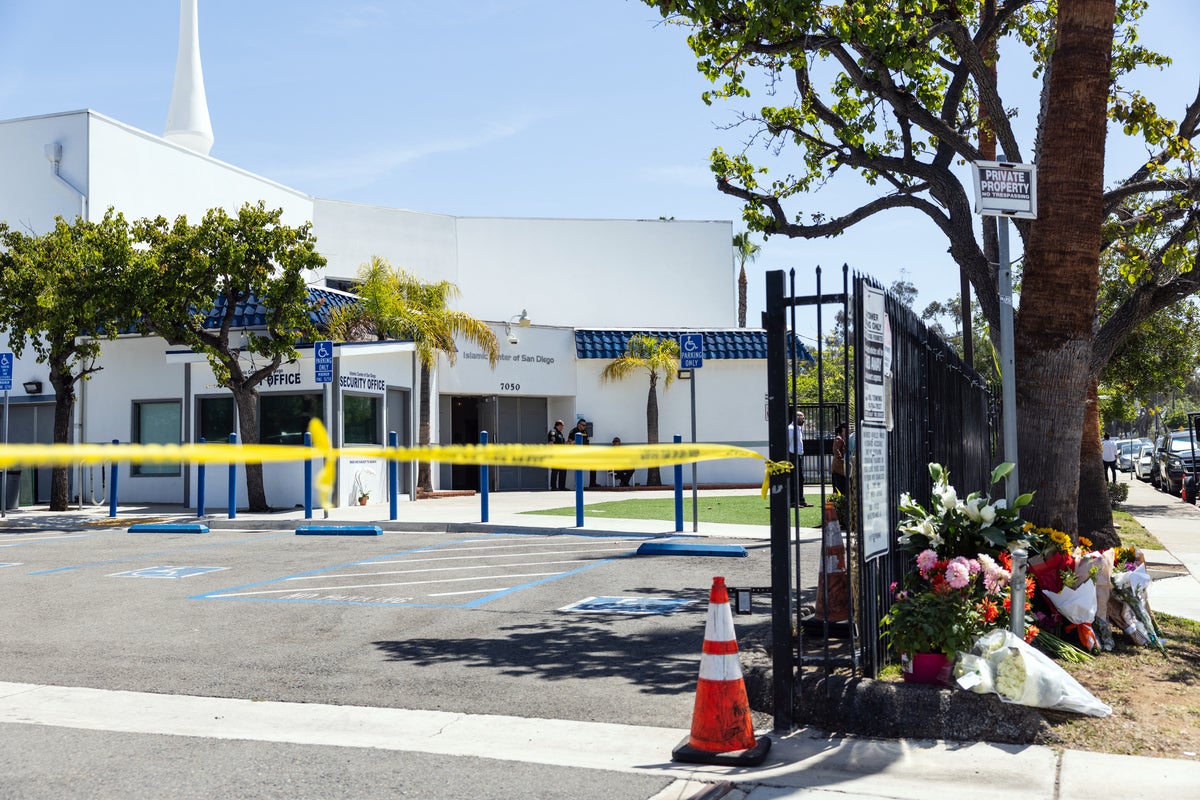
The indictment handed down by a North Carolina grand jury reads less like a traditional criminal charge and more like an autopsy of modern digital radicalization. Sarah L. Santiago, a seventeen-year-old high school student from Forsyth County, stands accused of three counts of murder and one count of conspiracy. Her alleged offense did not involve pulling a trigger inside the Islamic Center of San Diego. Instead, prosecutors state she acted as an essential remote hub for a horrific cross-country conspiracy, recording a livestream, purchasing a white-supremacist symbol patch, and publishing the manifesto of two teenage gunmen thousands of miles away.
This case marks a chilling escalation in how prosecutors target the invisible support networks fueling extremist violence. When Cain Clark and Caleb Vazquez stormed the mosque on May 18, killing three people before dying by suicide, they were not operating as isolated madmen. They were participants in an online ecosystem that converts alienated adolescents into foot soldiers for accelerationism. The decision by Forsyth County District Attorney Jim O'Neill to charge Santiago with murder under aiding-and-abetting statutes signals a profound shift in legal accountability for online accomplices.
The Mechanics of Remote Complicity
For decades, criminal law treated accessories to mass violence through a physical lens. Getaway drivers, weapons suppliers, and direct conspirators shared local space with the principal actors. The internet collapsed that geography.
According to court documents, Santiago agreed prior to the bloodshed to handle the digital distribution. While Clark and Vazquez wore GoPro helmets inside the San Diego mosque, the data feed flowed outward. Santiago allegedly captured that livestream, pushed it across online channels, and disseminated the joint manifesto authored by the attackers. She also allegedly bought a white-supremacist insignia patch and mailed it to one of the gunmen to ensure proper aesthetic alignment with historical inspirations like the 2019 Christchurch mosque massacre.
Under North Carolina law, aiding and abetting carries identical penalties to pulling the trigger. District Attorney O'Neill emphasized the gravity of these charges during his public briefing, noting the urgency sparked by her impending return to high school classes. Investigators faced a stark reality. A teenager accused of facilitating mass murder was moments away from walking back into a standard adolescent routine.
This creates a terrifying paradigm for modern law enforcement. The traditional markers of dangerousness no longer align with physical proximity. A bedroom computer terminal in Winston-Salem serves as effectively as a passenger seat in San Diego when the primary currency of the crime is digital amplification.
The Anatomy of Radicalization Pools
To understand how a seventeen-year-old girl ends up indicted for a California mass shooting, one must examine the dark architecture of extremist fringe forums. Clark and Vazquez left behind extensive writings detailing grievances that ranged from standard adolescent isolation to severe ideological rot. Vazquez's family noted in statements that he struggled with autism spectrum challenges and profound identity resentment, vulnerabilities that predatory online groups routinely exploit.
These forums do not merely host hateful ideas. They provide structured roles.
In a hypothetical example of modern extremist cell formation, young participants adopt specialized functions mirroring traditional military or media organizations. One individual acts as the tactical planner, another as the primary executor, and remote associates take on logistics, propaganda, or archival duties. By distributing these tasks across different time zones and state lines, participants build a false sense of security while deepening their psychological commitment to the collective mission.
Santiago's alleged role as a digital archivist and broadcaster highlights a grim truth about modern terrorism. Modern attacks require an audience to validate the perpetrators' nihilism. Without the livestream and the manifesto, the violence loses its intended viral impact within the subculture. By securing that transmission path, remote facilitators become core operational pillars of the plot.
The Broader Threat Matrix
The tragedy at the Islamic Center of San Diego could have been exponentially worse. Quick-thinking action by a security guard who exchanged gunfire with the pair and initiated an immediate lockdown protected roughly one hundred and forty children trapped inside the facility. The gunmen ultimately killed three innocent men—Amin Abdullah, Mansour Kaziha, and Nader Awad—before fleeing and taking their own lives.
Yet, the indictment reveals that the mosque was merely the initial stop on a far wider itinerary of carnage. According to prosecutors, the pair stockpiled thirty firearms and a crossbow stolen from Clark's parents. Their blueprint included planned assaults on a local Jewish temple and a predominantly Black high school.
The existence of a nationwide support network capable of coordinating manifesto releases and purchasing tactical gear demonstrates that these teenagers viewed themselves as part of a broader accelerationist vanguard. They sought to fracture societal cohesion entirely, leveraging racial animus, antisemitism, and generalized hatred to spark a broader social collapse.
Defense attorneys for Santiago have maintained her innocence, setting the stage for a complex legal battle over intent, digital footprint analysis, and the limits of accomplice liability across state lines. The outcome of this prosecution will likely establish a major precedent for how American courts handle remote digital accomplices who weaponize connectivity to assist mass casualty events.
As the legal proceedings unfold, the broader question remains unaddressed by standard security protocols. Society has yet to construct an effective firewall against the radicalization pipelines operating quietly inside children's bedrooms, turning normal school years into ticking clocks for catastrophic violence.