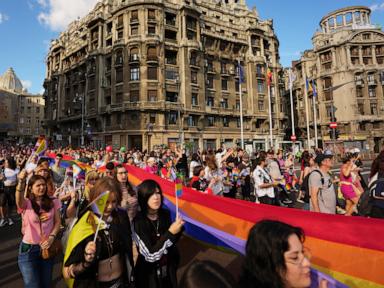
The annual Pride marches in Bucharest and Sofia are fundamentally misunderstood. Outside observers look at the tens of thousands of citizens carrying rainbow flags through the streets of Romania and Bulgaria and see a familiar narrative of slow, linear social progress. They assume that visibility eventually translates into statutory rights. It does not.
The harsh reality is that the largest public demonstrations in the history of the Balkan LGBTQ+ movement are occurring alongside a systemic, legislative shutdown. The swelling numbers on the pavement are not a celebration of incremental victory. They are a desperate, rear-guard action against institutional erasure.
The Accession Illusion
To understand how this crisis developed, one must look back to 2007. That was the year both Romania and Bulgaria entered the European Union.
Before Brussels would grant membership, both Sofia and Bucharest had to pass a battery of human rights and anti-discrimination laws. This created a profound structural contradiction. The political class adopted western human rights frameworks on paper to secure economic integration, but domestic political consensus never supported those changes.
The legal architecture was a facade. Decades later, that facade is crumbling under the pressure of domestic populist politics.
In the latest ILGA-Europe Rainbow Map, which evaluates the concrete legal and policy protections for LGBTQ+ citizens across Europe, Romania and Bulgaria ranked at the absolute bottom of all 27 European Union member states. The gap between Western European legal realities and Eastern European stagnation has widened into a chasm.
The core issue is legal recognition. Neither country recognizes any form of same-sex partnership. Civil unions do not exist. Marriage is explicitly restricted to opposite-sex couples under domestic frameworks, and in Bulgaria, this restriction is embedded directly into the national constitution.
The Real World Cost of Zero Legal Recognition
This is not an abstract debate about the definition of marriage. The total absence of a legal framework inflicts severe, daily harm on thousands of tax-paying households.
Consider a medical emergency. If an individual is admitted to an intensive care unit in Bucharest or Sofia, their partner of twenty years has no legal status. They can be barred from hospital visits. They have zero standing to make critical medical decisions if their partner is incapacitated.
The economic vulnerabilities are equally stark. When a partner dies without a recognized union, the survivor has no automatic right to inheritance. They cannot claim a survivor’s pension, even if they spent their entire adult lives building a home and pooling financial assets together. Property built through mutual investment can be legally seized by estranged biological relatives, leaving the surviving partner completely destitute.
The Transgender Bureaucratic Trap
The legal void is even more absolute for transgender citizens. In recent years, domestic courts have actively rolled back existing avenues for legal gender recognition.
In 2023, the Bulgarian Supreme Court of Cassation issued a binding interpretative decision. The ruling declared that national law simply does not permit the courts to alter the sex, name, or personal identification number of transgender individuals on the civil status register. This effectively instituted a blanket domestic ban on legal gender transition.
This creates an inescapable bureaucratic trap. When a person's physical appearance does not match the biological sex listed on their state-issued identity documents, everyday life becomes a gauntlet of administrative suspicion.
Opening a bank account becomes an ordeal. Boarding a plane triggers security delays. Applying for a job forces an unwanted disclosure of private medical history, which frequently leads to immediate, unspoken employment discrimination.
The European Court of Justice (CJEU) attempted to intervene in March 2026 with a landmark ruling in the Shipova case. The Luxembourg court ruled that EU member states must update identity documents to reflect the gender identity of citizens who transitioned in another member state, citing the core principle of freedom of movement.
Yet, local institutions routinely ignore these high-court mandates. The Romanian government has famously refused to fully implement the 2018 Coman ruling from the CJEU, which required member states to grant residency rights to same-sex spouses of EU citizens. Supranational judicial victories mean very little when domestic civil registries simply refuse to update their databases.
The Rise of State-Sponsored Backlashes
The surge in Pride attendance has directly triggered an organized, well-funded political counter-offensive. This is no longer just a collection of fringe nationalist groups shouting from the sidewalks. It has become a core element of state rhetoric.
In Bulgaria, the political landscape shifted dramatically following the April general election. The winning party openly voiced support for the "March of the Family," an anti-LGBTQ+ rally organized by right-wing and religious groups to compete directly with Sofia Pride. Politicians went as far as to frame the preservation of the traditional, opposite-sex family structure as a cornerstone of national security and national identity.
The Bulgarian Orthodox Church, which commands the cultural allegiance of roughly 80 percent of the population, actively backs this political alignment. Church leadership regularly issues public declarations condemning Pride messages and offering official blessings to traditionalist marches.
A parallel dynamic plays out in Bucharest. Every year, the "March for Normality" is staged by nationalist factions on the exact same weekend as the Pride parade. The state frequently deploys massive cordons of gendarmerie to keep the two groups physically separated, turning the capital city into a tense, militarized zone for a weekend.
+-----------------------------------------------------------------+
|               The Eastern European Legal Schism                 |
+-----------------------------------------------------------------+
|  Supranational Mandates (EU/CJEU) |  Domestic Realities         |
+-----------------------------------+-----------------------------+
|  * Freedom of movement protected  |  * Strict constitutional    |
|  * Cross-border gender identity   |    definitions of marriage  |
|    recognition ordered (2026)     |  * Total domestic bans on   |
|  * Equal residency rights for     |    legal gender transition  |
|    same-sex spouses mandated      |  * Non-implementation of    |
|                                   |    European court rulings   |
+-----------------------------------+-----------------------------+
The Geopolitical Battleground
This internal culture war cannot be separated from the broader geopolitical realities of Eastern Europe. The weaponization of anti-LGBTQ+ sentiment is a deliberate strategy utilized by populist leaders to draw a hard ideological line between the Balkans and Western Europe.
Local politicians consistently frame human rights campaigns as foreign ideological intervention. They tell voters that Brussels is attempting to dismantle traditional Orthodox values and erode national sovereignty. By manufacturing a moral panic around parental rights and traditional structures, ruling coalitions successfully divert public attention away from endemic corruption, economic stagnation, and crumbling public infrastructure.
The European Commission possesses mechanisms to combat this defiance, such as withholding cohesion funds or launching formal infringement procedures for rule-of-law violations. It did exactly that against Hungary's restrictive laws. However, Brussels has historically shown a deep reluctance to squeeze Sofia and Bucharest too hard on social issues, fearing it could destabilize fragile pro-Western coalitions and push voters toward openly pro-Russian, Euro-skeptic parties.
As long as the European Union prioritizes geopolitical stability over the enforcement of its own human rights treaties, the citizens marching in Bucharest and Sofia will remain trapped in a legal no-man's-land. The massive crowds on the streets are a sign of community resilience, but they are also an indictment of a broken enforcement mechanism. Visibility without legal leverage is just a target.