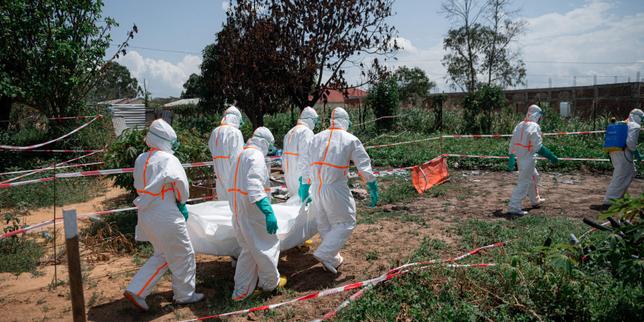
Central Africa is facing another deadly outbreak of Ebola, and the official narrative is dangerously detached from reality. While international health agencies release optimistic press statements about new vaccines and rapid deployment teams, the virus continues to exploit the exact same systemic vulnerabilities that have crippled responses for decades. The primary reason Ebola outbreaks keep spiraling out of control in Central Africa is not a lack of medical technology. It is a profound, systemic breakdown in local trust, driven by top-down international interventions that ignore community infrastructure and geopolitical instability.
To stop the current crisis, the global health apparatus must shift resources away from centralized bureaucratic command centers and pour them directly into frontline, community-led containment.
The Illusion of Technological Salvation
Public health officials love to talk about tools. They point to the Ervebo vaccine and mAb114 antibody treatments as definitive proof that humanity has won the scientific battle against the Ebola virus. This perspective is dangerously naive. A vaccine is entirely useless if the population refuses to take it. An antibody treatment cannot save a patient who is hiding in their home, terrified that entering a government treatment center is a death sentence.
In the dense forests and fractured border zones of Central Africa, the arrival of white SUVs and workers in biohazard suits often signals danger rather than aid. Decades of corruption, civil conflict, and broken promises have left rural populations deeply skeptical of any intervention bearing a government or international logo.
When a Western agency arrives with millions of dollars in equipment but the local clinic lacks basic paracetamol and clean running water, the community notices. They wonder why their lives only matter to the international community when they harbor a virus that could potentially cross oceans. This hypocrisy breeds resistance.
How Top Down Financing Strangles Local Medicine
The mechanics of international aid are fundamentally mismatched with the realities of an epidemic. When an outbreak occurs, international donors release hundreds of millions of dollars. However, this capital does not go to the local nurses and community leaders who understand the social fabric of the affected villages.
Instead, it flows through a complex pipeline of multinational agencies, sub-contractors, and capital-city ministries. By the time the money reaches the ground, it is heavily restricted and earmarked for highly specific, visible assets like mobile laboratories or international expert consultations.
Meanwhile, local healthcare workers go months without hazard pay. They strike. They work without basic personal protective equipment, becoming vectors for the disease themselves. Consider a hypothetical scenario where an international agency spends fifty thousand dollars to fly a specialized epidemiologist to a remote district for a week, while the local isolation ward lacks a functional generator to keep its lights on at night. This is not an exaggeration of the dysfunction; it is the standard operating procedure of modern humanitarian response.
International Aid Pipeline:
[Donors] ➔ [Multinational Agencies] ➔ [Capital Ministries] ➔ [Restricted Bureaucratic Projects]
                                                                        │
                                                     (Starves Frontline Medical Workers)
The Geopolitical Tinderbox
Ebola does not respect borders, nor does it operate in a political vacuum. The current outbreak is tearing through regions characterized by weak state presence and intense militia activity. Armed conflict makes traditional contact tracing—the absolute bedrock of Ebola containment—nearly impossible.
When an infected individual flees an active conflict zone, they disappear from the tracking grids. Health workers attempting to follow these chains of transmission face literal crossfire. In past outbreaks in the Democratic Republic of Congo, treatment centers were repeatedly burned down by armed groups or angry local factions.
International agencies often respond to this insecurity by demanding military escorts. This is a fatal mistake. Aligning public health teams with government soldiers immediately politicizes the medical response. In the eyes of an opposition-aligned civilian population, the health worker is no longer a healer. They are an agent of an oppressive state.
Flipping the Intervention Model
To break the cycle of infection, the entire architecture of the response needs to be inverted. This requires an approach that prioritizes local governance over foreign expertise.
- Fund Local Networks Direct: Direct financial resources must bypass capital-city bureaucracies and flow straight to religious leaders, traditional healers, and local youth networks who already possess the community's trust.
- Integrate General Healthcare: Ebola treatment cannot exist as an isolated island of luxury in a sea of medical neglect. Isolation centers must be integrated into upgraded, permanent local clinics that treat malaria, typhoid, and maternal health issues concurrently.
- Decentralize Testing: Instead of relying on distant reference laboratories that take days to return results, invest heavily in deploying rapid, point-of-care diagnostic tests at the village level, even if they have a slightly lower sensitivity than laboratory PCR tests.
The biological profile of the Ebola virus is well understood. We know how it spreads through bodily fluids, and we know how to neutralize it in a laboratory setting. The failure to contain it is entirely political and structural.
As long as the international community treats Central African outbreaks as technical puzzles to be solved by foreign experts rather than structural crises rooted in poverty and mistrust, the virus will continue to find cracks in the armor. Containment happens in the community, or it does not happen at all.