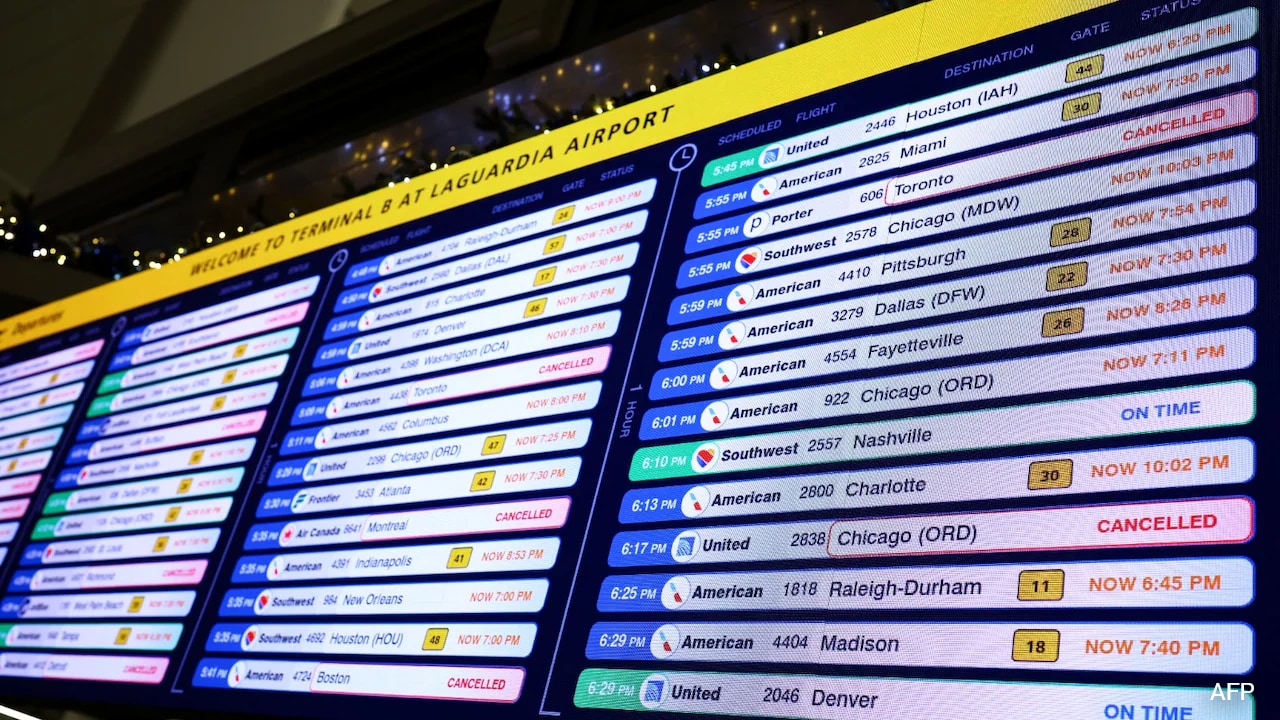
On a Wednesday morning in January 2023, the United States airspace system suffered its first nationwide ground stop since the terrorist attacks of September 11, 2001. More than 1,300 flights were canceled and over 8,000 delayed after a corrupted database file brought down the Federal Aviation Administration’s Notice to Air Missions (NOTAM) system. While initial reports blamed a single contractor’s error, the real culprit was decades of deferred maintenance, chronic underfunding, and a dangerously bloated legacy network that turns critical safety alerts into unmanageable noise.
The NOTAM meltdown was not a freak accident. It was a predictable structural failure.
To understand how one bad file could paralyze commercial aviation across North America, you have to look beneath the sleek glass cockpits of modern airliners and examine the aging digital plumbing that keeps them from hitting things on the ground.
The Architecture of a Failure
A Notice to Air Missions—formerly known as a Notice to Airmen—is a real-time alert sent to pilots and flight dispatchers detailing abnormal conditions along a route or at an airport. These conditions range from closed runways and broken approach lights to temporary flight restrictions over wildfires or presidential visits. Under federal aviation regulations, commercial flights cannot legally depart without verified access to current NOTAMs.
The system responsible for distributing these alerts dates back to the early 1980s. Built on legacy mainframe architecture, the primary NOTAM system relies on aging hardware, brittle code, and a patchwork of middleware designed to translate decades-old data formats into something modern airline dispatch systems can read.
When the failure occurred in January 2023, personnel working on routine database synchronization inadvertently replaced a primary database file with a corrupted version. Because the backup system shared the same synchronization pipeline, the corrupted file immediately replicated across the redundancy layer.
The backup failed in the exact same way as the primary system.
The FAA was forced to execute a hard reboot of the entire NOTAM network—a process that requires hours to safely clear caches, verify data integrity, and rebuild connections with thousands of airline operations centers. During that window, the agency issued a nationwide ground stop, freezing departures across every major hub in the country.
Why Redundancy Failed
In high-reliability engineering, redundancy is supposed to prevent single points of failure. If Server A dies, Server B takes over instantaneously without the end user noticing.
However, hardware redundancy does not protect against data corruption when both systems read from the same poisoned well. When a corrupted file is synchronized across mirrored servers, the backup faithfully reproduces the exact error that killed the primary server. True resilience requires isolated, air-gapped validation layers that quarantine bad data before it reaches production environments—a standard feature in modern cloud infrastructure, but a luxury the FAA’s legacy stack lacked.
The Hidden Crisis of Data Overload
Blaming the outage solely on a misplaced file misses the larger, systemic rot inside the NOTAM ecosystem. Even when the system is online and functioning as designed, pilots and dispatchers treat it as a liability.
Over the past forty years, the volume of NOTAMs has exploded. Today, a routine cross-country flight generates a pre-flight briefing packet containing dozens of pages of dense, upper-case text filled with cryptic abbreviations and obscure coordinates.
Consider a hypothetical flight from New York to Los Angeles. Before pushing back from the gate, the captain might be handed a 60-page printout containing over 200 individual NOTAMs. Buried on page 43, sandwiched between notices about unlit cell towers three miles away from the airport and minor taxiway paint fading, might be a single line stating that the primary instrument landing system at the destination runway is out of service.
Industry veterans refer to this as alert fatigue. When everything is flagged as a critical safety notice, nothing stands out.
The International Civil Aviation Organization (ICAO) and pilot unions have warned for years that the NOTAM format encourages bureaucratic self-protection over operational clarity. Airport operators, terrified of liability, issue NOTAMs for virtually every minor maintenance quirk, dead lightbulb, or construction cone on the airfield. Rather than purging outdated notices or categorizing them by severity, the legacy database simply stacks them chronologically.
In 2018, an Air Canada Airbus A320 nearly landed on a crowded taxiway at San Francisco International Airport, missing four queued passenger jets by less than sixty feet. The runway closure notice had been buried inside a massive wall of NOTAM text that the exhausted flight crew skimmed past. The National Transportation Safety Board explicitly cited the poorly designed, cluttered NOTAM system as a contributing factor in its final accident report.
Follow the Money
If the flaws in the NOTAM system were documented years before the 2023 collapse, why was it still running on 1980s-era architecture? The answer lies in how Congress funds the FAA.
Unlike private telecommunications companies or commercial airlines that can issue bonds, raise capital, and execute multi-year technology upgrades smoothly, the FAA operates on federal appropriations. Its budget is subject to the whims of annual congressional cycles, continuing resolutions, and periodic government shutdowns.
For the past two decades, the agency’s modernization budget has been consumed by NextGen—a massive, multi-billion-dollar initiative aimed at transitioning air traffic control from ground-based radar to satellite-based navigation. NextGen has delivered genuine improvements in fuel efficiency and airspace capacity, particularly through Automatic Dependent Surveillance-Broadcast (ADS-B) tracking.
However, NextGen’s massive price tag—estimated at over $35 billion across public and private investments—starved foundational back-end systems of capital.
Upgrading radar displays and satellite transponders makes for compelling congressional testimony and ribbon-cutting ceremonies. Rewriting the back-end database architecture of a text-based alert system from the Reagan administration does not. As a result, critical infrastructure projects like the Federal NOTAM System (FNS) modernization were repeatedly delayed, scaled back, or split into fragmented phases.
At the time of the 2023 meltdown, the FAA was running two parallel NOTAM systems—the legacy system (USNS) and the newer FNS—forcing data to pass through brittle translation bridges that increased latency and multiplied failure points.
The Staffing Bottleneck
Money alone does not maintain legacy code. You need engineers who understand how it works.
The FAA faces a severe demographic cliff within its technical workforce. Many of the software engineers and system architects who built and maintained the agency's core mainframe infrastructure in the 1980s and 1990s have retired. Replacing them is notoriously difficult.
Federal pay scales cannot compete with salaries offered by major technology firms in Seattle, Silicon Valley, or Austin. Furthermore, few young software engineers graduating from top computer science programs want to spend their careers debugging archaic mainframe protocols inside a rigid federal bureaucracy. Those who do join the FAA often face years-long security clearance processes and outdated development tools.
When an agency relies on external contractors to bridge that talent gap, institutional knowledge erodes. Contractors rotate off projects, documentation lags behind emergency patches, and accountability blurs between federal managers and private vendors.
The Ripple Effect Across Aviation
When the FAA halted departures in January 2023, the immediate shockwave hit passengers stranded in terminal concourses. Yet the financial and operational damage inside the aviation industry lasted for days after the NOTAM system came back online.
Modern commercial aviation operates on hyper-optimized, tightly wound schedules. Aircraft are routed across six or seven legs per day, with turnaround times at the gate squeezed to as little as 35 minutes. Flight crews—pilots and flight attendants—are governed by strict federal duty-time limits under FAR Part 117.
A four-hour ground stop does not simply push the schedule back by four hours. It breaks the chain entirely.
- Crew Timeouts: Pilots sitting on the tarmac waiting for the NOTAM reboot burn through their legal duty hours. Once a crew times out, the airline cannot legally fly the plane until a fresh reserve crew is located and transported to the airport.
- Aircraft Displacement: When flights are canceled mid-rotation, planes end up in the wrong cities. A widebody jet stuck in Chicago cannot operate its scheduled evening departure from Newark to London, triggering international cancellations that cascade across multiple days.
- Gate Gridlock: Airports do not have enough gate space to park an entire morning’s worth of grounded departures while simultaneously accommodating inbound flights that were already airborne when the ground stop hit. Planes end up stranded on remote taxiways, burning fuel and requiring complex towing operations.
For major carriers like Delta, United, and American, a single nationwide ground stop costs tens of millions of dollars in lost revenue, overtime pay, hotel vouchers, and rebooking logistics. More importantly, it exposes a glaring vulnerability in the national transportation grid: private airlines have spent billions building predictive maintenance algorithms, dynamic crew scheduling software, and high-speed inflight Wi-Fi, yet their entire operation remains tethered to a single government database held together by digital duct tape.
Can the System Be Fixed?
Following the 2023 outage, the FAA accelerated its timeline to decommission the legacy USNS architecture and migrate all operations onto the modern Federal NOTAM System, targeting full retirement of the old hardware by mid-2025 and continuing architectural refinements into 2026.
The agency also implemented strict new guardrails around database synchronization, requiring manual verification and automated rollback checks before any file update can propagate across production servers.
Still, migrating to a newer database only solves half the problem. Hardware reliability means very little if the data flowing through the pipes remains unreadable.
To genuinely fix the NOTAM crisis, aviation regulators must address the structural incentives that create data overload in the first place. That requires three concrete reforms:
- Mandatory Filtering and Prioritization: Pilots should not have to wade through 50 pages of non-critical airport maintenance notices to find out if a runway is closed. Modern flight deck tablets (Electronic Flight Bags) are fully capable of filtering NOTAMs geographically and hierarchically—highlighting life-safety hazards in red at the top of the screen while relegating minor taxiway lighting issues to a secondary tab.
- Strict Expiration Protocols: Airport operators must be barred from issuing permanent or open-ended NOTAMs for routine construction. If a crane is parked near an airfield for six months, that data belongs in permanent aeronautical charts, not temporary emergency alerts.
- Protected Capital Funding: Congress must insulate foundational FAA technology maintenance from annual political budget battles. Treating core air traffic control infrastructure like a discretionary line item guarantees that agencies will continue patching rotting foundations until the next collapse occurs.
The aviation industry prides itself on a safety culture built on learning from every incident before it becomes a catastrophe. Every rule in the federal aviation code is written in the lessons of past failures. Yet when it comes to the digital infrastructure underpinning the busiest airspace in the world, regulators spent decades ignoring the warning lights flashing on their own dashboards—until a single corrupted file forced the entire nation to stay on the ground.