Two newly established joint working groups tasked with overseeing the disarmament of the Gaza Strip and managing immediate humanitarian aid have exposed deep structural fractures in international diplomacy. The panels emerged following high-stakes talks in Jerusalem involving United States envoy Jared Kushner, representatives of the Board of Peace, and Israeli Prime Minister Benjamin Netanyahu. The first committee focuses entirely on the collection of weapons, decommissioning of military infrastructure, and the complete demilitarisation of the territory. The second committee addresses urgent public health threats, clean water access, and sanitation. Beneath the diplomatic veneer of these administrative bodies lies a high-risk gamble over sequencing, security control, and the complete marginalization of traditional regional mediators.
Diplomats like to present technical committees as neutral instruments of conflict resolution. They are rarely anything of the sort. In geopolitical negotiations, structural design dictates outcome. By dividing the post-conflict roadmap into a security panel and a humanitarian panel, the architects of the initiative have decoupled physical survival from political settlement. This separation creates an immediate leverage point. One group holds the keys to clean water and sanitation, while the other demands the immediate surrender of weaponry under direct American military supervision.
The Sequencing Trap and the Mechanics of Disarmament
The core friction point centers on the timeline of military withdrawal versus weapons handover. Under frameworks pushed by international intermediaries, disarmament was initially envisioned as a parallel process accompanying a phased Israeli military pullback. Israeli leadership rejected that formula, maintaining that no territorial redeployment will happen until every weapon is accounted for and permanently decommissioned.
The security working group, coordinated on the operational side through figures linked to international stabilization planning, has adopted a hardline enforcement mechanism. Weapons surrendered by Palestinian factions will bypass the nascent Palestinian technocratic administration entirely. Instead, ordnance is slated to pass directly into the custody of an American-led military structure under US General Jasper Jeffers.
This specific logistical choice changes the nature of the arrangement. For local political factions and independent observers, moving weapon oversight away from domestic governance bodies strips the process of local buy-in. It transforms a political transition into an externally dictated disarmament under direct foreign military supervision. Trust evaporates when the entity collecting the weapons answers exclusively to external military commands rather than an inclusive civil authority.
The Humanitarian Shield
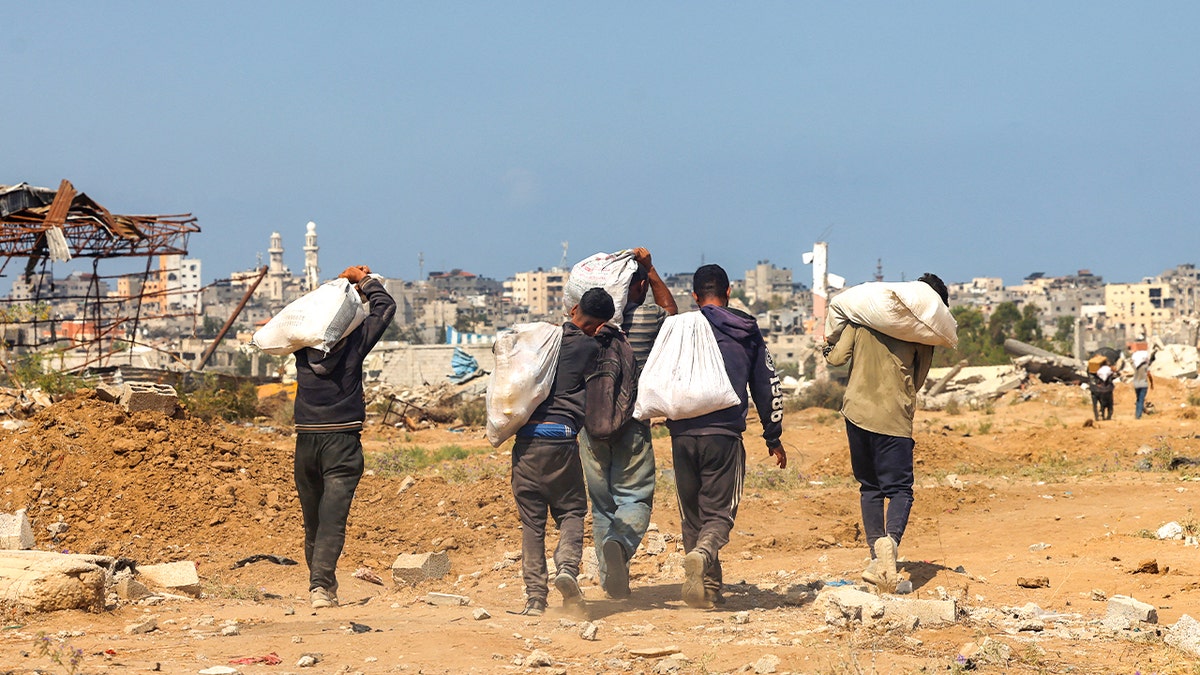
Public health concerns form the mandate of the second working group, yet the urgency behind clean water and sanitation infrastructure stems largely from immediate self-interest. Pathogens do not respect military lines. The breakdown of sewage treatment and municipal water systems inside the strip poses an immediate epidemiological hazard to neighboring areas and deployed forces.
Critics argue that tying basic survival needs to compliance with aggressive security demands amounts to coercive leverage. When sanitation and water access are governed by committees operating under strict diplomatic preconditions, humanitarian assistance ceases to be a universal right. It becomes a conditional asset deployed to accelerate political compliance.
The structural ambiguity surrounding the staffing and funding of these panels further complicates their execution. Months after broad announcements of transitional governing bodies, key international donors remain hesitant to commit capital. European states and traditional regional partners have raised persistent questions about oversight transparency, the integration of broader regional actors, and the long-term viability of parallel administrative bodies that bypass traditional United Nations channels.
Sidelining Traditional Mediators
Another overlooked consequence of the working group model is the active displacement of regional diplomacy. Past negotiations relied heavily on multilateral mediation channels involving Egypt, Qatar, and Turkey. The bilateral nature of the current setup between US envoys and Israeli authorities—coupled with alignment under the Board of Peace—marginalizes these traditional diplomatic pillars.
When key regional stakeholders are excluded from the mechanics of enforcement, the sustainability of any agreement plummets. Regional powers control the borders, supply chains, and political channels necessary to enforce local compliance. Bypassing them to deal directly through executive panels may yield quick press statements, but it produces brittle agreements that collapse the moment local actors reject external dictation.
The path forward remains fraught with contradictory demands. One side demands total security verification before reconstruction funds can flow, while local populations face uninhabitable infrastructure and systemic health risks. Technical working groups cannot legislate away a fundamental lack of political trust. Until the sequencing dispute over withdrawals and weapon collection finds a genuine compromise, these committees risk becoming bureaucratic monuments to a stalemate rather than vehicles for lasting peace