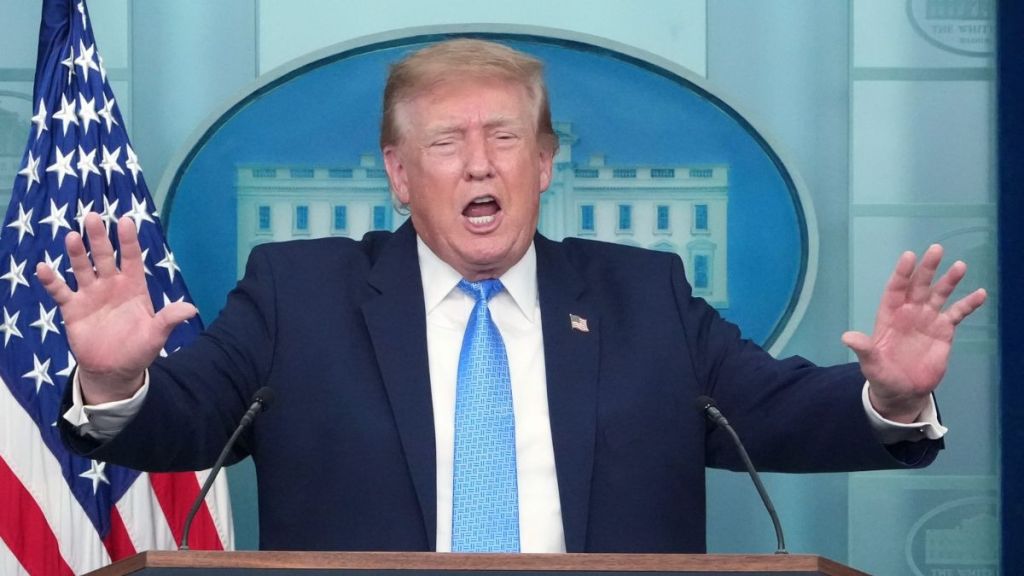
In the final stretch of the 2026 midterm election cycle, Donald Trump and Barack Obama effectively hijacked the national spotlight to deliver competing closing pitches that turned local congressional races into a personal referendum on their rival legacies. While incumbent President Trump crisscrossed 20 states on a relentless 30-event blitz touting tax breaks on tips and overtime alongside physical renovations in Washington, former President Obama hit battleground stages in Georgia and Ohio to mock Trump's priorities and rally base turnout. Beneath the surface of viral insults and stadium-sized spectacles lies a cold, structural reality. Neither man was actually on the ballot, yet both parties relied on these two polarizing figures to solve a fundamental modern campaign problem—how to force low-propensity midterm voters to show up when inflation fatigue and institutional cynicism threaten to keep them home.
The Structural Trap of the Modern Midterm
Midterm elections have always been a brutal math problem for the party holding the White House. Historically, the sitting president's party loses seats because the opposition is angry and motivated, while the incumbent's supporters grow complacent. Trump acknowledged this exact dynamic during his final campaign appearance at the Lincoln Memorial Reflecting Pool in Washington, noting that the sitting president rarely wins the midterms before insisting his administration gave the cycle a strong shot.
To beat that historical gravity, both political machines abandoned traditional localized messaging in the final week. Instead, they deployed their heaviest artillery.
For Republicans, that meant putting Trump everywhere at once. Rather than letting vulnerable House and Senate candidates run tailored, district-specific campaigns, the GOP leaned entirely into Trump's populist magnetism. His closing argument rested on a blunt transactional promise: vote to protect tax breaks on tips, overtime, and Social Security, or watch a Democratic Congress dismantle his second-term agenda. He framed the election as an existential battle between what he called a Golden Age of wealth creation and extremist opposition.
Democrats faced the mirror image of that dilemma. Lacking a single sitting incumbent with universal appeal across fractured progressive and moderate factions, they turned back to the only figure who can still command a stadium and dominate a cable news cycle without holding office. Obama stepped into the breach not merely as an elder statesman, but as an attack dog. His mission was simple. Strip away the aura of inevitability around Trump and remind demoralized Democratic voters why they showed up in previous cycles.
The Optics of Renovation Versus the Kitchen Table
Campaigns are won and lost on contrast, and the final week of the 2026 midterms produced one of the strangest thematic clashes in modern American political history. It came down to concrete, marble, and chain restaurants.
Throughout the autumn, Trump spent considerable political capital—and public airtime—highlighting physical restoration projects in the nation's capital, culminating in a closing speech staged directly beside the newly renovated Lincoln Memorial Reflecting Pool. To Trump, a former real estate developer, fixing cracked stone exteriors, upgrading White House spaces, and repairing national landmarks served as tangible proof of executive competence. He boasted that predecessors like Obama and Joe Biden had failed to finish the pool restoration, using the water behind him as a literal backdrop for his claim that his administration gets things done quickly.
Obama saw a glaring vulnerability in that obsession. On the campaign trail, he weaponized Trump's focus on construction and aesthetics to paint the president as out of touch with working families struggling with the cost of living.
"These are not serious people. They don't have solutions to actual problems." — Barack Obama on the 2026 midterm trail
Obama leaned into self-deprecating humor to widen the cultural gap, joking to crowds about spending a decade eating at Chuck E. Cheese, California Pizza Kitchen, and the Cheesecake Factory. The line was engineered for social media clips, and it worked. When Trump took the bait—accusing Obama of failing to understand cleanliness and defending his renovation habits—the exchange dominated the final news cycle.
From a purely tactical standpoint, Obama achieved his primary objective. Every minute the press spent covering a feud over the Cheesecake Factory or broken sidewalks was a minute taken away from Republican talking points on border enforcement and deregulation. Yet this strategy carried an undeniable risk. By leaning heavily into cultural mockery and character critiques, Democrats risked preaching exclusively to their converted base while offering few concrete policy answers to undecided voters worried about grocery bills.
Battleground Calculations in Georgia and Ohio
The geographic footprint of both men's final swings revealed exactly where the Senate majority hung in the balance. Neither leader wasted time in safe territory. They went straight for the jugular in states where razor-thin margins decide control of the upper chamber.
In Georgia, Obama threw his weight behind Senator Jon Ossoff and gubernatorial hopeful Keisha Lance Bottoms, drawing massive, energized crowds. Obama's strategy in the Peach State relied heavily on invoking moral authority and historical continuity, explicitly tying Ossoff's candidacy to the legacy of civil rights icon John Lewis. The goal was surgical. Democrats needed to replicate the Black voter turnout that delivered Georgia in 2020 and 2022, a demographic that had shown signs of softening amid economic frustration.
Meanwhile, Trump focused intensely on Rust Belt states like Ohio and Michigan, where working-class realignment remains the decisive factor. In Ohio, Trump campaigned aggressively to boost Republican Jon Husted against former Democratic Senator Sherrod Brown. Trump's stump speeches in the region blended economic nationalism with his signature off-script tangents, frequently praising candidates' physical attributes and college athletic backgrounds alongside warnings about foreign competition stealing American manufacturing jobs.
Obama countered directly in Ohio, attacking what he characterized as the cruelty and indecency of Trump's allies while attempting to reframe the race around basic governance and healthcare stability. The contrast between their approaches in the exact same state underscored a deeper philosophical divide in how modern campaigns operate. Trump treated rallies as immersive, unpredictable entertainment spectacles designed to cement emotional loyalty. Obama treated them as structured, rhythmic lectures meant to shame apathy and restore civic urgency.
The Hidden Vulnerability of the Proxy Strategy
Relying on two titanic personalities to carry down-ballot candidates across the finish line exposes a quiet rot inside both major political parties. When a party's best closing argument is a former president who left office a decade ago, or a sitting president who makes every local race about himself, it signals a profound failure to build a deep bench of persuasive local leaders.
Consider the friction visible beneath the surface of the 2026 campaign trail. In Michigan, internal Democratic divisions burst into public view during the final weekend when primary rival Haley Stevens broke ranks to endorse Republican Senate nominee Mike Rogers over Democratic candidate Abdul El-Sayed, calling El-Sayed unfit to serve. In Ohio, prominent Republicans publicly criticized the messaging tactics used in state-level attack ads even as national figures tried to project unity.
Trump's omnipresence created its own set of headaches for vulnerable GOP incumbents in purple districts. While his appearance guarantees maximum media coverage and energizes rural counties, his unfiltered rhetoric—such as attacking federal prosecutors and calling for the prosecution of political opponents like Alaska's Mary Peltola—frequently alienates the suburban independent voters who decide swing House seats. Local candidates often found themselves spending the final 48 hours of the campaign answering questions about Trump's latest headline rather than their own legislative records.
Obama's closing blitz carried a different limitation. The "hope and change" orator of 2008 is now an elder statesman operating in a vastly more cynical media ecosystem. While his speeches still generate millions of views online and pack arenas, his ability to persuade skeptical, non-college-educated swing voters has diminished. To many working-class voters in the industrial Midwest, Obama represents the very political establishment they rejected a decade ago. His presence energizes the Democratic base, ensuring high turnout in urban centers, yet it simultaneously serves as a potent mobilizing tool for conservative voters who view him as their ultimate political foil.
Why Voters Still Respond to the Spectacle
If the proxy war between Trump and Obama highlights the institutional weakness of modern party infrastructure, why do campaign strategists keep going back to the exact same playbook? Because in an era of fractured media consumption, attention is the only currency that converts into votes.
Traditional political advertising has hit a wall of diminishing returns. Voters routinely skip pre-roll ads, ignore direct mail, and tune out generic candidates reciting focus-grouped talking points. By November 2, more than 57 million Americans had already cast early ballots, meaning the traditional Election Day window had shrunk into a frantic final sprint to capture the remaining slice of hesitant or distracted citizens.
To break through that noise, campaigns need figures capable of commanding unfiltered, wall-to-wall coverage across legacy television, partisan podcasts, and algorithmic social feeds simultaneously. Only two men in American politics reliably clear that bar.
When Trump stands at a podium beside the Reflecting Pool and declares that a Republican victory will trigger an unprecedented landslide, every network carries it live. When Obama steps onto a stage in Atlanta or Cleveland and delivers a sharp, standup-calibrated takedown of Trump's ego, millions of users share the clip within minutes. Local House and Senate candidates simply cannot buy that kind of organic reach, regardless of how much dark money floods their states.
This creates a self-reinforcing cycle that traps American politics in the past. As long as voters reward the familiar clash between these two towering figures with their attention and their ballots, neither party has any incentive to cultivate fresh voices or elevate substantive policy debates over personality-driven theater. Until a new generation of leaders proves they can command a room without borrowing the spotlight from Washington's aging titans, every midterm election will remain a rerun of the same bitter rivalry.
To see how their final messaging clashed directly on the trail, watch US Midterms: Donald Trump and Barack Obama make closing pitches, which captures the contrasting styles and rhetoric both leaders deployed in the closing days of the campaign.