The federal government recently made a startling prediction about the nation's premier performing arts venue. In a series of frantic legal filings, the Department of Justice argued that stripping Donald Trump’s name from the John F. Kennedy Center for the Performing Arts would trigger immediate financial ruin, forcing the institution to return millions in committed donations and halting future fundraising entirely.
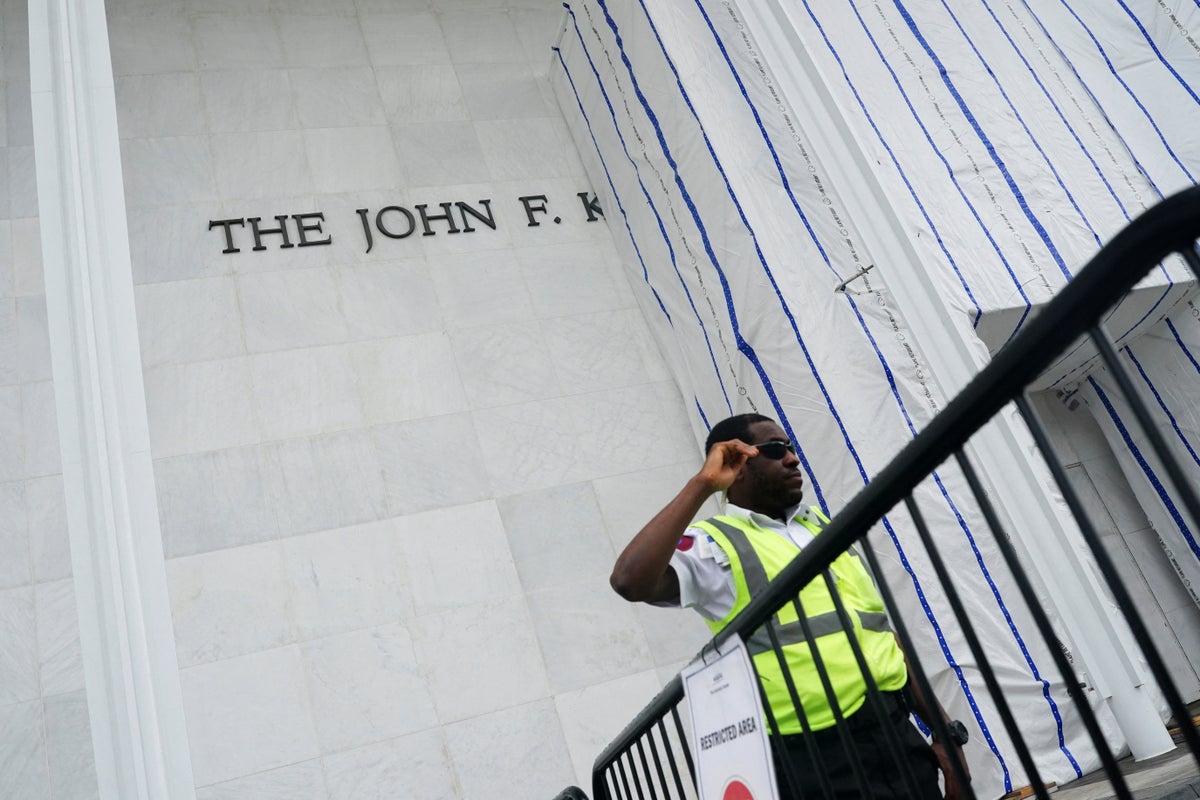
The warning went unheeded. In the early hours of June 13, 2026, workers erected scaffolding and systematically dismantled the letters spelling out the 47th president's name from the building's facade. This middle-of-the-night operation followed a blistering 94-page ruling by U.S. District Judge Christopher Cooper, who declared that the institution's board of trustees had overstepped its legal bounds. Congress named the center in 1964 as a living memorial to John F. Kennedy, and only Congress holds the authority to alter that designation.
While public attention focused on the political theater of the late-night removal, a much deeper crisis is unfolding behind the marble walls. The legal battle has exposed a broken financial model, a deeply fractured board, and an institutional identity crisis that cannot be scrubbed away with a few construction tools.
The Extortion Narrative of Cultural Fundraising
The core of the government's legal defense rested on an ultimatum. Lawyers representing the administration claimed that donors who pledged money to the newly branded venue would claw back their capital if the Trump name disappeared. They argued that the institutional survival of the center depended entirely on maintaining the short-lived moniker.
It was a stark admission of how cultural philanthropy has changed. Major arts institutions have always traded naming rights for financial lifelines, but tying the baseline operational survival of a national monument to a hyper-partisan branding exercise marks a dangerous shift. For decades, the Kennedy Center relied on a delicate balance of federal appropriations and bipartisan private donors. That balance is shattered.
When the board voted to alter the name, corporate sponsors and traditional arts patrons began quietly backing away. Ticket sales had already dipped to historic lows. By attempting to anchor the institution's financial future to a single political movement, the board isolated the very community that keeps the lights on. The claim of impending financial ruin was not just a legal tactic. It was an admission that the center had run out of traditional options.
The Real Cost of the Blocked Renovation
The legal battle did more than just settle a naming dispute. Judge Cooper's ruling also blocked a controversial plan to close the entire facility for two years for sweeping renovations.
The administration’s appeals warned of catastrophic infrastructure failures. They cited rusted support beams, crumbling parking garage ceilings, and structural degradation that threatened public safety. The language in the filings was characteristically dramatic, warning of total collapse if the facility remained open to the public.
Projected Renovation Budget vs. Federal Funding Gap
--------------------------------------------------
Total Estimated Renovation Cost:   $257 Million
Current Federal Annual Subsidy:    $45 Million
Private Endowment Shortfall:       $112 Million
The true crisis is structural, both physically and financially. The center genuinely needs extensive repairs, but the decision to opt for a complete, multi-year shutdown rather than phased maintenance raised immediate alarms. Critics and preservation groups argued the closure was an attempt to clear out staff, dissolve existing contracts, and completely reset the institution's cultural footprint.
By freezing the renovation plan, the court left the venue stuck in limbo. The facility cannot close to fix its structural issues, yet it lacks the broad-based donor support required to fund those repairs while staying open.
The Shadow Board and the Trump Endowment
Control of the venue remains firmly in the hands of the president's closest allies. Even with the exterior signage removed, the board of trustees is still chaired by Trump and packed with political appointees who refuse to back down.
Days after the court-ordered purge, the board held a unanimous vote to bypass the ruling through financial engineering. They established a new private endowment called the Trump Kennedy Center Fund. This mechanism allows the board to funnel private donations directly into a vehicle carrying the president's name, effectively maintaining his influence over the institution's programming and direction without violating the literal wording of the court order.
This financial maneuver ensures that the internal civil war will drag on. On one side stands a unified board utilizing private capital to reshape a national institution. On the other side are lawmakers, preservationists, and legacy donors fighting to maintain the historical mandate of the monument.
The cash flowing into this new fund does not solve the underlying operational deficit. It merely segregates the money, earmarking it for projects that align with the board's specific agenda while the general operating budget continues to bleed.
A Monument Untethered From Its Mission
National cultural institutions cannot operate effectively as ideological battlegrounds. The theater, the opera, and the concert halls require a level of stability that constant litigation utterly destroys.
The legal defeat in Washington proved that the judiciary will protect statutory mandates from executive overreach, but a courtroom cannot force donors to write checks. It cannot force patrons to buy tickets to shows caught in the crossfire of a national branding war. The letters have been scraped off the front portico, leaving behind mismatched stone and the faint outline of a political era. The real damage, however, remains internal, buried deep within the ledger books and the compromised structure of the building itself.