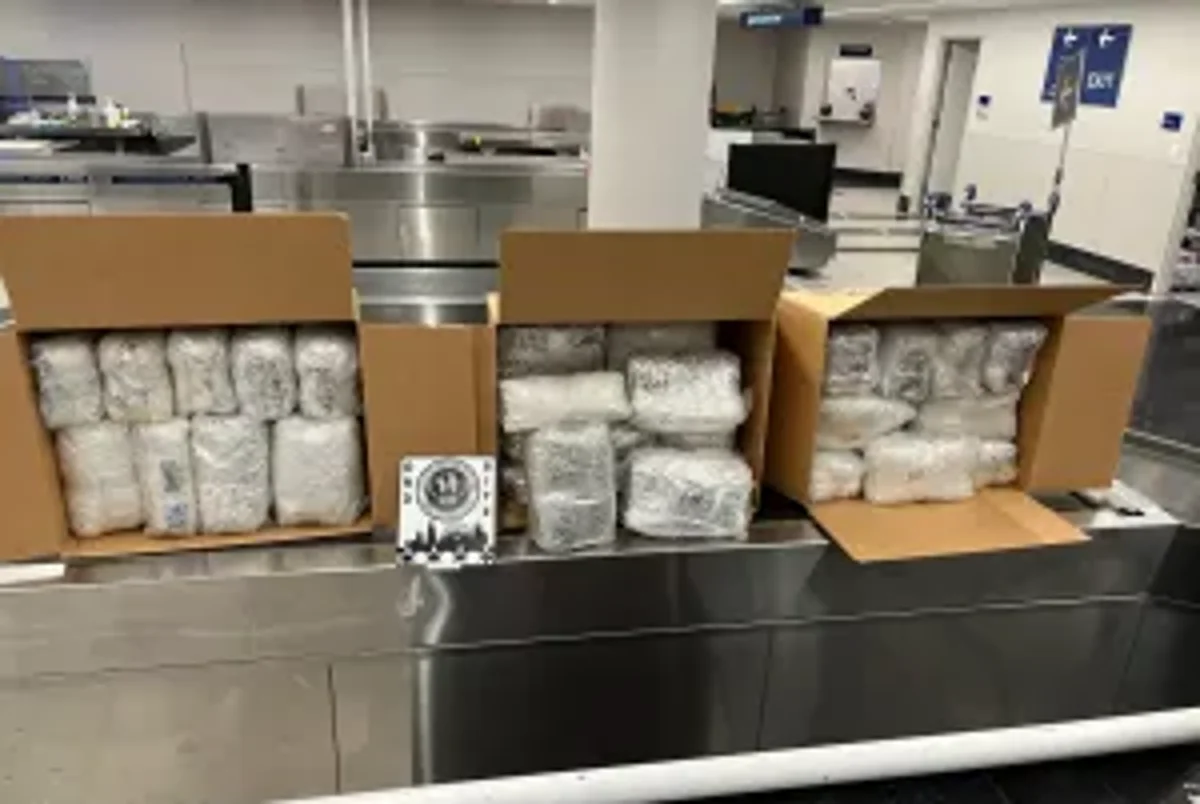
Federal customs agents at major aviation hubs across the United States are quietly intercepting staggering quantities of a leafy green narcotic that most Americans cannot pronounce.
Khat, an evergreen shrub native to East Africa and the Arabian Peninsula, is flooding international arrivals disguised in checked baggage and foil-wrapped parcels. Recent enforcement actions at airports from Chicago to Washington Dulles have netted thousands of pounds of the plant, revealing an underground supply chain operating in plain sight. For immigrant communities originating from regions like Yemen, Somalia, and Ethiopia, the plant is a deeply entrenched cultural staple. For federal law enforcement, it represents a Schedule I chemical threat wrapped in a botanical loophole.
Understanding why this green stimulant is suddenly generating massive border seizures requires looking past sensationalized headlines and examining the structural realities of international drug interdiction.
The Chemistry of Catha Edulis
The plant itself is Catha edulis. Users traditionally harvest the tender leaves and stems, tucking them into their cheeks to chew slowly over several hours.
The physical mechanics rely on two primary active compounds. The first is cathinone, a potent central nervous system stimulant structurally similar to amphetamine. The second is cathine, a milder derivative.
Freshness dictates potency. Cathinone degrades rapidly after harvest, breaking down into less potent compounds within days. This chemical clock creates an intense logistical constraint for traffickers. To preserve market value, smugglers must move the product from overseas farms to domestic distribution networks before the leaves spoil.
This biological clock explains the reliance on commercial passenger flights over slow cargo shipping containers. Couriers fly directly from transit hubs in Europe or Africa, checking multiple suitcases packed with hundreds of pounds of the perishable green crop.
Decoding the Federal Prohibition Maze
The legal status of khat in the United States is a study in regulatory fragmentation.
While the whole living plant is technically outside explicit bans in certain jurisdictions, isolating or possessing the active chemical components instantly triggers federal felony statutes. The Drug Enforcement Administration classifies cathinone as a Schedule I controlled substance, placing it in the same legal category as heroin and LSD. Cathine occupies a more lenient Schedule IV tier.
This creates a bizarre legal paradox. The plant material containing the chemical is illegal to possess, distribute, or consume, yet enforcement agencies frequently grapple with shifting smuggling tactics designed to exploit customs blind spots. When couriers abandon luggage on baggage carousels or route shipments through secondary airports, they exploit the sheer volume of global transit.
Data from U.S. Customs and Border Protection shows tens of thousands of pounds seized annually. These figures illustrate an ongoing cat-and-mouse game between intelligence-driven interdiction teams and couriers willing to risk federal trafficking charges.
The Economic and Cultural Driving Forces
Why do individuals risk long prison sentences to transport dried leaves?
The answer lies in a combination of high profit margins and diaspora demand. A shipment yielding a few hundred pounds overseas can command tens of thousands of dollars on domestic black markets in major metropolitan areas. For communities where chewing khat is a traditional social ritual akin to gathering over coffee or alcohol in Western societies, the prohibition feels culturally disconnected.
Public health officials point to valid medical concerns regarding chronic use. Long-term consumption links to elevated blood pressure, cardiac complications, insomnia, and psychological dependence. Yet, enforcement strategies rarely curb overall demand; they merely drive the commodity further underground, inflating street prices and drawing transnational smuggling networks deeper into the trade.
As border agencies deploy advanced screening technologies and behavioral analysis to spot suspicious travel patterns, traffickers continue to adapt their routes. The green leaf keeps moving because the economic incentive to supply insulated markets outweighs the deterrent of airport security.