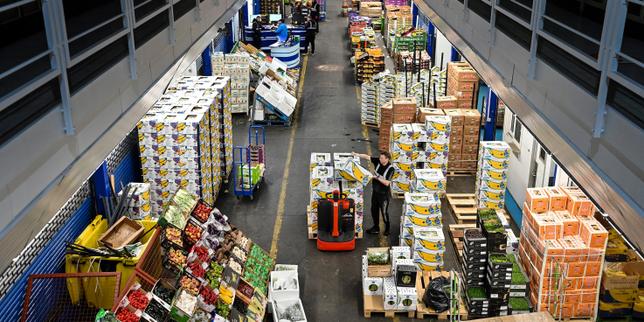
Dawn breaks over Nine Elms long before the rest of the British capital stirs from sleep. Beneath concrete overhangs south of the Thames, diesel engines rumble against the damp air while forklifts carve precise lines through cavernous loading bays. This is New Covent Garden Market, the sprawling wholesale food hub that quietly commands a staggering share of London's hospitality sector. Roughly forty percent of all fruit and vegetables consumed outside the home across Greater London pass through these corrugated corridors.
Romance often clouds media descriptions of wholesale food terminals. Glossy lifestyle pieces frame the site as a bountiful modern horn of plenty where immaculate heirloom tomatoes sit shoulder-to-shoulder with rare truffles destined exclusively for elite dining rooms. Reality proves far more industrial, gritty, and fiercely competitive. Behind every pristine plate served in Mayfair or Soho lies an unglamorous web of midnight logistics, fluctuating currency markets, and centuries-old merchant instincts that refuse to die.
The Mechanics of Midnight Commerce
Operating a massive fresh produce exchange in the twenty-first century demands an extraordinary balancing act between high-tech inventory tracking and tactile human judgment. Traders here do not simply push boxes from point A to point B. They act as financial speculators who manage extreme volatility on perishable goods. When a sudden frost ruins stone fruit yields across Southern Europe, wholesale prices shift within hours. Importers must pivot instantly, securing cargo from alternative hemispheres before dawn breaks.
Consider how a typical high-end kitchen interacts with this ecosystem. A celebrated executive chef crafting a tasting menu does not browse an online catalog over morning coffee. Instead, head buyers maintain direct, text-message relationships with specific merchants stationed in Nine Elms. These merchant families have traded across generations, developing an intuition for quality that automated sorting machines cannot replicate. They know precisely which coastal grower harvested the best sea salt-laced samphire or which orchard yielded apples with the ideal balance of acidity.
Yet, this traditional merchant model faces severe structural strain. Real estate pressures in central London have squeezed profit margins tighter than ever. Developers hungry for residential high-rises have steadily encroached upon historical trade footprints. Long-term regeneration projects have forced the market to shrink its physical boundary, compelling operators to modernize vertically rather than horizontally. Space remains at a premium, and every square foot must justify its existence through rapid stock turnover.
Margins, Waste, and the High Cost of Perfection
The public rarely considers the vast operational waste inherent in supplying top-tier gastronomy. Michelin-starred dining demands absurd levels of visual and textural uniformity. If a restaurant orders fifty portions of baby courgettes with blossoms attached, every single specimen must match strict dimensional parameters. The surplus stock that fails these rigorous aesthetic filters rarely goes to upscale plates. Wholesalers must absorb these variances, redirecting imperfect produce toward secondary buyers like caterers, institutional kitchens, or food processing plants at heavily discounted rates.
Logistical friction compounds these pressures. Urban congestion charges, low-emission zones, and unpredictable traffic bottlenecks across Thames river crossings turn final-mile delivery into a high-stakes gamble. A refrigerated van delayed by forty minutes on Vauxhall Bridge risks missing morning prep windows for dozens of downtown establishments. Consequently, transport overhead accounts for an escalating percentage of wholesale expenditure. Fuel duties and vehicle maintenance costs bite directly into merchant profits, leaving little room for error.
Independent traders also grapple with the shifting purchasing habits of modern hospitality groups. Corporate-backed restaurant chains increasingly bypass traditional wholesale floors altogether, opting for centralized logistics contractors that guarantee fixed pricing across multi-site operations. While this corporate consolidation secures steady volume for massive distributors, it starves smaller independent merchants of predictable revenue streams.
Surviving the Shift
Adaptation dictates survival beneath the concrete sheds of Nine Elms. Long gone are the days when merchants relied solely on walk-in buyers shouting orders across wooden pallets. Digital inventory portals now run parallel to physical haggling, allowing sous-chefs to lock in orders before midnight. Refrigeration technology has advanced to extend shelf life, mitigating the catastrophic losses once accepted as standard collateral damage in the produce trade.
Despite these technological layers, the core driver of the market remains stubbornly analog. Trust cannot be automated. When a merchant inspects a crate of winter truffles arriving from Umbria, the decision to buy rests entirely on smell, density, and tactile feedback. That human expertise is the invisible anchor holding London's culinary reputation together.
The next time an elite dining establishment plates an extraordinary seasonal creation, remember the invisible choreography that made it possible. It is forged in the freezing pre-dawn hours by traders calculating risks against the clock, turning raw logistics into high art long before the city wakes.



/voters-voting-in-polling-place-138711480-87a09f220a71438dbdff698a643c8cf1.jpg)