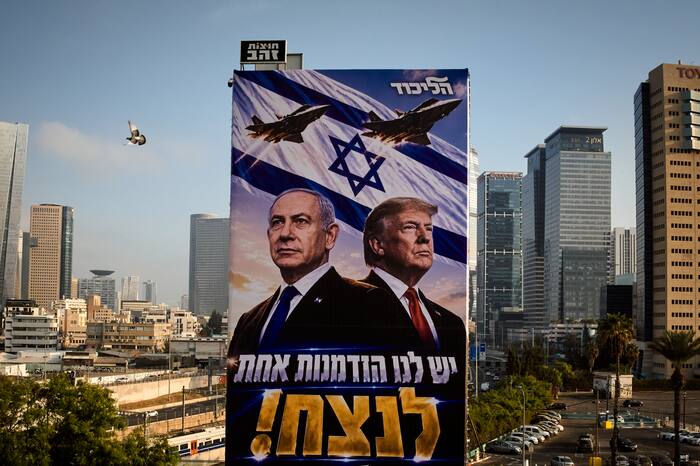
Political opponents of Israeli Prime Minister Benjamin Netanyahu accuse him of deliberately escalating military and rhetorical tensions with Iran to consolidate domestic support, distract from internal fractures, and frame himself as the sole leader capable of ensuring national survival ahead of an election. While opposition figures argue this strategy subordinates long-term regional stability to short-term political survival, Netanyahu’s supporters and national security hawks counter that the confrontation with Tehran represents an existential necessity driven by Iranian nuclear advancements and proxy warfare rather than the Israeli electoral calendar.
Watch Jerusalem closely during an election cycle. The rhetoric sharpens almost on cue.
In Israeli politics, national security is never merely a policy file; it is the ultimate currency of legitimacy. Whenever an election looms on the horizon—whether scheduled or triggered by the collapse of a fragile coalition—the political gravity in Jerusalem shifts toward existential threats. For decades, no threat has loomed larger in the Israeli strategic imagination than the Islamic Republic of Iran. Critics of Prime Minister Benjamin Netanyahu contend that he has mastered the art of turning this genuine security challenge into a recurring electoral shield, timing military posturing, intelligence disclosures, and fiery international warnings to coincide with moments of peak domestic vulnerability.
The Architecture of the Rally-Around-the-Flag Effect
To understand why opposition leaders view Netanyahu’s posture toward Tehran with deep skepticism, you have to look at the mechanics of Israeli coalition politics. Israeli governments are notoriously unstable, built on narrow majorities and ideological compromises that can unravel over a single budget vote or religious exemption bill. When domestic controversies threaten to fracture his base, shifting the national conversation from internal governance to external survival alters the political terrain overnight.
Political scientists refer to this phenomenon as the rally-around-the-flag effect. In times of acute external crisis, voters naturally gravitate toward familiar leadership and military strength, temporarily setting aside grievances over the cost of living, judicial reform, or coalition dysfunction.
Opposition figures argue that Netanyahu has repeatedly weaponized this dynamic. By elevating the Iranian threat to an immediate, ticking-clock emergency right before voters head to the polls, he forces his rivals onto the defensive. Criticizing the Prime Minister during a high-stakes standoff with Tehran risks looking unpatriotic or soft on defense. In a country where military credentials often determine political viability, few opposition leaders can afford to appear hesitant when the government frames an issue around national survival.
The strategy operates on three distinct levels:
- Agenda Control: High-profile warnings about Iranian nuclear milestones or covert operations instantly dominate front pages and broadcast cycles, crowding out domestic scandals and economic frustrations.
- The "Mr. Security" Brand: Netanyahu has spent decades cultivating an image as the indispensable guardian of the state, arguing that only his diplomatic experience and willingness to confront global powers can stop Tehran.
- Coalition Discipline: External crises apply immense pressure on rebellious coalition partners to stay in line rather than topple a government in the middle of a security emergency.
How Domestic Vulnerability Mirrors External Escalation
Critics point to a recurring pattern across multiple Israeli election cycles over the past fifteen years. Again and again, periods of intense domestic political jeopardy have coincided with dramatic escalations in rhetoric or covert activity aimed at Iran.
Consider the timeline of past political standoffs. During the multi-election deadlocks between 2019 and 2022, Netanyahu faced unprecedented domestic headwinds, including corruption indictments and the historic unification of rival parties determined to unseat him. Throughout those campaigns, the government repeatedly spotlighted Iranian regional entrenchment, unveiled dramatic intelligence archives regarding Tehran’s past nuclear ambitions, and warned of imminent military confrontation.
Opposition leaders, including former prime ministers and former chiefs of staff of the Israel Defense Forces (IDF), have publicly questioned the timing of these disclosures. Their argument is not that Iran is harmless—virtually the entire mainstream Israeli political spectrum views a nuclear-armed Iran as an unacceptable threat—but rather that the management and publicity surrounding the threat are tailored for electoral impact.
When sensitive intelligence operations or covert strikes are leaked to the press or hinted at in campaign speeches, veterans of Israel’s defense establishment often bristle. Traditionally, Israel relied on a doctrine of strategic ambiguity—striking enemy capabilities in the shadows without claiming credit, thereby denying adversaries the public humiliation that forces them to retaliate. Critics accuse Netanyahu of eroding this doctrine, arguing that publicizing shadow wars serves domestic political theater while increasing the risk of an uncontrollable regional conflagration.
The Counterargument From Jerusalem’s Security Hawks
Dismissing Netanyahu’s Iran policy purely as an electoral stunt misses half the picture. To understand why this narrative resonates with millions of Israeli voters, you have to examine the reality on the ground across the Middle East.
Tehran is not a passive backdrop for Israeli politics. Over the past decade, Iran has steadily expanded its regional footprint, funding, arming, and coordinating a network of proxy forces—often referred to as the "Axis of Resistance"—spanning Hezbollah in Lebanon, militias in Iraq and Syria, and the Houthis in Yemen. Simultaneously, following the collapse of the 2015 nuclear deal (the JCPOA), Iran significantly accelerated its uranium enrichment program, stockpiling fissile material at levels far exceeding civilian energy needs and narrowing its technical breakout time.
Supporters of the Prime Minister argue that accusing him of manufacturing a crisis confuses cause and effect. From their perspective, Israel does not get to choose when Iran crosses nuclear thresholds or when Iranian-backed militias launch attacks. If an Israeli election happens to overlap with a critical juncture in Tehran’s nuclear program or a surge in regional hostilities, waiting until after the ballots are counted to respond would be a dereliction of duty.
Furthermore, allies of Netanyahu contend that loud, public deterrence is a deliberate strategic choice rather than a political gimmick. By projecting uncompromising resolve and signaling a readiness to act unilaterally, Jerusalem aims to achieve two concrete goals:
- Pressuring Western Allies: Publicly raising the alarm forces Washington and European capitals to keep Iran at the top of their diplomatic agendas, discouraging them from pursuing sanctions relief or weak containment agreements.
- Deterring Tehran: Convincing Iranian leadership that Israel is on the brink of military action is intended to make Tehran pause before crossing critical red lines.
In this view, what opponents label as "stoking tensions" is actually the core mechanism of deterrence. Silence, hawks argue, invites aggression.
The Strategic Risks of Politicizing National Security
Even if one accepts that the Iranian threat is acute and genuine, the fusion of high-stakes military strategy with partisan electioneering carries severe institutional risks for Israel. When national security decisions are viewed through the prism of domestic politics, trust between the political echelon, the military brass, and the public begins to erode.
Israel’s security apparatus relies on a delicate balance between elected officials and professional intelligence and military leaders. Over the years, remarkable public rifts have emerged between Netanyahu and top figures from the Mossad, Shin Bet, and the IDF over how to handle Iran. Several former intelligence chiefs have broken traditional norms of silence after leaving office to warn that political considerations were distorting strategic assessments.
When voters suspect that military posturing might be influenced by polling numbers, a dangerous cynicism sets in. During an actual crisis, a government needs unquestioned public trust to ask citizens to endure rocket fire, economic disruption, or military mobilization. If half the electorate believes the emergency is partially engineered to save a prime minister’s career, national resilience suffers.
There is also the problem of escalation dominance. Rhetorical brinkmanship works only as long as both sides remain rational and avoid miscalculation. When a leader raises the public temperature to project strength before an election, it becomes much harder to de-escalate quietly behind closed doors. Public commitments create domestic political traps; backing down after issuing existential warnings can look like weakness to voters, incentivizing leaders to double down on confrontation even when strategic prudence dictates restraint.
What Voters Actually Weigh at the Ballot Box
Despite the fierce accusations flying between the government and the opposition, Israeli electoral behavior is rarely dictated by a single variable. While security crises undeniably boost incumbent visibility, they do not guarantee victory.
Israeli voters are deeply accustomed to living under chronic security threats. Having experienced decades of wars, intifadas, rocket barrages, and covert conflicts, the electorate possesses a high threshold for alarmist rhetoric. Many voters distinguish sharply between a leader’s ability to deliver tough speeches about Iran and their ability to manage day-to-day governance, inflation, healthcare, and social cohesion.
In several past elections, heightened tensions with Iran or Gaza failed to deliver Netanyahu the decisive majority he sought. Voters who prioritize economic reform or secular-religious balance often view security escalations with a jaded eye, recognizing the familiar rhythm of pre-election sabre-rattling. Conversely, his core base does not need a sudden crisis to back him; their loyalty is rooted in long-standing ideological alignment and deep skepticism of the political opposition.
Ultimately, the battle over the Iran narrative is a battle over framing. The opposition wants the election to be a referendum on domestic competence, institutional integrity, and coalition stability. Netanyahu wants the election to be a referendum on existential survival in a hostile neighborhood.
The Unforgiving Logic of Deterrence and Democracy
In any democracy facing persistent external threats, separating genuine strategic necessity from political opportunism is nearly impossible. Actions taken to deter an adversary look identical on the surface to actions taken to impress a voter. A military drill, a leaked intelligence assessment, or a fiery speech at the United Nations serves both purposes simultaneously.
For Israel, the tragedy of this dynamic is that Iran’s leadership watches Israeli politics just as closely as Israeli voters do. Tehran understands the rhythms of the Knesset, the fragility of Jerusalem’s coalitions, and the bitter polarization dividing Israeli society. Whether Netanyahu is acting out of pure strategic conviction, raw political survival, or an inseparable blend of both, the regional consequences remain the same—every move on the domestic chessboard nudges the Middle East one step closer to a conflict that neither side can fully control.