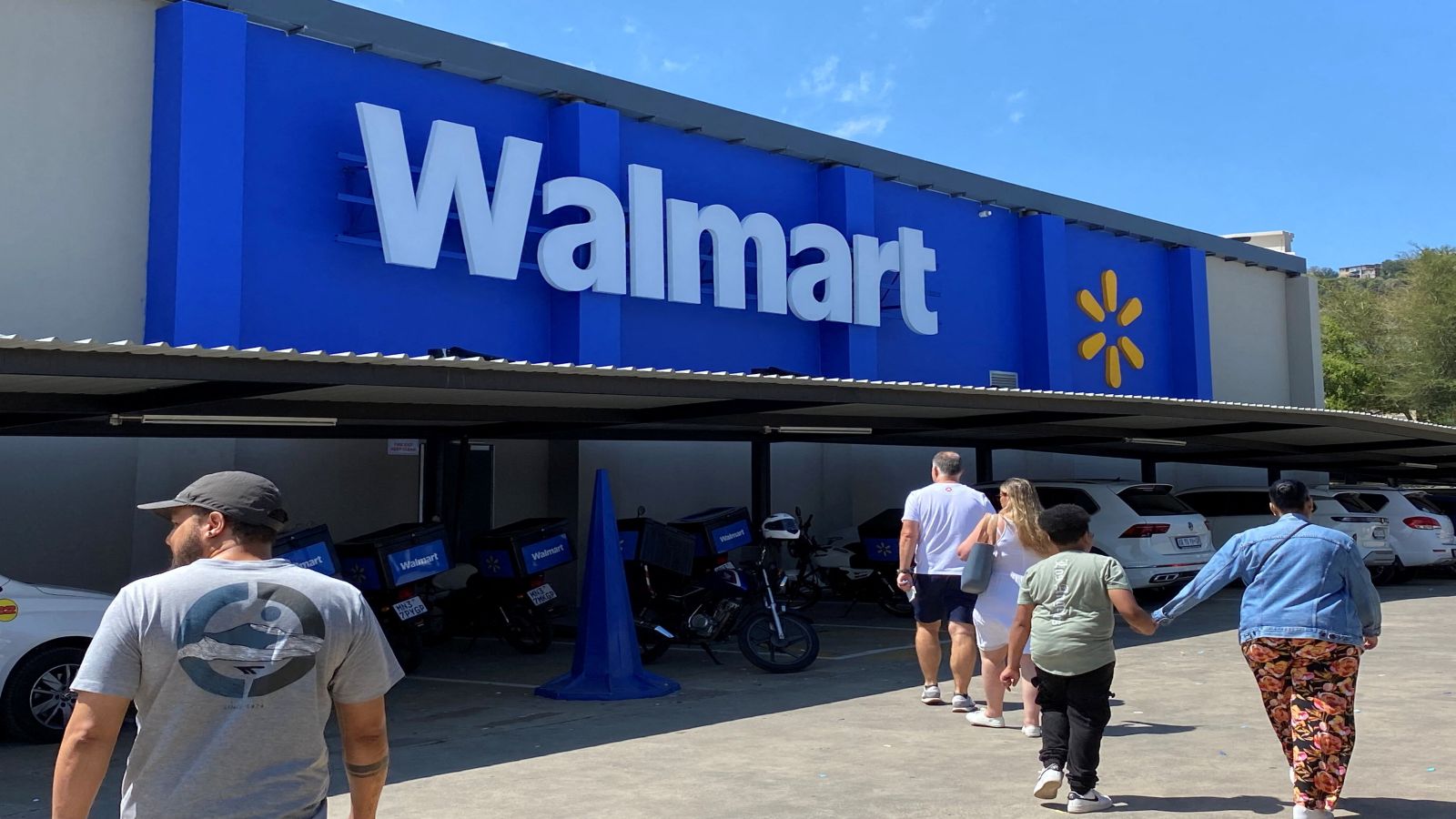
Retail giants are splitting over a quiet technical choke point. Walmart is opening its doors to third-party AI shopping agents while Amazon is putting up walls against rival bots, turning a seemingly nerdy infrastructure debate into a battle over who owns the customer relationship.
For decades, retail power worked in straight lines. A shopper typed a search query, saw ranked listings, clicked a button, and checked out on a merchant storefront. Even when aggregators or price-comparison sites showed up, the brand or retailer still controlled the page, the layout, and the moment of commitment. AI shopping agents threaten to compress that entire funnel into a single conversational exchange. Instead of browsing ten tabs, a user tells an assistant to restock household basics, compare winter coats, or hunt down the lowest unit price across stores. Whoever mediates that request holds immense commercial gravity.
Anyone who has watched retail technology cycle through waves of hype knows that big boxes rarely act out of pure altruism. When a massive retailer welcomes outside automation or slams the gate shut, the move usually traces back to margin protection, data capture, and shelf control. The contrast between Walmart inviting external AI agents and Amazon blocking rival bots like Meta's shopping assistant is not just a difference in engineering philosophy. It is a clash between two deeply entrenched business models trying to survive an interface shift before habits harden.
Why Retail Gatekeepers Are Drawing Lines in the Sand
Every major shift in commerce starts with friction over who gets seen and who gets paid. In the traditional web era, retailers tolerated search crawlers because those crawlers sent human traffic back to the store, where ads, cross-sells, and checkout flows lived. Outside AI agents change that bargain. An agent can scrape product specs, check inventory, compare prices, and potentially complete a purchase without the shopper ever spending time inside a retailer's curated environment.
That creates an existential headache for platforms built on retail media and onsite merchandising. Over the past decade, advertising inside retail apps and websites evolved from a nice side hustle into a high-margin profit engine. When a shopper scrolls a search results page, sponsored placements sit right next to organic matches, nudging buyers toward higher-margin items or house brands. If an external AI agent bypasses the visual grid and hands the user a single recommendation, ad inventory loses value fast.
Blocking rival crawlers and agents is one obvious response. By restricting automated access, a dominant marketplace protects its catalog from being harvested to train competing models or power rival assistants. It also keeps users inside a familiar ecosystem where Prime-style perks, bundled logistics, and native recommendations remain front and center. Critics see that posture as defensive or anti-competitive. Insiders see a company guarding its most valuable real estate from uncompensated extraction.
Yet closing the gates carries its own risks. If shoppers increasingly rely on general-purpose assistants to start their buying journeys, a store that blocks those tools risks becoming invisible in the exact moments where convenience wins. Meanwhile, inviting external AI agents in lets a retailer meet demand where it is forming, provided the retailer can shape how its catalog is read, ranked, and converted.
How Walmart and Amazon Read the Same Threat Differently
At first glance, two retail titans reacting in opposite directions looks like confusion. Look closer at their underlying mechanics, and both moves make cold commercial sense.
Walmart built its empire on scale, everyday low prices, and relentless physical-to-digital integration. Because its core groceries and household essentials carry razor-thin margins, volume and repeat habits matter more than squeezing every nickel out of a single display ad. Opening pathways for external AI agents allows Walmart to capture high-frequency replenishment and convenience orders before a rival grabs the cart. If a customer asks an assistant to assemble a weekly grocery list or find the cheapest version of a standard item, being accessible to that agent is a direct line to basket size.
Amazon, by contrast, operates a marketplace where discovery, third-party seller competition, and high-margin advertising are tightly woven together. Its search bar has long functioned as a product-intent engine rather than a broad web search box. Letting outside AI agents freely roam, extract structured data, and mediate transactions risks stripping away the behavioral signals and merchandising levers that keep the flywheel spinning. Blocking rival bots—such as automated shopping agents tied to social platforms like Meta—slows down third-party intermediaries that want to sit between Amazon and its buyers.
A shopping agent that sits between the customer and the checkout screen does not just save time. It quietly reassigns pricing power.
Neither strategy is a silver bullet. A retailer that welcomes outside agents must still solve attribution, fraud, return handling, and customer support when something goes wrong. Imagine a hypothetical scenario where an external AI assistant orders the wrong replacement filter because a product description had an edge-case compatibility note buried at the bottom. Who eats the return shipping cost and the frustrated review—the assistant maker, the marketplace, or the merchant? Those plumbing questions remain messy across the industry.
A retailer that blocks outside agents faces a different trap. Technical blocks are rarely permanent in software. Scraping arms races, partnerships, and evolving web standards mean walls get probed constantly, while users who prefer a single cross-store assistant may simply shop elsewhere if their favorite tool hits a dead end.
The Hidden Economics of Agentic Commerce
Strip away the buzzwords around agentic commerce, and the fight comes down to three concrete levers: structured data, checkout control, and commission flow.
Structured Catalogs Replace Eyeballs
Human shoppers react to photography, star ratings, badges, and urgency cues. AI agents parse attributes, availability, shipping windows, price per unit, and return terms. Retailers that clean up their product feeds and expose reliable real-time inventory give agents cleaner answers. Messy catalogs get skipped or misread.
This shifts investment from flashy front-end gimmicks to backend data hygiene. If an item is out of stock at a nearby fulfillment center or carries a three-day handling delay, an agent needs to know immediately or recommend a substitute. Retailers that treat catalog accuracy as a core engineering priority will hold an edge regardless of which interface the shopper prefers.
Who Owns the Checkout Moment
There is a big difference between an AI agent that researches options and hands the user a link versus an agent that executes payment and delivery choices autonomously. The closer an agent gets to autonomous checkout, the more leverage it gains over merchant routing.
Retailers care deeply about whether transactions clear through their own payment rails, loyalty programs, and fulfillment networks. Native checkout preserves fraud controls, membership perks, and post-purchase communication. Handing checkout over to an external intermediary risks turning a high-repeat customer into a faceless order number.
| Strategic Dimension | Open to External AI Agents | Blocking Rival AI Bots |
|---|---|---|
| Customer Reach | Captures demand inside third-party assistants | Relies on direct visits and owned surfaces |
| Data & Catalog Control | Requires clean feeds and clear terms of use | Keeps catalog data tightly gated inside platform |
| Ad & Merchandising Margin | Faces pressure if visual grids are bypassed | Protects onsite ad slots and curated rankings |
| Operational Risk | Higher ambiguity around disputes and attribution | Risk of friction if shoppers prefer external tools |
Monetization Before Scale Is Proven
Right now, nobody has cracked a universally accepted monetization model for third-party AI shopping agents. Affiliate links exist, sure, but affiliate payouts are tiny compared to retail media margins, and not every product category supports generous commissions. Direct partnerships, negotiated data access, or fee-sharing agreements are still taking shape.
That uncertainty explains why executives are jumpy. Committing to an open model before economics stabilize can expose margins; locking everything down too tightly can stall growth if agent usage takes off. Most retail leaders are hedging in real time, testing where openness brings incremental volume and where restrictions protect core profit pools.
What Overlooked Factors Could Decide the Winner
Most commentary on AI shopping focuses on cleverness—how well a bot understands natural language or negotiates a bargain. In real retail operations, cleverness loses to boring reliability every single time.
Trust and liability sit right near the top of that list. If a human clicks the wrong size on a website, that mistake is on them. If an AI agent orders a non-returnable item or misses a delivery window because of a hallucinated detail, customers will blame both the assistant and the retailer. Clear rules on consent, order confirmation, and dispute resolution will determine whether shoppers actually trust agents with real money.
Fulfillment geography is another factor that gets glossed over in software debates. Digital convenience still hits physical reality at the doorstep. A retailer with dense local stores, fast pickup, and dependable last-mile delivery has a massive advantage when an agent optimizes for speed or total landed cost. Software can rank options in milliseconds, but trucks and store shelves still obey physics.
Regulatory and platform scrutiny also lurks in the background. When dominant platforms restrict rival automated tools, questions about fair access, anti-steering, and consumer choice inevitably surface. Conversely, when retailers expose APIs or partner with major tech players, questions about data sharing and privacy follow close behind. Neither path is free of friction.
How Retailers and Brands Should Respond Now
Waiting on the sidelines until the dust settles is a luxury few operators can afford. Even if agentic shopping grows gradually rather than overnight, the groundwork takes quarters, not weeks, to build.
- Audit product data for machine clarity. Make sure specifications, dimensions, compatibility notes, pricing, and stock status are accurate, consistent, and structured—not locked inside vague marketing copy or images alone.
- Define clear rules for automated traffic. Establish explicit policies distinguishing legitimate shopping assistants and partners from abusive scrapers, while monitoring how automated agents interact with site speed and inventory locks.
- Protect direct customer value. Strengthen reasons for shoppers to come back directly—reliable delivery, fair pricing, easy returns, and genuine loyalty benefits—so convenience never relies on trapping people behind closed doors.
- Test attribution and conversion tracking. Measure how assisted or agent-driven journeys convert, return, and repeat compared to standard search and direct traffic before committing major budget.
In retail, the interface always changes, but the fundamentals stay stubbornly familiar. Give people accurate information, fair prices, and dependable delivery, and you earn a right to stay in the game—no matter which bot is doing the asking.