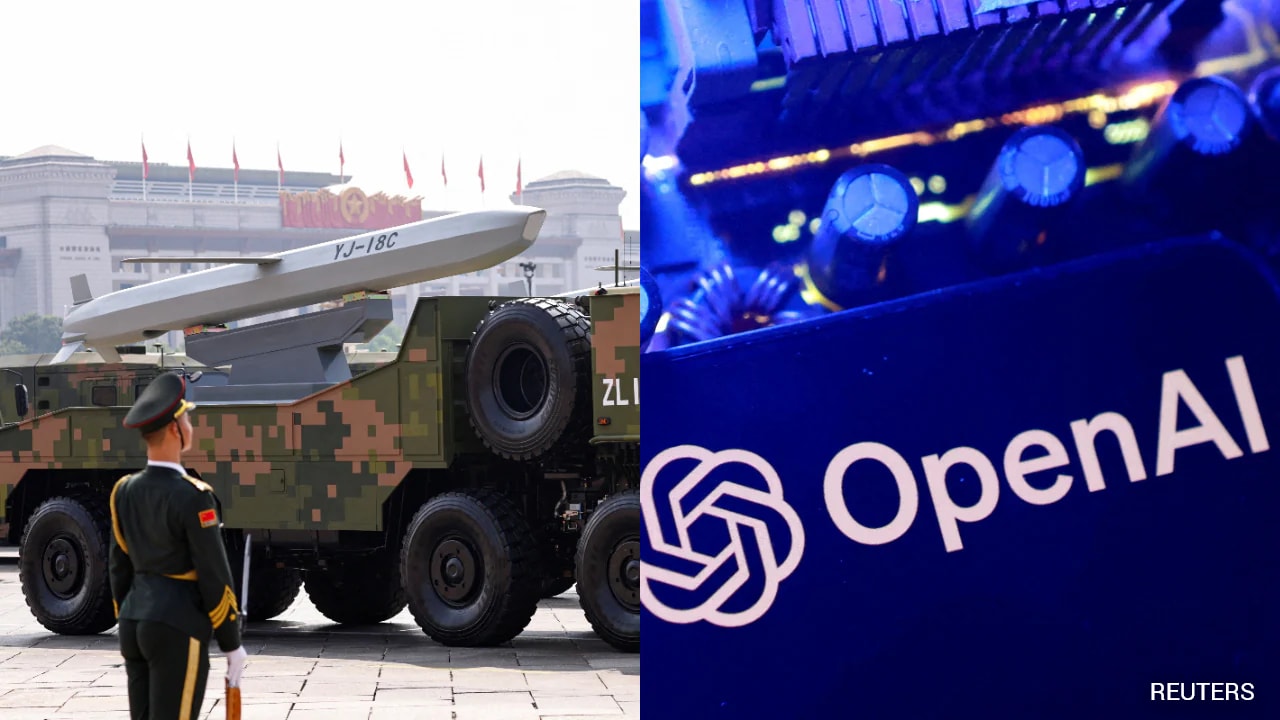
Chinese researchers are quietly using American frontier models like OpenAI and Anthropic to bootstrap domestic artificial intelligence systems, bypassing export controls through a steady, distributed network of API workarounds and third-party intermediaries.
The mechanism is entirely predictable. When Washington tightens export curbs on advanced silicon, capital and talent simply route around the hardware bottleneck through software distillation. Domestic labs in Beijing and Shenzhen feed massive volumes of prompts into foreign models, harvest the high-quality outputs, and use those outputs to train native architectures.
This practice turns the crown jewels of Silicon Valley into unwitting teachers for foreign competitors. The policy establishment treats semiconductor shipments as the ultimate chokepoint for artificial intelligence development. That assumption ignores how knowledge actually moves across borders in the twenty-first century.
The Anatomy of API Distillation
Distillation is not a new concept in machine learning. Academic labs have spent years shrinking massive neural networks into smaller, more efficient versions to run on edge devices or consumer hardware. What changes when applied geopolitically is the scale and intent.
Instead of compressing an internal model, researchers use commercial APIs from American providers as a master oracle. They construct intricate pipelines of prompts designed to extract step-by-step reasoning, coding logic, and linguistic nuance from models like GPT-4 or Claude.
The resulting datasets capture the emergent behaviors of frontier systems without requiring the billions of dollars in compute infrastructure needed to discover those behaviors from scratch.
Think of it as architectural espionage conducted in plain sight. No servers are hacked. No flash drives are smuggled out of secure facilities. Every interaction happens through standard HTTP requests, billed to valid credit cards, routed through Virtual Private Networks, and obscured by shell companies or overseas student proxies.
Commercial terms of service prohibit using model outputs to train competing systems. But corporate legal agreements carry little weight across sovereign jurisdictions where domestic industrial policy encourages any method that closes the technology gap.
Why Export Controls Miss the Mark
For three years, the strategy from Washington has centered on extreme hardware denial. By restricting shipments of extreme ultraviolet lithography machines and high-end graphics processing units like the Nvidia A100 and H100, policymakers believed they could freeze foreign competitors in place.
The strategy fundamentally misunderstands how modern software development works. Hardware scarcity forces optimization.
When labs cannot brute-force a problem with raw compute, they must find clever ways to extract maximum efficiency from lesser hardware or imported knowledge. By distilling capabilities from American models into smaller domestic architectures, engineers reduce the computational footprint required to run competitive systems.
A model trained on high-quality synthetic data generated by a superior model requires far fewer training cycles to achieve parity in specific domains.
The hardware restrictions created a temporary speed bump. They did not construct a permanent wall. While export enforcement agencies track physical crates of microchips through global ports of entry, the actual transfer of intellectual capability happens in milliseconds over fiber-optic cables.
The Intermediary Economy
The logistics supporting this transfer require a specialized infrastructure. A thriving gray market of proxy services has emerged to bridge the gap between Western API providers and domestic Chinese entities.
Researchers routinely purchase accounts via overseas intermediaries who register accounts using non-Chinese billing profiles and phone numbers. These intermediaries often pool requests, distributing them across thousands of individual user sessions to evade automated anomaly detection systems operated by security teams at OpenAI and Anthropic.
Platform operators play a constant game of cat-and-mouse. When an IP range or behavioral pattern suggests systematic distillation, security filters ban the accounts. Within hours, new accounts spin up using fresh credentials. The friction is real, but it is an operational nuisance rather than an existential barrier.
The Threat to American Technological Dominance
The implications extend far beyond commercial competition. Artificial intelligence capability serves as the foundational layer for future economic and military power.
When American intellectual property is systematically siphoned to train foreign systems, the strategic advantage narrows. More importantly, it undermines the economic model that funds domestic research. Frontier model development requires immense capital investment. Companies sink tens of billions of dollars into cluster construction, data curation, and safety alignment.
If foreign competitors can bypass the foundational research phase by distilling those models for pennies on the dollar, they can undercut American firms in global markets without shouldering the underlying research and development costs.
The safety implications are equally troubling. Frontier labs spend months implementing rigorous alignment protocols to prevent models from generating dangerous content, cyberattack code, or biological synthesis instructions.
When those models are distilled into domestic systems operating under different regulatory frameworks, those safety guardrails often vanish. The distilled model inherits the capabilities of the parent system while shedding the safety constraints built into its architecture.
Closing the Loophole
Addressing this vulnerability requires a fundamental shift in how policymakers view security in the digital age. Focusing solely on silicon export controls is like locking the front door while leaving the windows wide open.
Software access controls must match hardware restrictions. This means implementing rigorous know-your-customer protocols for cloud providers and API vendors, moving beyond simple credit card verification to verify the geographic and corporate identity of enterprise accounts.
Cloud providers must deploy advanced telemetry to identify prompt patterns indicative of mass distillation campaigns. Detecting automated extraction requires looking beyond basic rate-limiting to analyze the semantic diversity and structural depth of incoming requests.
The tech industry has long prioritized open access and rapid developer acquisition over rigorous access control. That luxury is no longer tenable in a geopolitical environment where commercial software tools double as strategic assets.
As long as American models remain accessible to anyone with an internet connection and a payment method, the shadow pipeline will continue to feed global competitors.
The debate in Washington must evolve from counting microchips to monitoring data flows. Until policymakers recognize that code is just as strategic as silicon, American innovation will continue to fuel the very systems designed to surpass it.