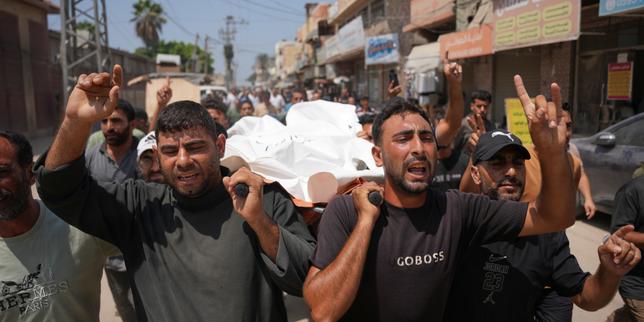
Four fatalities reported across the Gaza Strip following a wave of Israeli military strikes lay bare the fragile reality of an ongoing, highly compromised cessation of hostilities. While diplomatic channels in foreign capitals continue to project an image of containment, the ground tells a radically different story. The latest kinetic actions, centered around hospital complexes and urban neighborhoods, expose an operational environment where the line between structural ceasefire and active warfare has effectively vanished.
At the core of the latest escalation is a targeted operation inside the compound of the Al-Aqsa Martyrs Hospital in Deir al-Balah. The Israel Defense Forces stated that the objective was a high-ranking Hamas commander orchestrating attacks against troops and civilian populations. According to military briefings, this commander operated from a structure adjacent to the medical wards, utilizing the physical layout of humanitarian infrastructure as a shield. Local medical personnel confirmed that a storage facility within the complex sustained direct impacts, resulting in structural damage and multiple injuries, while separate incidents in Gaza City and Khan Yunis pushed the local death toll higher.
This dynamic highlights a grim tactical equilibrium. The underlying framework brokered to pause large-scale maneuvers has mutated into a persistent low-intensity conflict. On paper, major combat operations scaled back. On the ground, the military maintains a doctrine of preemptive disruption, targeting individuals accused of rebuilding militant networks or violating the terms of the pause. For the families navigating the wreckage, the distinction between a formal war and a breached ceasefire offers little practical relief.
The Mechanics of Shadow Warfare
Understanding why these flashpoints continue requires examining how the confrontation has adapted. Large-scale division movements have largely given way to intelligence-led micro-operations. Precision munitions, drone surveillance, and rapid ground incursions target specific nodes within the militant infrastructure.
When a commander attempts to reconstitute a local cell or coordinate supply lines, response times from aerial assets measure in minutes. Yet, this reliance on targeted elimination inside dense civilian environments guarantees collateral friction. Medical facilities, designated safe zones, and densely packed residential blocks remain entangled in the theatre of operations. International humanitarian organizations repeatedly condemn these actions, pointing out that hospitals retain protected status under international law regardless of accusations leveled against specific individuals.
Conversely, military planners argue that the structural integration of militant command assets within civilian zones forces their hand. If a commander orchestrates operations from the perimeter of a functioning hospital, military doctrine dictates that inaction carries an unacceptable security cost. This structural dilemma turns every medical center and relief hub into a potential zone of tactical confrontation.
The Diplomatic Stalemate
The diplomatic architecture meant to stabilize the region is caught in a profound structural freeze. Proposals involving the disarmament of militant factions in exchange for a phased withdrawal of forces remain stalled. Fundamental disagreements over ultimate security control prevent any long-term resolution from taking root.
Political leadership on the Israeli side insists that security architecture cannot permit any residual operational capacity for Hamas to remain intact. Meanwhile, militant leadership continues to demand complete withdrawal terms before relinquishing remaining leverage. This zero-sum stalemate ensures that every local skirmish threatens to unravel the entire diplomatic fabric.
As casualty counts steadily tick upward past the initial thresholds of the paused phase—with over a thousand fatalities recorded since the agreement's inception—the term ceasefire becomes increasingly semantic. Each localized strike generates new grievances, hardening positions on both sides and making comprehensive political settlement an increasingly distant prospect. The immediate future points not toward resolution, but toward a permanent state of managed violence where the margin for error grows narrower by the day.