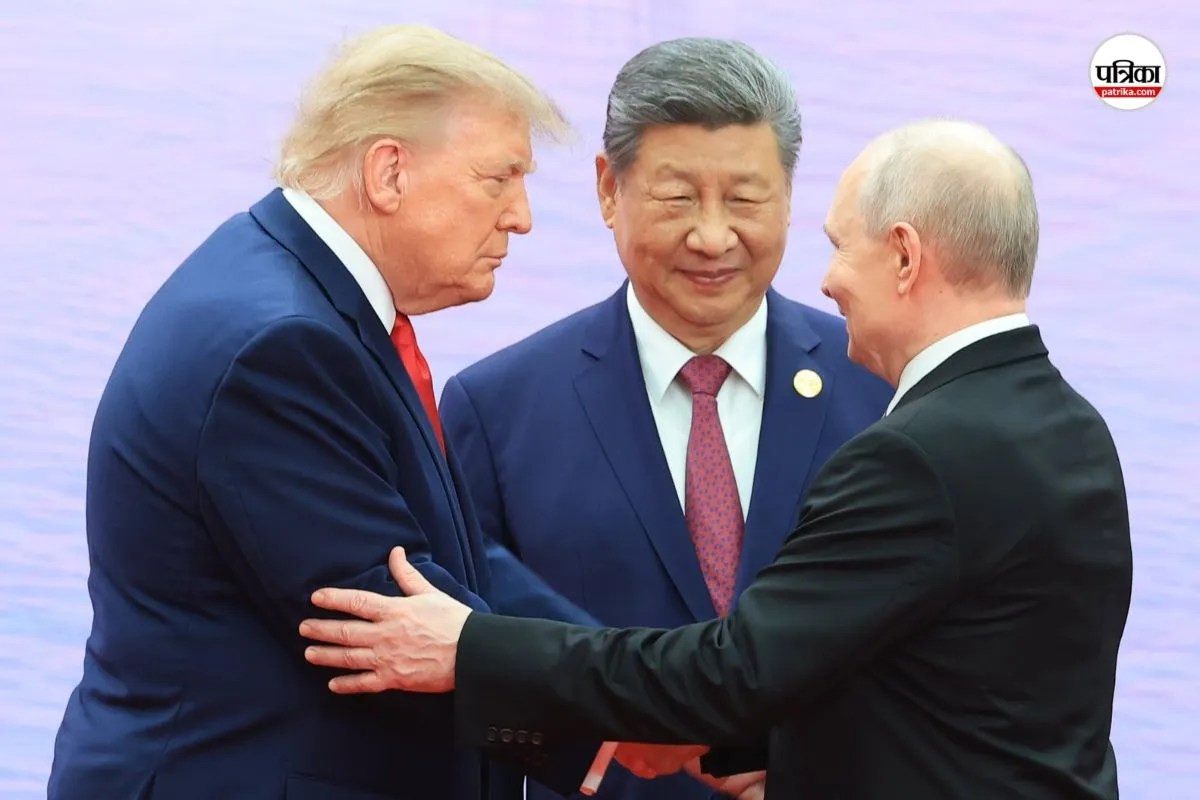
On November 19, 2026, Donald Trump, Xi Jinping, and Vladimir Putin sat together inside Shenzhen’s wooded Kylin Villa for roughly 70 to 90 minutes, producing the first trilateral summit of American, Chinese, and Russian leaders in modern history. They emerged with a four-point "Declaration toward Peace" that promised nuclear risk reduction talks, attacked the International Criminal Court, and called for United Nations reform, yet delivered zero breakthroughs on the war in Ukraine or nuclear warhead caps.
Most coverage treated the Shenzhen gathering on the sidelines of the Asia-Pacific Economic Cooperation (APEC) forum as an ordinary diplomatic preview or a straightforward peacemaking breakthrough. That reading misses the real mechanics of what happened beside the lake in southern China. Strip away the handshake photo-ops and the choreographed warmth—including Xi breaking longstanding protocol to greet Trump at the airport—and a starker reality emerges. The three men did not meet to dismantle the crises tearing across Eurasia and the Middle East. They met to establish a new great-power cartel that insulates their sovereignty from international courts while trading symbolic legitimacy for domestic political breathing room.
The Anatomy of a 70-Minute Photo Opportunity
Diplomacy at the highest level rarely hinges on spontaneous chemistry, regardless of how loudly leaders insist otherwise. When Trump walked into the room and declared that the three men were "really making history," he was framing an image meant for domestic consumption in Washington, Beijing, and Moscow. Putin echoed the grandiosity by invoking the Second World War, reminding the room that the three nations were founding members of the United Nations and therefore bore a special responsibility for global stability. Xi supplied the aphorism, warning that when major powers clash, the world falls into turmoil.
Look closely at the actual text of the U.S.-Russia-China Heads of State Declaration toward Peace, however, and the grand rhetoric evaporates into carefully hedged diplomatese.
- Nuclear Weapons: The three leaders reaffirmed the classic Reagan-Gorbachev formula that a nuclear war cannot be won and must never be fought, agreeing only to "conduct a dialogue on reducing nuclear risks and preventing the proliferation of nuclear weapons".
- Global Governance: The communiqué called for reforming the United Nations so it can respond more effectively to global challenges.
- Energy Markets: The three powers pledged to boost the production and supply of refined petroleum products "for the benefit of all nations".
- Legal Immunity: In the sharpest passage of the document, the leaders declared that state consent and the immunity of state officials are of supreme importance, warning that the International Criminal Court (ICC) and similar bodies "must not abuse their jurisdiction".
Notice what is missing. Ukraine does not appear in the joint declaration at all. Neither does the grinding conflict involving Iran, nor the concrete verification mechanisms required to stop an unconstrained nuclear arms race. For all the breathless anticipation surrounding a historic three-way bargain, the summit functioned less as a peace conference and more as a mutual non-aggression pact against multilateral accountability.
Why Nuclear Arms Control Hit a Wall in Shenzhen
To understand why the nuclear portion of the Shenzhen talks stalled at vague promises of "dialogue," you have to look at the calendar. The New START treaty, the last remaining bilateral pact capping deployed strategic nuclear warheads between Washington and Moscow at 1,550 apiece, expired in February 2026. For the first time since the early 1970s, the world's two largest nuclear powers are operating without legally binding limits or on-site inspection regimes.
Putin had previously floated an informal extension of those warhead caps, an offer Trump rejected on the grounds that any modern arms control framework must bind China as well. On paper, Trump's argument reflects a real shift in the strategic balance. Pentagon assessments have tracked the rapid expansion of China's nuclear arsenal, which is no longer the minimal deterrent force Beijing maintained during the Cold War. From Washington's perspective, locking itself into bilateral limits with Moscow while Beijing builds silos unchecked is strategic suicide.
Yet bringing Xi into a three-way treaty runs into an immovable mathematical problem.
| Nuclear Actor | Treaty Status as of November 2026 | Core Negotiating Stance in Shenzhen |
|---|---|---|
| United States | Unconstrained following New START expiration | Demands trilateral caps that include Beijing's growing arsenal |
| Russia | Unconstrained following New START expiration | Wants bilateral parity preserved while avoiding pressure on Beijing |
| China | Never bound by bilateral strategic limits | Refuses numerical caps until U.S. and Russian stockpiles drop to Chinese levels |
Beijing's resistance is entirely predictable. Even with its ongoing buildup, China's stockpile remains a fraction of the thousands of strategic and tactical warheads held by Washington and Moscow. During the Shenzhen meeting, Xi called for nuclear weapons to be "completely prohibited and thoroughly destroyed," a maximalist slogan Chinese diplomats have used for decades precisely because it avoids near-term caps on their own modernization.
The compromise—agreeing to talk about "reducing nuclear risks"—gives Trump a talking point that he brought China to the table for the first time, while allowing Xi to avoid a single binding constraint. Meanwhile, all three men share one quiet anxiety that kept the conversation polite. None of them wants middle powers like Germany, Japan, Poland, or South Korea to lose faith in existing security umbrellas and build nuclear bombs of their own. Preventing horizontal proliferation among U.S. allies is the narrow sliver of common ground holding their nuclear dialogue together.
The Ukraine War and the Illusion of Trilateral Leverage
Before the leaders sat down at Kylin Villa, Trump suggested that Washington and Beijing shared a mutual interest in ending the Russia-Ukraine war, citing staggering monthly casualty figures of roughly 25,000 people killed. Inside the room, Putin played along, remarking that the three countries had "many converging interests" in resolving regional conflicts, explicitly naming Ukraine.
That exchange created the impression that Beijing might finally use its economic lifeline to Moscow to force a ceasefire. The evidence on the ground tells a different story.
Now grinding through its fifth year, the war in Ukraine has resisted four rounds of U.S.-brokered negotiations in Abu Dhabi earlier in November 2026 without producing a workable framework on territory or post-war security guarantees. Trump's separate bilateral session with Putin in Shenzhen yielded no visible movement on either front.
The reason is structural. Putin believes time and attrition still favor Russian forces on the eastern front, and he sees no reason to surrender occupied land while Western unity frays. Xi, despite styling himself as a neutral broker, benefits from a protracted European conflict that absorbs American military bandwidth, drains Western munitions stockpiles, and keeps Russia dependent on Chinese industrial exports and energy purchases. Beijing will happily endorse vague calls for peace, just as it has since 2023, so long as no one asks Xi to cut off the dual-use trade keeping Russia's wartime economy afloat.
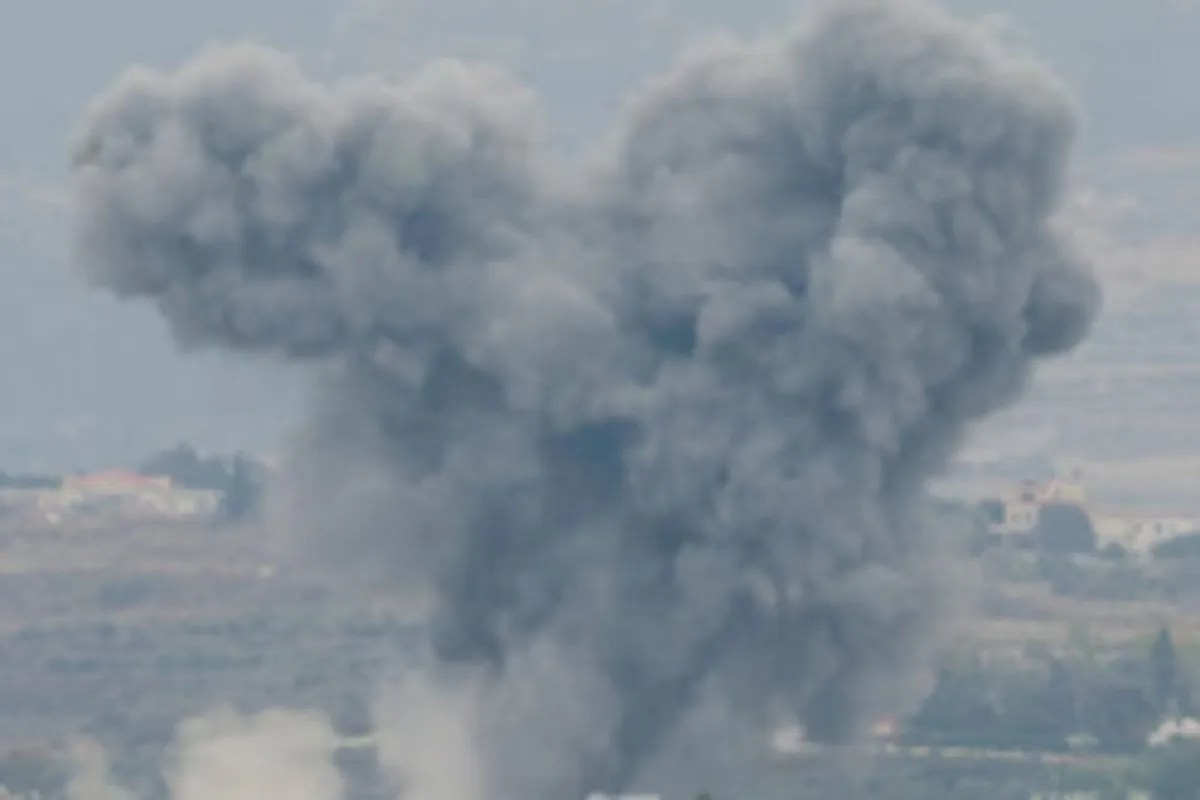
Adding to the complexity is Trump's own strategic distraction. Washington arrived in Shenzhen entangled in an escalating, costly conflict with Iran that has threatened energy transit through the Strait of Hormuz. Trump openly linked his outreach in China to preventing Tehran from acquiring a nuclear weapon and keeping Gulf oil flowing. When an American president needs Chinese and Russian cooperation—or at least non-interference—to manage an Iranian crisis and keep global fuel prices down, his leverage to demand concessions from Putin on Kyiv shrinks dramatically.
The Real Winner in the Room Was Not in Washington
Strip away the diplomatic spin, and the Shenzhen summit delivered its cleanest geopolitical payoffs to Putin and Xi.
For nearly four years, Western capitals sought to isolate Putin as an international pariah, an effort underscored by the March 2023 arrest warrant issued by the International Criminal Court over the unlawful deportation of Ukrainian children. Standing shoulder-to-shoulder with the leaders of the United States and China on a global stage shattered whatever remained of that diplomatic quarantine. Even better from the Kremlin's perspective, Trump used the trilateral platform to denounce the ICC as "out of control," an attack codified directly into the joint declaration's warning against judicial overreach. Because neither the United States nor China is a party to the Rome Statute, both powers have long resisted the court's authority. By folding that grievance into a trilateral communiqué, Trump handed Putin a formal great-power endorsement delegitimizing the very warrant restricting his international travel.
Xi secured an equally valuable prize. Hosting both the American and Russian presidents in Shenzhen—a city that serves as the showcase of China's technological and economic rise—projected an image of Beijing as the indispensable center of global diplomacy. Ahead of the trilateral, Xi used his APEC remarks to champion open trade and portray China as a steady, predictable anchor in contrast to American tariff volatility. With the current U.S.-China trade truce set to expire on January 10, 2027, and tensions simmering over semiconductor export controls, Xi bought himself precious diplomatic momentum before facing Trump again at the G20 summit in Miami in mid-December.
What the Shenzhen Declaration Actually Signals
Skeptics inside the foreign policy establishment have already dismissed the Shenzhen meeting as "much ado about nothing" because it failed to deliver a signed treaty or a ceasefire timeline. That dismissal underestimates how profoundly the rules of international order are shifting.
The four-point declaration is a blueprint for a multipolar world run by a small directory of armed superpowers. By pairing a call for United Nations reform with an explicit assault on international courts and a pledge to coordinate refined petroleum supplies, Washington, Beijing, and Moscow signaled a shared preference for transactional deal-making over rules-based institutions. Smaller nations—from Kyiv to Brussels to Tokyo—are left to absorb an uncomfortable truth. When the three largest military powers sit down together in 2026, they are not negotiating the protection of smaller states; they are negotiating the terms of their own coexistence.
The real test of Shenzhen will not be found in the warm reviews Trump gave the meeting aboard Air Force One. It will arrive over the next sixty days, when negotiators reconvene in Miami and the January trade deadline hits, exposing whether three leaders who agreed on everything in principle actually agreed on anything that matters.