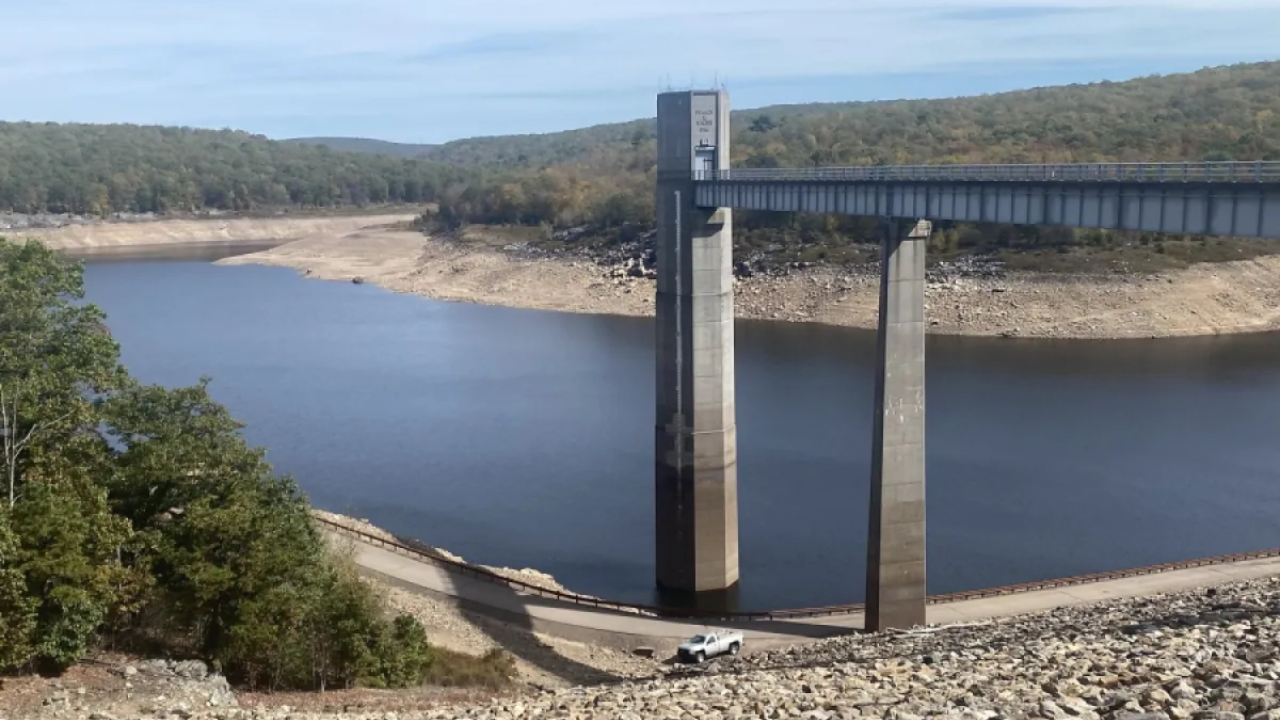
When heavy excavation equipment finally breached the O'Conner Reservoir dam on Pennsylvania's Moosic Mountain in December 2021, project leads anticipated a complicated and expensive multi-year stream reconstruction effort. For over 128 years, a six-acre artificial lake had drowned the upper reaches of Sterry Creek, altering local water chemistry, accumulating fine sediment, and trapping aquatic species behind a deteriorating stone and timber barrier. Yet as the impounded water drained away from the Dick and Nancy Eales Preserve, field teams led by The Nature Conservancy uncovered a remarkable geological reality. Beneath a century of standing water and silt, the original winding path, gravel beds, and natural contours of Sterry Creek remained completely intact.
This accidental preservation upended standard ecological restoration playbooks. Instead of engineering an artificial channel across a barren lakebed, project managers simply allowed the historic waterway to reoccupy its ancestral home. The project highlights an emerging truth in modern watershed management. Removing obsolete infrastructure often yields immediate environmental rebounds that far surpass what active human engineering can manufacture.
The Anatomy of an Obsolete Hazard
Built in the late nineteenth century, the O'Conner Dam served an era of industrial and municipal expansion that viewed wild rivers merely as plumbing systems. For generations, the structure held back water, slowly turning a dynamic mountain stream into an unmoving pool. Stagnant conditions behind aging dams routinely trigger predictable environmental degradation. Water temperatures rise as shallow reservoirs absorb solar radiation. Dissolved oxygen levels drop. Nutrients concentrate, and the overall pH shifts away from ranges tolerated by native coldwater species.
By the late 2010s, the O'Conner structure had crossed the threshold from functional asset to liability. Decades of weathering combined with intense storm events left the embankment vulnerable to catastrophic failure. An unmanaged breach would have sent a sudden wall of sediment and accumulated debris rushing down toward the Lackawanna River watershed, threatening downstream habitats and infrastructure.
Faced with mounting safety risks, The Nature Conservancy's stewardship director Pat McElhenny and stream restoration specialist Bill Weihbrecht initiated a carefully planned deconstruction. Lowering a reservoir safely requires patience. Crews deployed specialized pumps and temporary piping to reduce hydrostatic pressure against the aging earthen embankment before any heavy machinery touched the core structure.
Rediscovering the Ancient Streambed
Conventional wisdom in fluvial restoration dictates that when an artificial lake is drained, what remains is an ecological blank slate. Teams usually expect a flat, sterile plain of compacted mud where an engineered ditch must be carved, lined with imported rock, and seeded to prevent severe erosion.
Sterry Creek defied that expectation. Decades of fine sediment accumulation had blanketed parts of the lakebed, but the underlying physical memory of the valley floor endured. The historic gravel beds, meanders, and riffles had been sealed beneath layers of water and sediment, protected from the erosive forces of surface water for more than a century. Once the water receded and the central embankment was excavated, the original channel re-emerged almost precisely where cartographers would have mapped it in the 1890s.
This preservation saved the project substantial capital and labor. More importantly, it provided a biological template that human designers rarely replicate with absolute accuracy. Natural streams rely on complex hydraulic geometries—varying width-to-depth ratios, specific particle distributions, and micro-topography—that evolve over millennia to handle high-velocity mountain runoff. By letting the water find its historic footprint, the restoration bypassed the trial-and-error phase typical of newly dug channels.
Ecological Rebound and Watershed Connectivity
The removal of the O'Conner Dam did more than just reveal an old streambed; it initiated a profound systemic reset across the Moosic Mountain ridge. Within seasonal monitoring cycles following the breach, biological indicators confirmed rapid recovery.
The former six-acre lakebed transitioned organically into a functioning natural floodplain. During heavy precipitation events, Sterry Creek now rises and spreads laterally across this vegetated basin rather than channeling destructive velocity straight downstream. Wetland plants within the zone trap suspended sediment, filter runoff, and slowly release stored water back into the system, buffering the watershed against extreme weather volatility.
Water temperatures dropped swiftly as shade returned to the narrow, unimpounded channel. Dissolved oxygen concentrations normalized, creating favorable conditions for native aquatic life that had long been absent from this section of the ridge. Furthermore, reconnecting the upper reaches of Sterry Creek eliminated a hard migration barrier for fish, amphibians, and macroinvertebrates, linking isolated populations back into the broader Lackawanna River ecosystem.
To honor the site's industrial past, project planners chose a hybrid approach rather than total erasure. Crews retained sections of the original stone-lined spillway and outer dam walls alongside remnants of nineteenth-century timber cribbing. These physical artifacts remain visible along the banks, serving as educational markers of human history integrated directly into a restored natural landscape.
The transformation of Sterry Creek stands as a clear precedent for thousands of similar low-head barriers scattered across aging American infrastructure grids. As maintenance costs mount and safety regulations tighten, environmental agencies face difficult choices regarding obsolete impoundments. The Moosic Mountain project demonstrates that stepping aside to let nature reclaim its historic architecture is frequently the most effective engineering strategy available.


