The quiet was always an illusion. For roughly a month, the bitter contest between Washington and Tehran had retreated from the smoking wreckage of direct military exchanges into the quieter, more insidious arenas of banking blockades, currency collapse, and oil embargoes. That fragile lull evaporated over the weekend when United States Central Command warplanes targeted two Islamic Revolutionary Guard Corps rocket launchers on Larak Island, plunging the Middle East back into open kinetic warfare and jolting global financial markets.
The immediate catalyst was deceptively simple. American intelligence assets observed Revolutionary Guard units preparing to deploy sea mines into the narrow shipping channels of the Strait of Hormuz, an arterial waterway carrying a substantial share of the world's traded energy supply. When those launchers were flattened by American ordnance, the response was swift and predictable. Tehran answered by firing a volley of ballistic missiles at American military installations in Jordan, shattering the month-long absence of direct cross-border fire and demonstrating how quickly economic coercion can degenerate back into high-explosive violence.
To understand the trajectory of this conflict, one must look past the immediate tactical flashes and examine the systemic architecture of the blockade. For months, the waterway separating the Persian Gulf from the Gulf of Oman has functioned as a maritime choke point. Iranian forces have consistently maintained pressure on commercial shipping lanes, forcing vessels to navigate a gauntlet of intimidation, toll demands, and sporadic attacks. When Washington tightened its financial grip through the Treasury Department, aiming to cut off remaining corridors of the Iranian banking network, Tehran retaliated where it hurt global commerce the most.
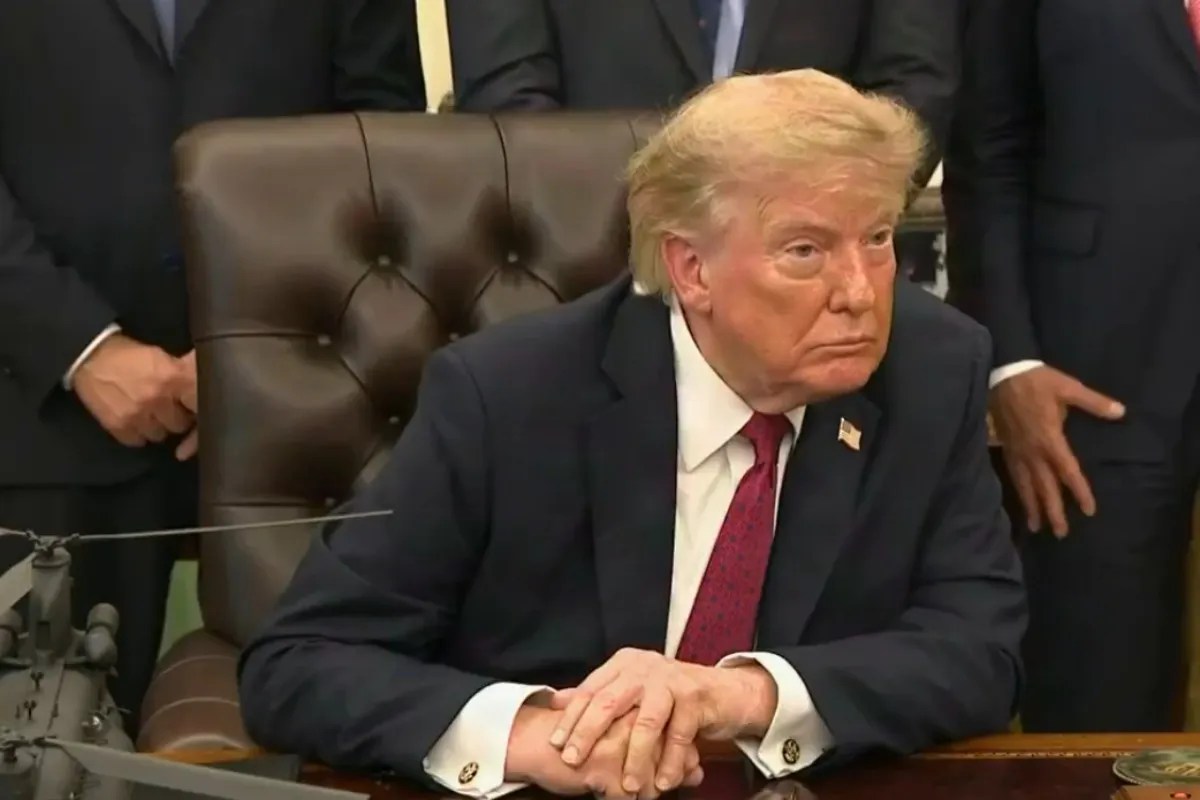
The military reality on the ground reflects a brutal cycle of action and reaction. Following the initial strike on Larak Island and the subsequent missile barrage targeting the King Hussein and Al-Azraq air bases in Jordan, the White House authorized a broader wave of strikes targeting core Islamic Revolutionary Guard Corps infrastructure. Fighter jets and naval assets pounded strategic nodes across Iranian coastal positions, including areas near Bandar Abbas and Qeshm Island. President Donald Trump framed the escalation in uncompromising terms, warning that further retaliation from Tehran would be met with overwhelming force capable of dismantling what remains of the nation's military apparatus.
Yet the macro-level economic fallout extends far beyond the immediate blast radius in the Persian Gulf. Energy markets reacted instantly to the resumption of hostilities. West Texas Intermediate crude jumped significantly, pushing past critical thresholds as traders priced in the growing risk of prolonged supply disruptions through the strait. Higher oil prices immediately reverberate through the global economy, threatening to reignite inflationary pressures just as central banks attempt to navigate delicate interest rate adjustments. Government bond yields climbed sharply across multiple international markets, reflecting deep investor anxiety over the intersection of geopolitical volatility and macroeconomic stability.
What makes this phase of the conflict uniquely dangerous is the breakdown of traditional diplomatic safety valves. Earlier agreements and interim memorandums of understanding have dissolved into mutual accusations of bad faith. Iranian leadership, facing domestic economic pressures and a plunging currency, has found itself trapped between internal unrest and external strangulation. By striking out at regional neighbors and American installations, Tehran is signaling that it will not accept a slow economic strangulation without dragging regional stability down with it.
The broader Gulf region watches these developments with profound unease. Neighboring states that hoped to insulate themselves from the conflict have found their airspace utilized, their waters threatened, and their economic security tied directly to the whims of two opposing capitals. The architecture of deterrence that once kept these tensions contained has worn thin, replaced by a reactive cycle where every tactical strike invites a broader strategic counter-stroke. As new waves of American air power target military installations inside Iran, the horizon offers little room for de-escalation, leaving the Strait of Hormuz once again at the center of a volatile storm.