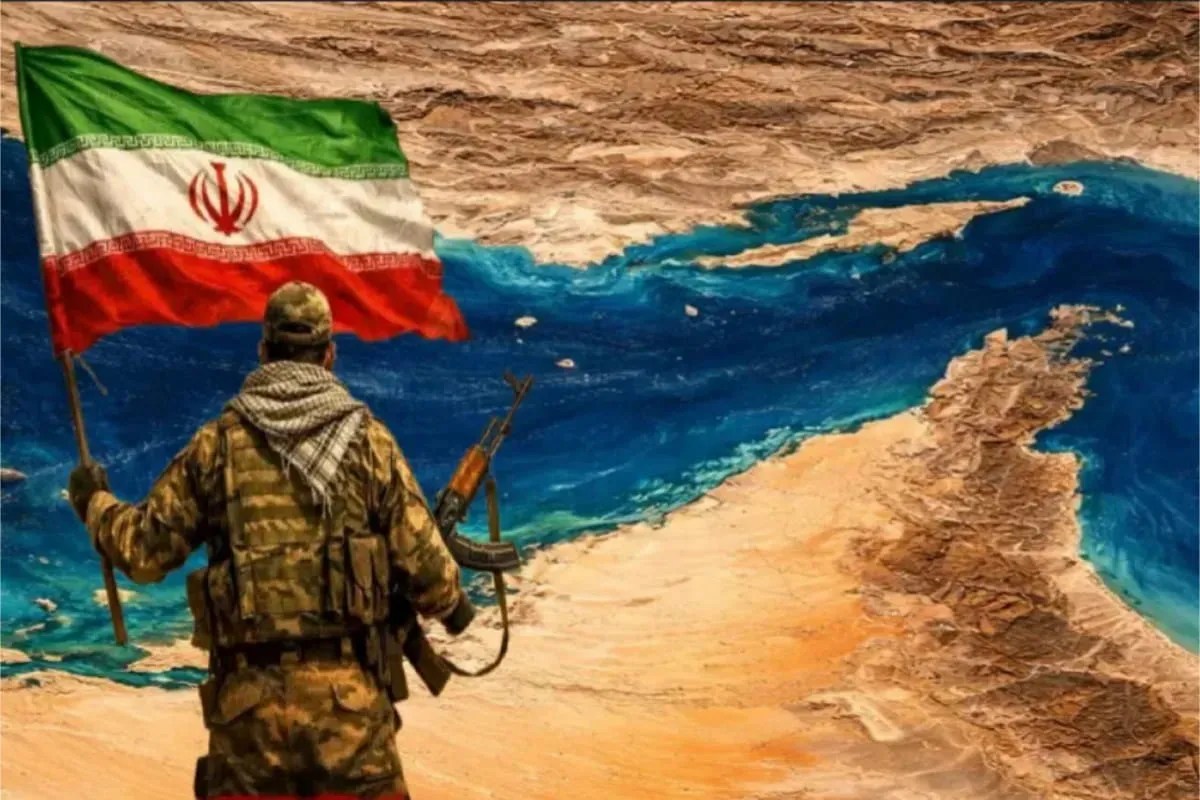
Claims by Iran's Islamic Revolutionary Guard Corps (IRGC) of full control over the Strait of Hormuz amid American military threats collide with hard maritime geography and naval physics. Controlling a narrow shipping lane on paper is one thing. Sustaining a physical blockade against superior naval power while protecting your own coastal infrastructure is another.
I have watched maritime crises in the Persian Gulf flare and cool for over thirty years. Every few years, commanders in Tehran issue sweeping declarations about sealing the waterway. Every few years, tankers keep moving, freight rates spike, insurers adjust premiums, and Washington calculates the cost of escalation rather than fighting a war of attrition on day one.
When the IRGC asserts full control over the Strait of Hormuz, the statement serves multiple audiences at once. It projects domestic strength to hardliners in Tehran. It signals asymmetric reach to regional neighbors. Most importantly, it tests the risk tolerance of shipowners, energy traders, and policymakers in Washington. Yet full control implies uninterrupted authority over who passes and who does not, a standard no single force easily holds in a waterway shared by Oman and Iran and vital to global commerce.
Why Geography Gives Tehran Leverage Without Giving It Monopoly
Look at a map of the Persian Gulf and the Strait of Hormuz jumps off the page. At its narrowest point, the channel between Musandam in Oman and the Iranian coast is roughly twenty-one miles wide. The actual deep-water shipping lanes used by loaded supertankers are much tighter—split into inbound and outbound lanes, each only about two miles wide, separated by a two-mile buffer zone.
That narrowness is the foundation of every IRGC claim. Geography does the heavy lifting.
A massive share of the world's seaborne crude oil and liquefied natural gas passes through those narrow lanes every day. Even a temporary disruption, a single mine discovered in the channel, or an attack on a commercial vessel can send shockwaves through global energy markets within hours. Because global oil supply has thin spare capacity at times, traders price in fear long before a single ship is sunk.
Asymmetric leverage is real. Cheap anti-ship cruise missiles, armed fast-attack craft, unmanned surface vessels, coastal radar batteries, and naval mines do not require a blue-water navy to cause chaos. Hidden along rocky islands like Abu Musa, the Greater and Lesser Tunbs, and Qeshm, mobile launchers can fire and relocate before a warship completes its targeting cycle.
Still, leverage is not monopoly. A chokepoint cuts both ways.
Iran relies heavily on maritime trade and regional shipping lanes to move goods, maintain diplomatic ties, and keep its own economy breathing. Sealing the Strait of Hormuz completely would invite massive retaliatory strikes on Iranian ports, oil terminals, naval bases, and air defenses. Tehran knows that an all-out closure triggers a conflict it cannot win conventionally.
The Gap Between Rhetoric and Sustained Blockade
In naval strategy, there is a vast difference between denial and control. Denial means making transit dangerous, slow, or costly. Control means dictating terms over time without losing the ability to operate.
When the IRGC claims full control over the Strait of Hormuz, analysts should ask a blunt operational question. How long can that posture survive under sustained American air and naval pressure?
A hypothetical example makes the mechanics clear. Imagine an IRGC naval unit deploys fast-attack boats and coastal batteries to halt commercial tankers at the entrance of the strait. Within hours, satellite surveillance, maritime patrol aircraft, electronic warfare assets, and carrier or surface combatants track emissions and vessel movements. If Washington orders strikes against radar sites, missile launchers, and staging bases, the tactical calculus shifts fast from intimidation to survival.
Control in a narrow waterway is measured not by the loudness of the warning, but by who still holds firing positions after the first twenty-four hours of retaliation.
Mines present a more stubborn headache. Naval mines are inexpensive, easy to conceal, and slow to clear. Even a handful of mines can force commercial ships to pause while mine countermeasures vessels sweep the lanes. Yet sweeping mines is routine work for trained navies, even if it takes days or weeks rather than hours.
There is also a diplomatic reality that rarely makes headlines in fiery speeches. Neighbouring states in the Gulf—including Saudi Arabia, the United Arab Emirates, Qatar, and Kuwait—depend on maritime exports for state revenue. A prolonged blockade of the Strait of Hormuz would wreck their economies too, guaranteeing fierce regional pushback and likely inviting deeper foreign military involvement rather than deference to Tehran.
What Washington Actually Fears Amid Escalation
American threats toward Iran rarely aim at a quick, clean victory with zero blowback. Planners in Washington understand the trap of a protracted Gulf conflict.
Even if U.S. forces sink every IRGC patrol boat and level coastal missile batteries, commercial shipping may still hesitate. Insurance markets react to perceived risk, not just physical damage. If war-risk premiums skyrocket or crews refuse to sail, oil prices jump even while warships patrol the channel.
Inflation and energy shocks are political dynamite in the United States and among key allies in Europe and Asia. A spike in crude prices ripples through gasoline pumps, trucking costs, manufacturing, and central bank interest rate decisions. That economic fragility is the real lever the IRGC hopes to pull when it claims dominance over the Strait of Hormuz.
Washington also worries about escalation ladders. A clash at sea can spill into proxy attacks elsewhere in the Middle East, cyber operations against infrastructure, or strikes on shipping outside the immediate strait. Once shots are fired directly between U.S. and Iranian forces, off-ramps narrow quickly.
At the same time, American military planners have spent decades studying this exact theater. Freedom of navigation operations, regional intelligence sharing, carrier strike groups, and long-range strike aircraft give the U.S. overwhelming conventional firepower. Calling the IRGC's bluff carries real risk of a fight, yet folding to every threat carries the cost of looking weak in front of allies and adversaries alike.
Overlooked Players Shaping the Waterway
Most coverage frames a crisis in the Strait of Hormuz as a binary duel between the United States and Iran. That framing misses critical actors whose choices shape outcomes on the water.
| Actor | Primary Interest | Key Constraint |
|---|---|---|
| IRGC Navy | Deterrence, regime security, asymmetric leverage | Vulnerability to concentrated air and naval strikes |
| United States | Freedom of navigation, regional deterrence, energy stability | Risk of oil price spikes and wider regional escalation |
| Gulf Arab States | Export continuity, domestic stability, security guarantees | Exposure to retaliation on oil facilities and cities |
| China & Asian Importers | Uninterrupted energy supply and stable trade routes | Heavy reliance on Gulf crude and LNG shipments |
| Maritime Insurers & Shipowners | Crew safety, asset protection, predictable margins | Rapidly shifting risk premiums and route delays |
China sits quietly at the center of this equation. A large share of Gulf oil and gas bound for Asia passes through the Strait of Hormuz. Beijing has strong commercial incentives to keep the waterway open and avoid a regional war that disrupts energy flows and global trade.
Oman plays another vital, often underappreciated role. Straddling the southern side of the strait, Oman has historically maintained working channels with both Tehran and Washington. Quiet backchannel diplomacy often prevents minor maritime incidents—like aggressive shadowing or vessel seizures—from spiraling into full-scale war.
Then there are the commercial crews and marine insurers. A supertanker is a floating asset worth well over a hundred million dollars carrying cargo worth tens of millions more. Shipowners do not send crews into harm's way out of ideology. When threats escalate, routing decisions happen in boardrooms and underwriting offices just as much as in war rooms.
How to Read the Next Move Without Getting Played
Public statements during high-tension standoffs are designed to move markets and shape nerves. Treating an IRGC claim of full control over the Strait of Hormuz as literal fact hands psychological momentum to the side making the claim. Treating it as empty bluster ignores real asymmetric capabilities.
Watch vessel tracking data, marine insurance advisories, and force deployments rather than speeches. When commercial tankers keep transiting without halting, and when insurers do not freeze coverage, full control remains a slogan rather than a reality on the water.
Keep an eye on the Musandam coastline, island garrisons, and regional air defense movements. Those are the physical indicators of whether forces are positioning for routine deterrence or preparing for sustained combat.
For anyone tracking global markets or regional security, the bottom line is straightforward. Verify movements on the water, price in the risk of brief shocks without assuming a total shutdown, and remember that in a narrow strait, every move carries a steep bill for whoever strikes first.