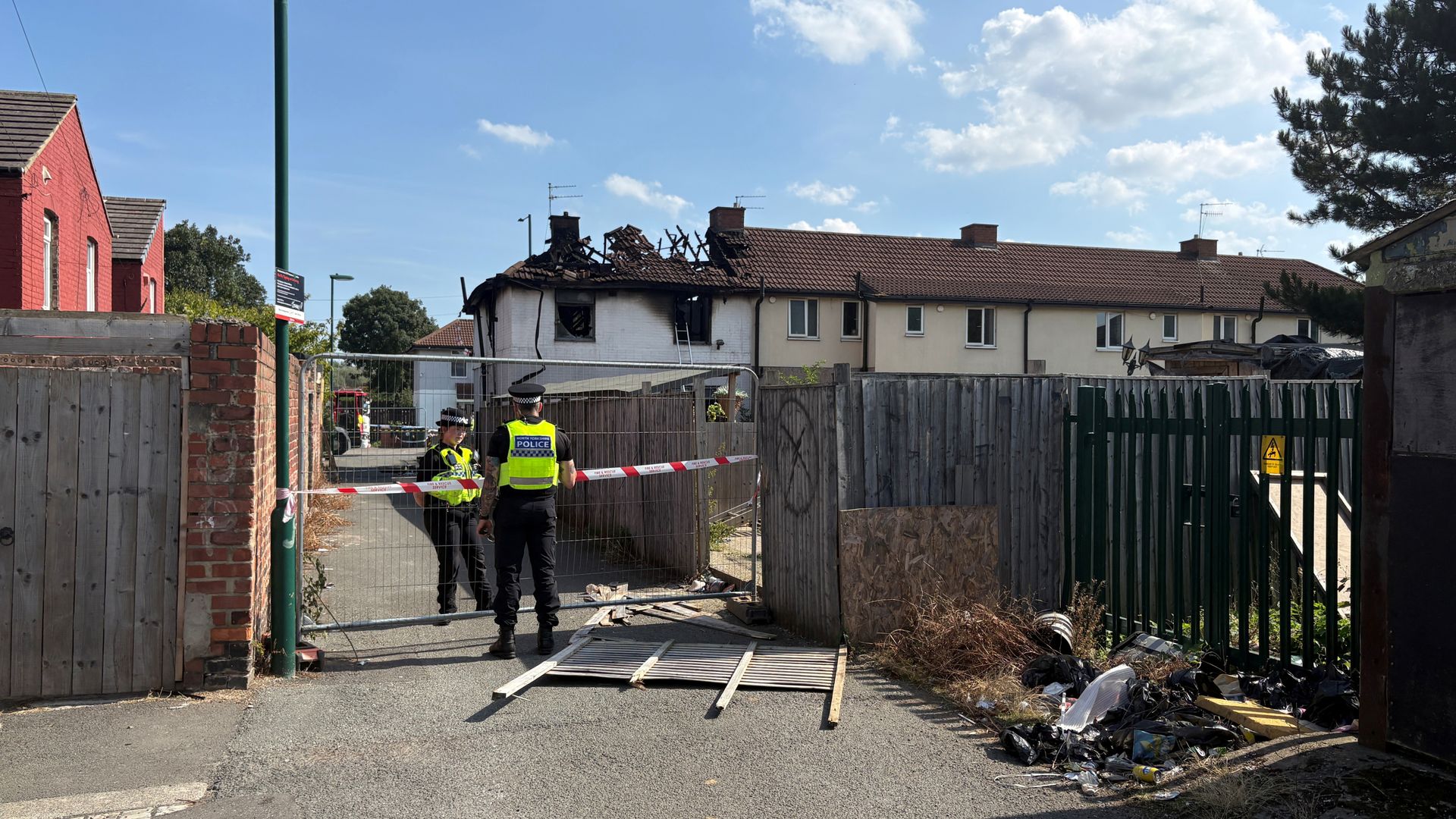
Two people are dead. A woman clings to life in critical condition. Another suspicious residence is reduced to ash. When initial reports tied a fatal blaze to organized crime syndicates, local outlets treated it as a tragic outlier, an isolated explosion of underworld violence playing out in a quiet residential neighborhood. They were wrong. This was not an anomaly. It was a textbook execution of a growing, clandestine property warfare tactic that law enforcement agencies are routinely failing to diagnose until the smoke clears and the bodies are counted.
The mechanics of syndicate-backed arson are brutally simple. When traditional debt collection or intimidation methods fail to yield results, criminal networks turn to thermal coercion. They do not send warning shots through living room windows anymore. They use targeted accelerants designed to bypass modern smoke alarms or turn a residential structure into a furnace within minutes.
Understanding this phenomenon requires stepping past the routine police blotter reports and examining how transnational criminal enterprises manage real estate assets, illicit drug production sites, and territorial disputes. When a safe house is compromised, or when a debt goes uncollected from a tenant or local affiliate, the property becomes a liability. Burning it down serves three distinct purposes. It destroys forensic evidence, sends an unmistakable message to rival factions, and allows syndicates to collect fraudulent insurance payouts through dummy corporations or coerced owners.
Street-level investigators often misclassify these incidents as standard electrical faults or accidental kitchen fires. First responders face immense pressure during active scenes, and a charred room looks largely the same whether the ignition source was a frayed toaster cord or a gallon of commercial-grade diesel poured across a floorboard. Arson investigators require days, sometimes weeks, to parse chemical residue signatures. By the time laboratory results confirm the presence of accelerants, the trail has gone cold, and the criminal cell responsible has already dissolved into the wider urban underbelly.
The human cost of this operational shift is staggering. Neighborhoods built for families and working-class residents are transformed into collateral damage zones. When syndicates choose residential streets to settle accounts, they ignore the proximity of children, elderly residents, and bystanders who have zero connection to illicit trade.
The Anatomy of an Underworld Firebombing
To understand how a house fire transitions from a local tragedy into an organized crime signature, one must look at the supply chain of illicit violence. Syndicate foot soldiers rarely improvise. They follow strict operational protocols that minimize forensic recovery while maximizing psychological terror.
Modern criminal arson relies on chemical timers or remote-ignition devices that give perpetrators ample time to clear the perimeter before ignition. Accelerants are chosen based on availability and burn temperature. Standard gasoline is frequently abandoned in favor of heavier industrial solvents that leave distinct, heavy-hydrocarbon footprints which standard municipal fire departments may initially misidentify as household cleaning agents or stored vehicle fluids.
Furthermore, the choice of target is rarely random. Properties linked to forced mortgage fraud, illegal cultivation operations, or low-level money laundering fronts are prime candidates for thermal erasure. When an occupant attempts to exit a life of crime or fails to surrender control of a property, the physical structure becomes an expendable chess piece.
Law enforcement agencies are structurally ill-equipped to intercept these plots. Intelligence units focus heavily on narcotics distribution networks, human trafficking rings, and weapons smuggling. Arson, by contrast, is frequently delegated to municipal fire marshals who operate in silos, separate from federal organized crime task forces. This bureaucratic divide creates a blind spot. Criminal organizations exploit this institutional separation, treating municipal fire departments as emergency responders rather than frontline crime scene investigators.
The Financial Architecture Behind the Smoke
Crime does not burn money without a reason. Beneath the horror of charred walls and loss of life lies a calculated financial ledger. Insurance fraud remains the lifeblood of syndicate property destruction.
Consider how a typical criminal property acquisition operates. A shell company purchases a dilapidated residential home using illicit cash reserves. The property is insured well above market value through secondary lenders who ask minimal questions regarding structural integrity or occupancy status. Once the property has served its temporary purpose—whether as a distribution hub or a stash location—it becomes a financial drain. Maintenance costs, police surveillance risks, and neighborhood complaints mount.
The solution is structural elimination. By hiring professional torch operators, syndicates convert a depreciating, high-risk asset into a liquid insurance payout. The human element, tragically, is treated as a calculated risk. If occupants happen to be inside, it accelerates the psychological impact on rival networks or serves as a brutal enforcement mechanism against anyone thinking of turning informant.
Why Current Policing Models Are Failing
The public expects swift justice when lives are lost. Yet, the reality of prosecuting syndicate-backed arson is an exercise in frustration for detectives.
Witness intimidation is absolute in these neighborhoods. Neighbors who heard vehicles idling at three in the morning or noticed unfamiliar figures casing the property weeks prior suddenly develop selective memory when approached by investigators. They know the police will leave at dusk, but the syndicate remains. Protection programs are underfunded and overburdened, unable to offer credible safety guarantees to working-class families living in high-crime postal codes.
Compounding the issue is the evidentiary threshold required for arson convictions. Proving intent requires establishing a clear chain of custody for chemical samples, matching microscopic trace evidence to specific suspects, and overcoming defense arguments about faulty wiring or accidental domestic disputes. Without a digital paper trail or a cooperating insider, prosecutors often hesitate to bring charges, leaving catastrophic crimes officially labeled as undetermined.
Breaking the Cycle
Halting this wave of targeted property violence demands a complete overhaul of how emergency services and law enforcement interact. Municipal fire departments must be integrated directly into organized crime intelligence sharing networks from the moment a multi-fatality residential fire displays suspicious burn patterns.
Investigators need specialized training to recognize the chemical signatures of professional arson before the bulldozers clear the rubble. Financial crimes units must simultaneously audit the ownership deeds of every suspicious residential fire in high-risk districts, treating insurance payouts as potential proceeds of crime rather than routine settlements.
Until local authorities stop treating these incidents as isolated tragedies and start recognizing them as coordinated corporate warfare executed by criminal syndicates, the smoke will continue to rise over residential streets, leaving behind silent ruins and grieving families with nowhere left to turn.