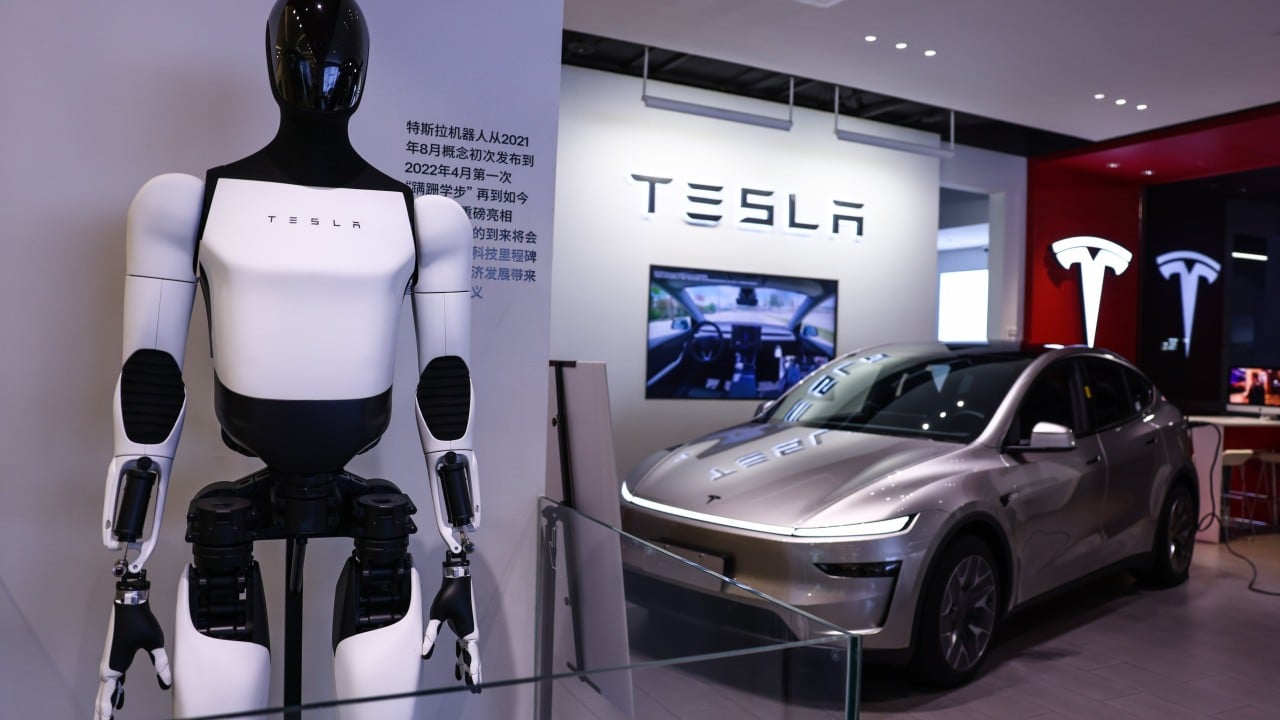
Tesla has officially introduced limited-time cash incentives of 5,000 yuan for the Model 3 and 10,000 yuan for the Model Y on in-stock inventory across China, valid through September 30. While headline-chasers frame these moves as an emergency price cut triggered by sliding Shanghai domestic sales, the structural reality inside the world's most cutthroat electric vehicle market is far more calculated. This is not an abrupt panic reaction to an unexpected slump. It is a precise quarter-end inventory maneuver designed to balance Giga Shanghai's massive export apparatus with domestic delivery targets, masking a deeper margin squeeze that Elon Musk's operation can no longer entirely avoid.
The Manufacturing Rhythm Behind the Numbers
To understand why Tesla is dropping cash incentives onto Chinese showroom floors now, you have to look at how Giga Shanghai actually breathes. The facility operates on a rigid cyclical pulse. The first month of any quarter is heavily dedicated to export manufacturing, churning out tens of thousands of units destined for Europe, Canada, and other international ports. Domestic deliveries inevitably compress during these weeks. Recently making news lately: Why Everything You Know About Sanctions Evasion is Wrong.
By the time the third month rolls around, the factory pivots back inward, flooding the local wholesale pipeline. But a massive production machine cannot pause without incurring punishing overhead costs. When local retail momentum softens—as evidenced by China Passenger Car Association data showing domestic deliveries down over the first seven months of the year compared to the prior period—un-earmarked inventory begins to pool.
The September campaign, branded locally as combined golden autumn benefits, layers these direct cash reductions on top of existing five-year zero-interest financing schemes, paint credits, and insurance subsidies. By tying the pure cash discount strictly to a September 30 delivery deadline, Tesla is attempting to force fence-sitting buyers to pull the trigger before the quarter closes. They are buying delivery velocity with margin points. Further details on this are detailed by CNBC.
The Domestic Competitor Bloodbath
The narrative that Tesla is merely adjusting to a normal manufacturing cycle ignores the atmospheric pressure exerted by domestic rivals. Companies like BYD, NIO, and Xpeng have stopped playing the old rules of engagement. They are iterating vehicle models at a breakneck speed that traditional automotive timelines deem impossible, stuffing cabins with advanced compute hardware, localized software integrations, and aggressive luxury features at price points that undercut foreign brands.
Consider the Model 3's trajectory. Deliveries for the sedan have faced steep contractions year-on-year for much of the period, battered by an endless parade of domestic alternatives that offer similar specifications with fresher styling and more palatable local infotainment ecosystems. Tesla's minimalist interior philosophy, once viewed as avant-garde, is increasingly treated by Chinese consumers as a cost-cutting measure rather than a design choice.
When a consumer walks into a showroom in Shanghai or Shenzhen, they are not comparing Tesla solely to legacy German luxury marques. They are weighing it against local brands offering instant biometric integration, hyper-fast charging architecture built on native 800V platforms, and localized voice assistants that understand regional dialects natively. Against that backdrop, a 5,000 yuan discount on a Model 3 or a 10,000 yuan break on a Model Y looks less like an unmissable bargain and more like a necessary tax just to stay in the conversation.
The Export Pressure Valve and Its Limits
For years, Giga Shanghai served as an indefatigable export engine, shipping affordable, high-quality electric vehicles abroad to plug holes wherever regional manufacturing lagged. That valve is starting to choke. Shipping costs, rising trade friction, and the looming shadow of international tariffs mean that sending hundreds of thousands of Chinese-built units across oceans is no longer a frictionless safety net.
When international markets begin to saturate or erect protective barriers, Giga Shanghai's surplus has nowhere to go but back onto domestic asphalt. That forces the company into a corner. Maintain high factory utilization rates and watch inventory lots fill up, or throttle production and suffer higher per-unit fixed manufacturing costs. Tesla chose the former, using financial engineering—zero-interest loans spanning sixty months alongside direct cash cuts—to artificially pull future demand into the present.
The financial mechanics of this strategy reveal the erosion of pricing power. Offering extended zero-percent financing is a hidden subsidy that transfers capital cost directly to the automaker's balance sheet over half a decade. When combined with paint waivers and insurance subsidies, the total concession package is far deeper than the nominal 5,000 or 10,000 yuan headline figures suggest.
What Comes After the Quarter-End Dash
Pushing inventory out the door by the end of September solves a temporal accounting problem for Wall Street analysts obsessed with quarterly delivery scorecards. It does nothing to solve the structural margin erosion happening underneath. Every yuan surrendered to clear a parking lot full of Model Ys is a yuan stripped away from the research and development war chest required to keep pace with an adversarial domestic market.
Tesla remains a master of operational scale, and Giga Shanghai remains one of the most efficient manufacturing marvels on earth. But efficiency alone cannot insulate a company from a market that has evolved past its product cycle. The September discount blitz is a temporary tourniquet on a long-term wound. As the year draws toward its final stretch, the question is not whether Tesla can clear its current inventory bottleneck before the calendar flips, but how many more concessions it will take to keep the assembly lines moving at full throttle.