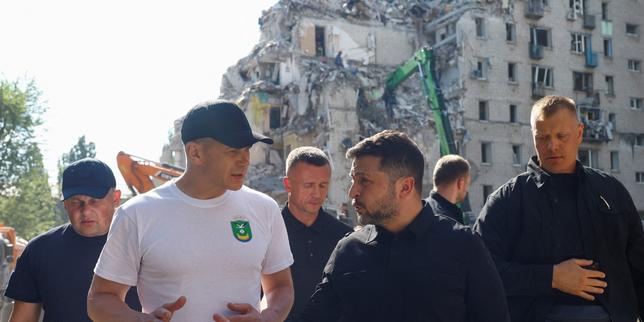
Kyiv is burning through its air defense interceptors faster than Western factories can build them. Following the most devastating Russian missile and drone assault on the Ukrainian capital since the outbreak of full-scale hostilities, President Volodymyr Zelensky promised a swift, severe retaliation. But retaliation is a political necessity, not a military strategy. The brutal reality on the ground reveals that Ukraine’s air defense umbrella is fracturing under the weight of sustained, multi-axis saturation strikes, exposing a critical vulnerabilities gap that retaliatory drone strikes on Russian oil depots cannot fix.
The Western narrative has long focused on the heroism of Ukrainian air defense crews and the high interception rates of Patriot systems. That narrative is hitting a wall of math. Moscow has systematically adapted its strike tactics, combining low-cost Iranian-designed Shahed drones with hypersonic Kinzhal missiles and North Korean ballistic ordnance to strip away Kyiv’s defensive layers.
To understand how Ukraine reached this tipping point, one must look past the official press releases and examine the cold logistics of attrition warfare.
The Calculus of Air Defense Attrition
Air defense is a losing economic proposition when fighting a prolonged war against a major industrial power. Russia is currently producing cruise missiles at a rate exceeding its pre-war capacity, despite sweeping Western sanctions. They have achieved this by re-routing supply chains through Central Asian intermediaries and shifting their domestic economy to a permanent wartime footing.
When Russia launches a swarm of twenty cheap drones alongside four sophisticated supersonic missiles, they are not just trying to hit buildings. They are baiting the hook.
A single Patriot interceptor missile costs roughly $4 million to manufacture. An Iranian-designed delta-wing drone costs Russia approximately $20,000 to produce. Ukrainian commanders face an impossible, split-second choice. They must decide whether to fire a multi-million-dollar missile at a cheap drone to protect a power substation, or save that missile for an incoming ballistic threat that might not materialize until the next wave.
+------------------------+-------------------+-----------------------+
| Weapon System          | Estimated Cost    | Tactical Role         |
+------------------------+-------------------+-----------------------+
| Shahed-136 Drone       | $20,000           | Flak Bait / Saturation|
| Kh-101 Cruise Missile  | $1.2 Million      | Infrastructure Strike |
| Patriot PAC-3 Missile  | $4.1 Million      | High-Tier Intercept   |
| NASAMS Interceptor     | $1.0 Million      | Mid-Tier Defense      |
+------------------------+-------------------+-----------------------+
This economic asymmetry is compounded by a stark reality in manufacturing. The global defense industrial base cannot keep pace. Lockheed Martin and Raytheon can increase production lines for interceptor missiles, but scaling high-tech manufacturing takes years, not months. The supply chains require specialized semiconductors, rare-earth elements, and highly skilled labor that cannot be conjured out of thin air by a congressional appropriation bill.
The Anatomy of the Capital Incursion
During the latest assault on Kyiv, the Russian Aerospace Forces executed a complex, multi-tiered strike package that bypassed several early-warning nets. Military analysts tracking the telemetry noted a distinct shift in flight patterns. Instead of flying in predictable, linear vectors, Russian cruise missiles utilized low-altitude terrain-masking techniques, weaving through river valleys to blind Ukrainian radar installations until the final seconds before impact.
Electronic warfare played a decisive role. Russian forces deployed advanced jamming pods that generated false radar echoes, confusing the automated targeting systems of Western-supplied batteries. This forced Ukrainian operators to switch to manual tracking modes, significantly increasing reaction times and reducing the probability of a successful kill.
The consequences were visible across the capital. While official channels reported a high interception rate, the debris from destroyed missiles falling into densely populated urban zones caused catastrophic structural damage and civilian casualties. More concerningly, several high-value targets, including energy distribution hubs that had been painstakingly rebuilt over the spring, were neutralized.
Kyiv’s energy grid is now teetering. Patchwork repairs can only sustain the civilian population for so long before sub-zero temperatures turn structural damage into a humanitarian emergency.
The Retaliation Dilemma
President Zelensky's public declaration of a counter-strike is aimed squarely at maintaining domestic morale and signaling resolve to international backers. However, Ukraine's offensive options inside Russian territory are severely constrained by political red lines and material scarcity.
Long-range strike capabilities remain a point of friction between Kyiv and its Western partners. The United States and European allies have consistently throttled the use of long-range weapons inside internationally recognized Russian borders, citing fears of vertical escalation. This forces Ukraine to rely on its domestic long-range drone program.
While Ukrainian drones have successfully struck oil refineries and ammunition depots deep within Russia, these operations are asymmetric pinpricks rather than decisive strategic blows. They embarrass the Kremlin and disrupt local logistics, but they do not alter the broader air-defense calculus over Kyiv.
To degrade Russia’s ability to launch these devastating raids, Ukraine needs the capacity to strike the archers, not just the arrows. This means targeting the Tu-95MS strategic bombers while they are parked on tarmac at airfields located hundreds of miles from the Ukrainian border. Without the permission and the specific targeting data required to use Western cruise missiles for these missions, Ukraine is fighting with one hand tied behind its back.
The Fractured European Shield
European promises of a unified air defense shield remain largely unfulfilled on the timeline Ukraine requires. While individual nations have donated batteries from their own active inventories, these contributions have left Western European nations dangerously exposed by their own military standards.
The German-led European Sky Shield Initiative is a long-term modernization project designed for the next decade, not the current crisis. Furthermore, the diversification of Ukraine’s air defense arsenal has created a logistical nightmare. On any given day, Ukrainian technicians are maintaining a chaotic mosaic of systems: American Patriots, German IRIS-T, Norwegian NASAMS, French-Italian SAMP/T, and aging Soviet-era S-300 complexes.
Each of these systems requires its own distinct supply chain, specific maintenance protocols, and unique operator training. A part that breaks on an IRIS-T launcher cannot be swapped with a component from a Patriot battery. The specialized repair facilities are located outside Ukraine, meaning damaged systems must be transported by rail across the Polish border, taking them out of the theater of operations for weeks at a time.
This fragmentation reduces operational efficiency. It strains the communication networks trying to link these disparate radars and launchers into a cohesive, real-time picture of Ukrainian airspace.
The Winter Outlook
The Kremlin’s strategy is clear to anyone who has watched Russian military doctrine evolve over the last forty years. They are executing a classic campaign of infrastructure destruction aimed at breaking the psychological resilience of the population and forcing an economic collapse.
If the current rate of missile expenditure continues without a massive, unprecedented influx of Western interceptors, Ukraine will be forced to make brutal triage decisions. Commanders will have to choose which cities to protect and which to leave exposed. Safeguarding the front lines against Russian close-air support could mean leaving critical industrial centers in Western Ukraine completely vulnerable to long-range strikes.
The conflict has entered a phase where industrial capacity is the ultimate arbiter of victory. The side that can sustain its production lines and manage its inventory of high-technology munitions will dictate the terms of the war's next phase, while the other side is left to watch the skies.