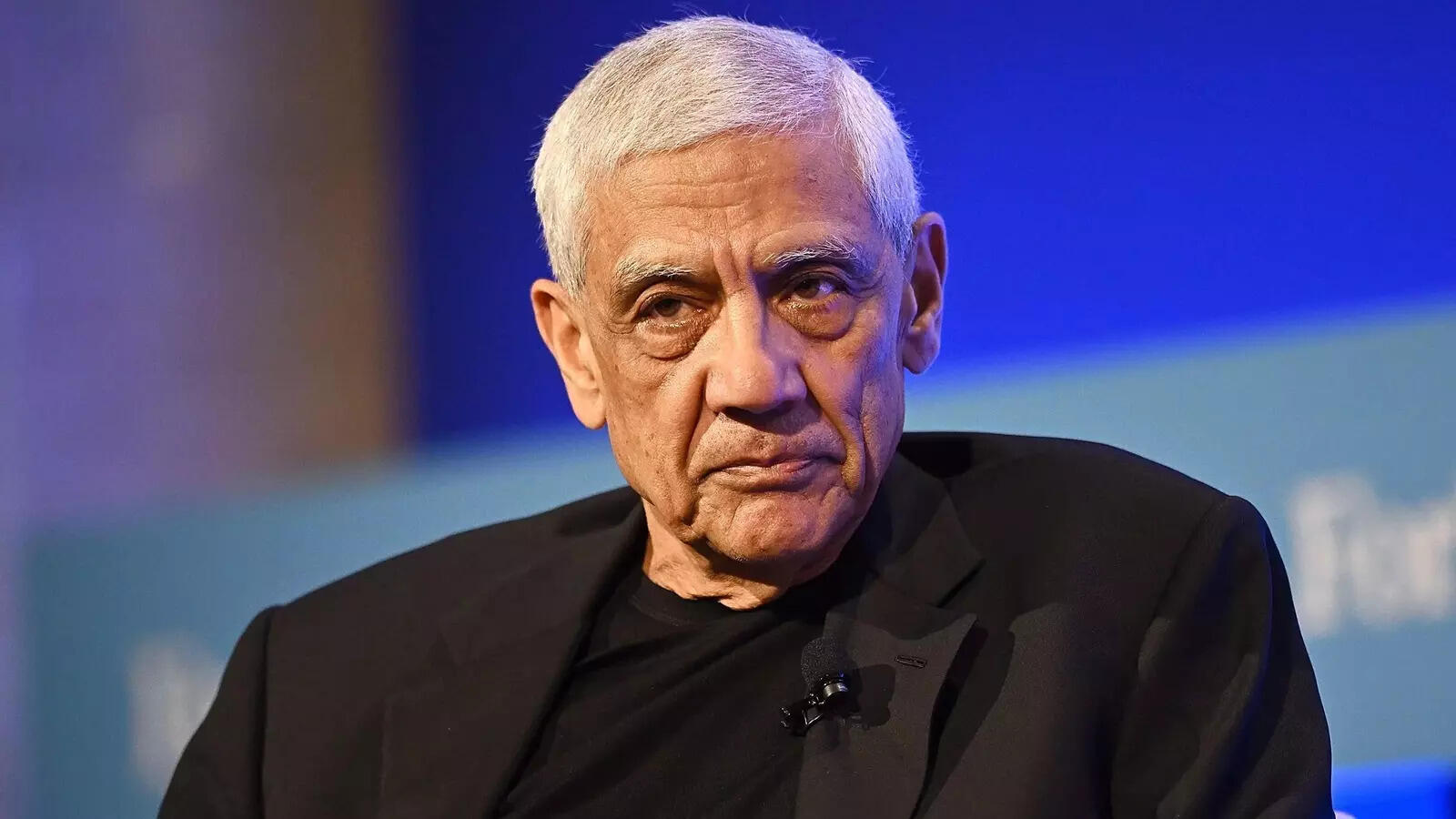
Vinod Khosla sparked fierce debate across Silicon Valley and tech circles after posting publicly to recruit a chief of staff, drawing sharp criticism over expectations, compensation, and the true nature of the role. Much of the outrage centers on how high-profile founders and venture capitalists frame grueling, multi-hat operational positions as prestige apprenticeships while leaving pay, boundaries, and decision authority ambiguous.
Watch enough venture cycles and the pattern becomes unmistakable. Every few years, a prominent investor or founder broadcasts a call for a chief of staff, framing the seat as a front-row ticket to power, pattern recognition, and access to elite deal flow. Critics push back almost immediately, dissecting the job description line by line, questioning whether the workload matches the reward, and pointing out how quickly enthusiastic applicants can turn into burned-out generalists.
That friction explains why a recruiting post from a figure as recognizable as Vinod Khosla cuts so deeply. Khosla is no ordinary background player in venture capital. As a co-founder of Sun Microsystems and the founder of Khosla Ventures, he has spent decades building a reputation around contrarian bets, intense technical ambition, and blunt commentary on everything from climate tech to artificial intelligence and public policy. When someone with that stature posts openly for a chief of staff, the post stops being just a hiring notice. It becomes a public Rorschach test for how power, labor, and ambition operate at the top of the tech economy.
Why High-Profile Chief of Staff Searches Trigger Instant Backlash
Public hiring posts from major venture figures invite scrutiny because they expose the gap between romanticized startup folklore and day-to-day operational reality. A chief of staff role at an investment firm or high-velocity tech operation rarely looks like the tidy executive track portrayed on social media. Instead, it frequently sits at the intersection of scheduling triage, research synthesis, stakeholder management, event logistics, follow-through on half-formed ideas, and quiet troubleshooting behind closed doors.
Critics often react to the tone of these listings before they even examine the compensation. When a post emphasizes intensity, speed, adaptability, or willingness to wear ten hats at once without spelling out clear guardrails, seasoned observers read between the lines. They see a role designed to absorb friction for a very busy principal whose time is scarce and whose attention shifts rapidly.
There is also a structural tension inherent to venture capital itself. Unlike an operating company where a chief of staff might coordinate cross-functional product launches, engineering sprints, and quarterly revenue targets, an investor's day is fractured across portfolio check-ins, LP relationships, media appearances, policy debates, and new thesis exploration. Coordinating that kind of sprawl requires constant context switching. People who have watched talented operators burn out in high-pressure advisory or support seats recognize the warning signs right away.
At the same time, defenders of these roles argue that critics misread the opportunity. To a hungry early- or mid-career operator, proximity to high-stakes capital allocation and industry leaders can compress years of learning into months. Being in the room when theses are debated, founders are evaluated, and strategic partnerships are forged offers exposure you cannot easily buy or simulate in a standard corporate hierarchy. Both sides are reacting to real incentives, which is why the debate rarely settles into simple consensus.
The Structural Gray Area of the Chief of Staff Title
Part of the confusion around any chief of staff search comes from the fact that the title has no universal definition. In military history, a chief of staff plays a clear institutional role in aligning command execution across divisions. In Silicon Valley, the title has stretched to cover everything from junior project coordinator and executive assistant to shadow operator and strategic sounding board.
Because the boundaries are fluid, expectations easily collide. Consider a hypothetical example where a mid-level analyst takes a chief of staff role expecting to lead investment diligence and sit on strategy calls, only to spend sixty percent of their week chasing calendar changes, drafting memos, and managing travel logistics. Neither side necessarily acted in bad faith, yet misalignment sets in fast when authority is implied by a grand title rather than defined in concrete terms.
Authority Without Ownership
One of the hardest realities of serving as a chief of staff to a dominant principal is carrying responsibility without formal line authority. When you do not own a P&L or directly manage a permanent department, getting things done depends on borrowed credibility. You are asking busy partners, founders, lawyers, or external advisors to move quickly on behalf of someone else's priorities.
That dynamic takes a specific temperament. Someone who thrives on clear ownership and direct credit can feel frustrated when their best work remains invisible or depends entirely on the principal's momentum. Conversely, someone who understands how to influence without formal rank—by preparing sharp briefs, removing bottlenecks, and keeping commitments crisp—can make an overstretched executive dramatically more effective.
The Apprenticeship Illusion Versus Real Career Leverage
Another flashpoint in these debates is whether the role builds durable career equity or merely proximity. Proximity feels intoxicating at first. Being cc'd on high-level threads, attending closed-door dinners, or traveling alongside prominent figures gives a sense of momentum that is hard to replicate elsewhere.
Yet proximity is not the same as skill compounding. Over two or three years, a strong operator wants to build capabilities that travel cleanly to the next chapter—whether that means leading operations at a startup, raising a fund, joining a growth team, or launching their own company. If the role consists mostly of reactive fire drills and personal coordination, the external market may value the pedigree of the name on the resume less than the candidate hoped.
| Dimension | High-Leverage Chief of Staff Seat | Low-Leverage Bottleneck Seat |
|---|---|---|
| Scope of Work | Clear ownership of recurring initiatives, research, or ecosystem programs | Mostly reactive coordination, scheduling, and ad-hoc errands |
| Decision Access | Direct visibility into why trade-offs are made and how priorities shift | Late-stage execution after decisions are already locked in |
| Skill Compounding | Sharpens analytical judgment, operator instincts, and network depth | Builds speed at triage, with limited transferable domain ownership |
| Career Trajectory | Strong launchpad into operating leadership, investing, or founding | Risk of being pigeonholed as an executive support generalist |
What Critics Miss About High-Intensity Venture Environments
While skepticism toward demanding job posts is healthy, critics sometimes flatten high-intensity environments into simple caricatures of exploitation. Venture capital and frontier tech operate under asymmetric payoffs where speed, conviction, and information quality matter enormously. A principal juggling dozens of commitments across emerging sectors—from deep tech and energy to software and AI—cannot personally track every thread with equal rigor.
In that context, hiring a sharp chief of staff is an attempt to solve a genuine bandwidth problem. A capable person in that seat acts as an intellectual force multiplier, turning scattered thoughts into structured action items, tracking follow-ups across weeks, and flagging blind spots before they become costly mistakes. When the relationship works, it creates real value on both sides.
It is also worth noting that public scrutiny often penalizes transparency more than opacity. Many investors and founders fill chief of staff roles quietly through personal networks, warm introductions, or informal referrals, avoiding public commentary altogether. Posting openly invites instant pile-ons from people who have never spoken to the poster or seen the internal workflow, even when an open call is meant to widen access beyond insider circles.
Still, transparency only helps if the posting sets realistic expectations. Vague appeals to hustle, grit, or once-in-a-lifetime exposure invite eye-rolls from experienced operators who have seen how easily enthusiasm is mined without clear accountability. Specificity—about daily cadence, reporting lines, expected tenure, and what success looks like after six months—does far more to attract serious candidates than hype.
Overlooked Factors That Decide Whether the Role Works
When observers argue over a chief of staff listing, they usually focus on prestige and workload while overlooking the practical mechanics that determine whether someone thrives or flames out. After watching dozens of executive support and chief of staff arrangements play out across tech and finance, a few quiet factors consistently separate healthy tenures from rocky ones.
- Communication cadence: If a principal communicates in rapid-fire bursts at midnight and expects instant replies on weekends, misalignment starts on day one unless explicit norms are set around urgency versus routine updates.
- Second-in-command boundaries: Tension often flares when a chief of staff inadvertently steps on the toes of established functional leads, partners, or long-tenured assistants whose turf was never clarified.
- Exit velocity: A healthy chief of staff arrangement usually has a natural horizon—often eighteen months to three years—with clear support for what the person builds or steps into next, rather than an open-ended limbo.
- Compensation structure: Base pay, bonus transparency, and any carry or equity participation need to match the actual market value of the labor, not just the perceived glamour of the brand.
None of these details are flashy enough to dominate a social media thread, yet they govern almost every day of the job. A candidate can love the mission, admire the principal's intellect, and still burn out quickly if the daily operating rhythm is chaotic or boundaries are nonexistent.
How Sharp Operators Evaluate Roles Like This
Anyone considering a chief of staff seat around a prominent investor or founder should treat the public post as a starting signal, not the full picture. The real due diligence happens in conversation with current and former team members who have worked closely with the principal over time. Ask how decisions actually get made when priorities clash, how feedback is delivered when something goes wrong, and what happened to the last two people who held adjacent roles.
Pay close attention to concrete examples rather than polished pitches. Ask what a typical Tuesday and a typical Friday look like, which recurring problems the role is meant to solve permanently, and what level of autonomy exists when the principal is unreachable. If the answers stay vague or rely solely on the excitement of being in orbit around big ideas, that ambiguity will likely follow you into the job.
Ultimately, the debate around Vinod Khosla's chief of staff search endures because it touches a nerve that runs through modern ambition: the tug-of-war between chasing access to power and protecting your time, autonomy, and long-term growth. Watch how the role is actually structured once filled, because in high-stakes tech circles, execution behind closed doors always tells the real story.