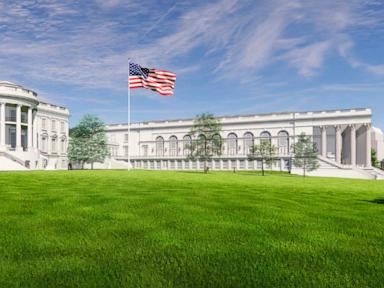
The federal government has officially argued that the American court system lacks the authority to stop a sitting president from fundamentally altering the architecture of the White House. During tense oral arguments before a three-judge panel of the U.S. Court of Appeals for the D.C. Circuit, Justice Department representation staked out an expansive vision of executive power, asserting that only Congress can intervene to halt the ongoing construction of a $400 million, 90,000-square-foot ballroom on the ruins of the demolished East Wing. The legal showdown presents a high-stakes conflict over institutional checks and balances, cloaked in a dispute over historic preservation and executive estate management.
By framing a massive real estate development project as an unreviewable national security priority, the administration is testing whether a president can bypass decades of statutory oversight through the simple act of demolition.
The current legal battle traces back to October 2025, when heavy machinery arrived on the South Lawn to dismantle the East Wing, a historic structure that had housed the offices of the first lady and her staff since the Franklin D. Roosevelt administration. In its place, the administration initiated vertical construction on an opulent reception facility designed to hold over a thousand guests, meant to eliminate the need for temporary social tents on the lawn. The National Trust for Historic Preservation swiftly sued, alleging blatant violations of the Administrative Procedure Act and the National Environmental Policy Act, alongside a failure to secure mandatory reviews from the National Capital Planning Commission and the Commission of Fine Arts.
While a lower court judge initially ordered work to stop, the administration secured a temporary administrative stay by tying the aboveground entertainment venue to a deeply fortified underground military bunker and medical facility beneath the site.
The core of the government's defense rests on an aggressive interpretation of standing and judicial overreach. Justice Department attorney Yaakov Roth informed the appellate panel that the preservationists simply lack the legal right to challenge the project in federal court. When pressed by Judge Patricia Millett on whether a court could have intervened on day one of the demolition, the government's position remained unyielding. The administration maintains that the judiciary has no role to play here, arguing that lawmakers tacitly approved such actions by previously allocating routine funds for annual White House improvements.
This argument attempts to establish a fait accompli. If a president can demolish a historic landmark before a court can review the merits of the case, and then argue that halting the subsequent construction creates a national security hazard, the statutory review process is rendered entirely obsolete.
Preservationists argue that this theory flies in the face of foundational American jurisprudence. Representing the National Trust for Historic Preservation, legal counsel invoked Marbury v. Madison to remind the panel that the ultimate duty of the court system is to say what the law is, particularly when an executive branch actor oversteps boundaries. The challengers emphasize that the White House is not a private estate. It is public property, subject to federal laws governing historic preservation, environmental impact assessments, and legislative appropriations.
The scale of the project challenges the definition of a simple domestic alteration. A 90,000-square-foot structure is roughly double the footprint of the existing executive residence. Ripping out a chunk of a historic landmark and replacing it with a massive, privately funded entertainment hub stretches the legal boundaries of routine home maintenance.
Financially, the project has evolved into a moving target. While initial rhetoric claimed the venue would cost around $200 million and be entirely covered by private donors, recent estimates have soared past $400 million. The reliance on private funding introduces a complex web of ethical questions. Who are these donors, and what expectations come with financing a permanent addition to the primary seat of American political power? The administration has kept the specifics of these financial arrangements opaque, asserting that because the structure sits on federal ground, the executive branch maintains the final say over design, zoning, and code requirements.
The strategic pairing of the ballroom with an underground bunker complicates judicial intervention. The Secret Service has intervened in court filings, with officials stating that leaving an open, unfinished construction zone on the White House grounds directly imperils the safety of the executive branch leadership. By weaving the luxury social space into the physical infrastructure of a heavily fortified military command center, the administration has created a structural knot that is difficult for a district judge to untie without looking like they are compromising the physical safety of the commander-in-chief.
This leaves the D.C. Circuit panel with a profound institutional dilemma. Ruling in favor of the preservationists would assert the supremacy of statutory law over executive unilateralism, but it would also require the courts to police an active construction zone at the nation's most secure residence. Siding with the administration, conversely, would signal that any future president can dismantle pieces of the federal footprint at will, provided they move fast enough to outrun the filing speed of a preliminary injunction.
The real crisis unfolding in the D.C. Circuit is not about architectural tastes, historical sentimentality, or whether formal dinners should be held under temporary canvas tents. It is a fundamental disagreement over whether the physical home of the American presidency belongs to the nation or to the temporary occupant of the office.