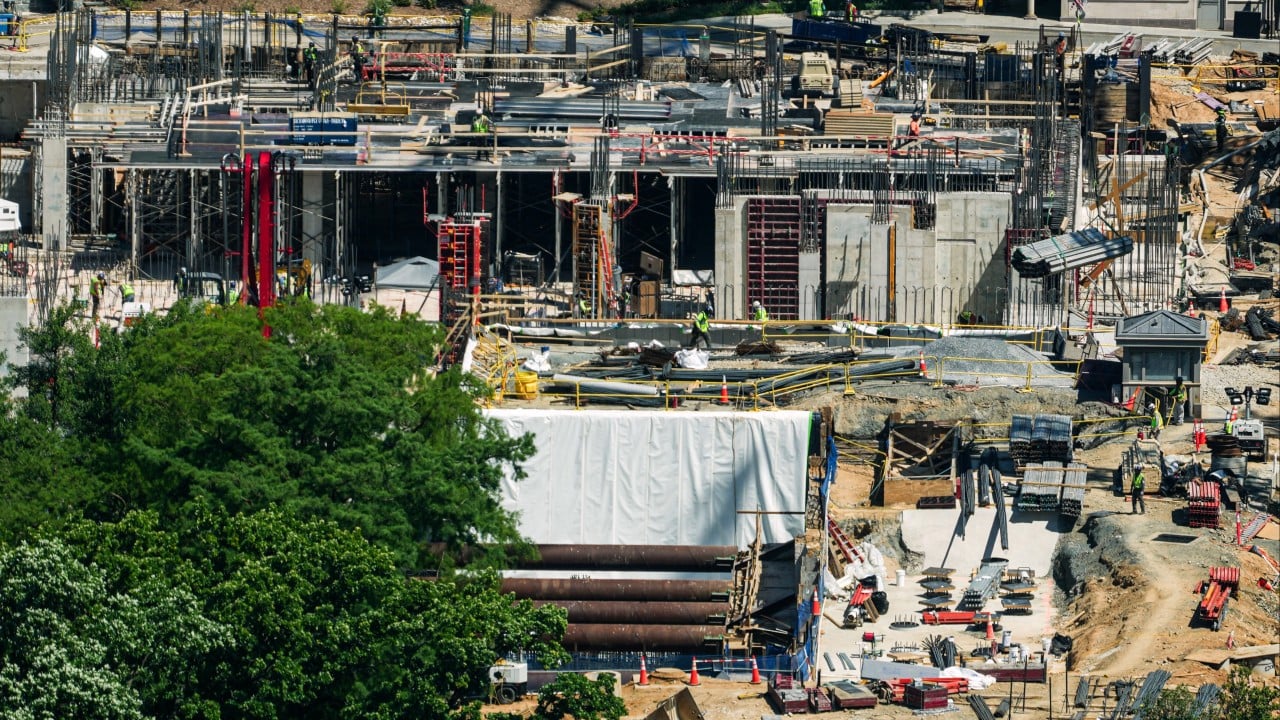
The physical remains of the White House East Wing are currently sitting in massive, toxic piles at a public golf course two miles from the Oval Office. This is not a metaphor for political upheaval; it is a literal environmental and legal reality. More than 30,000 cubic yards of excavated soil and demolition rubble have been dumped at East Potomac Golf Links, according to an interim report by Jacobs Engineering Group Inc. The report confirms the presence of lead, chromium, petroleum byproducts, and PCBs at levels exceeding laboratory reporting limits. What began as a lightning-fast $400 million renovation project has transformed into a high-stakes federal lawsuit that pits the Trump administration's "build first, ask later" philosophy against fundamental environmental protections and the health of the D.C. public.
The core of the crisis lies in the speed with which the administration bypassed traditional oversight. Typically, a project of this scale on federal land requires a mountain of paperwork under the National Environmental Policy Act (NEPA) and the National Historic Preservation Act. Instead, the East Wing was demolished in October 2025 to make room for a massive new ballroom, with the resulting debris trucked directly to a public park. The administration argues the soil was tested and met safety standards, but the engineering report released this week suggests otherwise, describing a "cocktail of contaminants" that now sits exposed to the elements where local residents play golf.
The Logistics of a Toxic Transfer
Moving 30,000 cubic yards of soil is a massive logistical undertaking. For context, that is enough material to fill approximately ten Olympic-sized swimming pools. This was not a slow, methodical removal. The National Park Service (NPS) began the transfer almost immediately after the demolition of the East Wing, using the East Potomac site as a convenient staging ground for what the administration envisioned as a world-class renovation of the municipal course.
The "why" behind this choice is rooted in efficiency. By treating the public golf course as a private dumping ground for the White House project, the administration avoided the costs and delays associated with transporting hazardous waste to certified disposal facilities. However, the "how" has left the government vulnerable. Lawsuits filed by the DC Preservation League and Democracy Forward allege that the dumping was not just an eyesore, but a violation of federal law.
Golfers at the 105-year-old course now navigate around these piles. While the Department of the Interior maintains that the transfer was "safe for the public," the discovery of chromium and lead in the soil creates a significant liability. These metals do not simply stay put; they leach into the groundwater and can be kicked up as dust, posing a direct risk to anyone on the grounds—particularly children.
A Ballroom Built on Legal Sand
The demolition itself is already the subject of intense litigation. In March 2026, U.S. District Judge Richard Leon ordered a halt to the ballroom project, ruling that the administration likely exceeded its authority by razing a historic wing of the White House without explicit congressional approval. The administration’s defense hinges on the idea that the project is an "alteration" rather than a new construction, a semantic distinction that has failed to convince the court so far.
The legal strategy employed by the White House has been one of aggressive jurisdictional shifting. By moving oversight of the project from the NPS to the Executive Office of the President, the administration attempted to shield the project from the Administrative Procedure Act, which generally does not apply to the President's immediate staff. This maneuver backfired when the National Trust for Historic Preservation pointed out that even the President cannot unilaterally dispose of federal property or bypass the National Capital Planning Commission.
The financial stakes are equally volatile. The $400 million project is reportedly funded by a consortium of private donors and corporate giants, including major tech and defense firms. If the project is permanently scuttled by the courts or Congress, the administration faces the prospect of returning hundreds of millions in committed funds or leaving a gaping construction hole on the South Lawn.
The Environmental Fallout at East Potomac
The situation at East Potomac Golf Links is the most visible symptom of this procedural breakdown. Unlike the secure, restricted grounds of the White House, the golf course is a public space. The presence of PCBs (polychlorinated biphenyls) is particularly concerning. These are man-made chemicals that were widely used in building materials before being banned in 1979 due to their toxicity and persistence in the environment. Their presence in the East Wing debris suggests that the demolition disturbed legacy materials that required specialized handling, not open-air storage in a public park.
Government attorneys have attempted to downplay the test results, suggesting the data has been "misinterpreted." Yet, the NPS's own safety assessment is still underway. This creates a bizarre paradox where the government is defending the safety of the site while simultaneously investigating its hazards.
Judge Ana Reyes, who is overseeing the D.C. Preservation League’s suit, recently warned the administration of "serious consequences" if work continues at the golf course without transparency. She likened the administrative chaos to a satirical television plot, yet the presence of toxic metals makes the reality far grimmer than fiction.
The Precedent of Presidential Construction
Historically, renovations of the "People's House" have been collaborative, albeit slow, efforts. When Harry Truman gut-renovated the White House in the late 1940s, he sought and received congressional approval and funding. The current administration has discarded this precedent, arguing that private funding grants them total autonomy over the site.
This tension between executive will and statutory oversight is now at a breaking point. If the courts allow the "alteration" loophole to stand, it sets a precedent that any sitting president can demolish and rebuild the executive mansion at will, provided they find private backers. More importantly, it signals that public parks can be used as unregulated landfills for executive projects.
The debris piles at East Potomac are more than a nuisance for local golfers. They are a physical manifestation of a breakdown in the checks and balances that govern federal land and public health. The resolution of this case will likely dictate how construction waste is handled in the nation’s capital for decades to come.
As the lawsuit moves forward, the immediate concern remains the remediation of the site. Removing 30,000 cubic yards of potentially contaminated soil is significantly more expensive and difficult than dumping it there in the first place. Whether the administration or the taxpayers eventually foot the bill, the "ballroom project" has already left a permanent, toxic mark on the D.C. landscape.