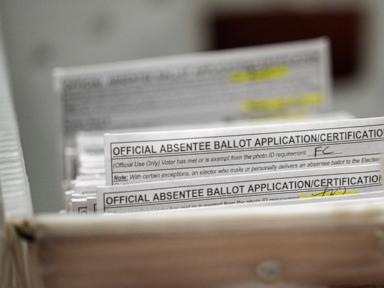
The Democratic Party of Wisconsin has formally demanded that the Wisconsin Elections Commission retract its July guidance prohibiting voters from voiding returned absentee ballots. With over 80,000 mail-in ballots already submitted for the state's August 11 primary election, recent campaign dropouts and re-entries—including Lt. Gov. Sara Rodriguez suspending her bid and Milwaukee County Executive David Crowley re-entering—have left thousands of early voters holding worthless votes cast for candidates no longer campaigning. Party leadership warns that without immediate action, a legal showdown is imminent.
The conflict boils down to a procedural mechanism known in election law as ballot spoiling. For decades, Wisconsin voters who mailed an early ballot could contact their municipal clerk, ask to have that ballot destroyed, and receive a fresh one to reflect new information or correct a mistake.
That safety net vanished weeks before early in-person voting began.
The Musical Chairs Primary that Trapped Early Voters
Wisconsin's Democratic gubernatorial primary was supposed to be a straightforward contest to select the nominee tasked with defending the governor's mansion following Governor Tony Evers' decision not to seek a third term. Instead, the race descended into internal volatility just as county and municipal clerks began mailing thousands of absentee ballots across the state.
Former Wisconsin Economic Development Corporation CEO Missy Hughes ended her campaign in late June, throwing her support behind Lt. Gov. Sara Rodriguez. Within weeks, Milwaukee County Executive David Crowley suspended his own campaign and endorsed Rodriguez.
Then came the financial reckoning.
Rodriguez abruptly pulled the plug on her campaign after discovering severe accounting discrepancies. A double-counting of donations and underreporting of campaign expenses left her campaign treasury near empty, rendering her bid nonviable overnight. Barely twenty-four hours later, Crowley re-entered the primary with the endorsement of Governor Evers.
By the time the musical chairs stopped, more than 80,000 Wisconsinites had already marked their ballots and dropped them in the mail.
A substantial chunk of those early voters selected Rodriguez or Hughes. Under existing Wisconsin law, candidate names cannot be scrubbed from printed ballots once administrative deadlines pass, meaning dead campaigns remain fully visible on the paper slip. Voters who cast their ballots in late June or early July marked their choices in good faith, unaware their preferred candidates would drop out weeks before Election Day.
Under current guidance, those votes will be counted exactly as cast. They will sit in locked municipal ballot boxes until primary night, only to be tallied for candidates who are no longer running.
The Four to Two Vote That Changed the Rules
The immediate cause of the legal stand-off lies in a July 9 vote by the Wisconsin Elections Commission.
In a 4-2 decision, the bipartisan commission issued new directive guidance instructing municipal clerks that once an absentee ballot is returned to an election official, it cannot be canceled or replaced under any circumstances. Surprisingly, the majority vote was not strictly along party lines. Republican commissioners were joined by Democratic commissioner Carrie Riepl, a former municipal clerk, in enacting the strict prohibition.
Commission Chairman Don Millis defended the bright-line rule during the meeting.
"If you're sitting at your kitchen table and you realize that you voted for two candidates in the same election, you can go back and say, I need a different ballot. I made a mistake," Millis explained. "Or if your significant other spilled coffee on your ballot, you say, I need another ballot. That's fine. Once you've turned your ballot in, that's it."
To election administration hawks, the decision enforces needed finality. Once a voter surrenders control of a physical ballot, treating that vote as revocable introduces administrative strain on local election clerks who must track down specific envelopes, void paper records, and reissue official stock.
To voting rights attorneys, however, the commission's sudden shift mid-election represents an unconstitutional barrier to voter participation. Democratic commissioners Mark Thomsen and Ann Jacobs voted against the restriction, pointing out a stark inequality between mail-in voters and in-person voters.
An in-person voter on Election Day who marks the wrong bubble can hand the paper back to a poll worker, watch it get marked as spoiled, and receive a clean sheet. Under the commission's July directive, mail-in voters who return their envelopes early lose that privilege entirely.
The Four Year Legal Tug of War Over Ballot Spoiling
This battle is not happening in a vacuum. It is the latest chapter in a multi-year legal war over how Wisconsin manages absentee voting.
Historically, Wisconsin permitted absentee voters to spoil their ballots up to three times for virtually any reason, provided the request met statutory deadlines prior to Election Day. State data shows that between the 2018 midterms and the 2022 primary, less than 1% of voters ever utilized the practice. It was a rare, low-frequency relief valve.
The practice became a partisan flashpoint following the 2020 election. In September 2022, Republican voter Nancy Kormanik filed a lawsuit in Waukesha County challenging the commission's long-standing guidance. Her legal team argued that state statute only authorized clerks to reissue ballots if a voter returned a physical document that was damaged or spoiled in the act of marking it. Changing one's mind after mailing a completed ballot, they argued, fell outside the statutory definition of a spoiled ballot.
Waukesha County Circuit Judge Brad Schimel agreed with the lawsuit, ordering the commission to withdraw its guidance in October 2022.
The state court of appeals quickly stepped in to halt Schimel's ruling just weeks before the 2022 midterm election to avoid confusing voters. Later, an appellate court vacated Schimel's decision entirely on procedural grounds, ruling that the plaintiff had failed to properly serve a legislative committee at the start of the lawsuit.
Because the appellate court threw out the case on procedural defects, it never ruled on the underlying legal question of whether state law allows post-submission ballot spoiling.
Despite the court throwing out the Waukesha ruling, the elections commission chose to adopt its core logic in its July meeting. In doing so, the commission effectively restored the strict 2022 court restriction on its own accord, setting up the current political collision.
Partisan Strategy and the Shadow of Supreme Court Precedent
The response from political operatives was swift and predictable.
Democratic Party Chair Devin Remiker released a statement accusing the commission of bowing to conservative pressure and disenfranchising rank-and-file voters. In a formal letter sent to commission chair Don Millis, party attorney Diane Welsh argued that altering absentee voting rules after 80,000 ballots had already been returned violates established U.S. Supreme Court precedent.
Under federal election jurisprudence, state officials are barred from changing fundamental voting procedures close to an election if doing so creates confusion or alters the rules under which voters have already cast ballots. Thousands of Wisconsin Democrats mailed their ballots in late June under the assumption that historical ballot-spoiling rules remained active.
Republicans view the sudden Democratic outcry as political hypocrisy.
Wisconsin Republican Party Chairman Brian Schimming pushed back forcefully against the request, framing the dispute as an attempt by Democrats to clean up the fallout from an unstable primary field.
"Their primary is already chaotic enough," Schimming said. "Election laws should not be changed to rescue one party from the consequences of its own actions."
Schimming's argument taps into a core conservative principle of election administration: predictability and equal application. From this viewpoint, allowing rules to bend because a specific party's frontrunner dropped out creates a dangerous precedent where administrative procedures shift based on political expediency.
The Unresolved Dilemma of Early Voting Finality
Beyond the immediate legal threats and partisan fighting lies a structural tension built into modern American voting laws.
As states expand early mail-in access, the timeline of an election stretches from a single day into a multi-week campaign marathon. Voters gain flexibility, but they surrender information. When a voter casts a ballot 45 days before Election Day, they accept the inherent risk that political reality might look drastically different when votes are actually tabulated.
Legal scholars note that Wisconsin law explicitly defines absentee voting as a privilege rather than an absolute right. Voters who choose to exercise that privilege early trade away the adaptability that in-person voters retain until the final hours of polling.
If the Wisconsin Elections Commission refuses to retract its guidance, the Democratic Party will almost certainly file an emergency lawsuit in state court. With early in-person voting ramping up and primary day rapidly approaching, time has run out for administrative compromise.
The state's top court, which now holds a liberal majority, may soon be forced to decide whether a returned ballot represents an unalterable final decision or an adaptable expression of voter intent. Until that ruling comes down, thousands of Wisconsin mail-in voters remain locked out of their own primary election, their voices frozen in time.