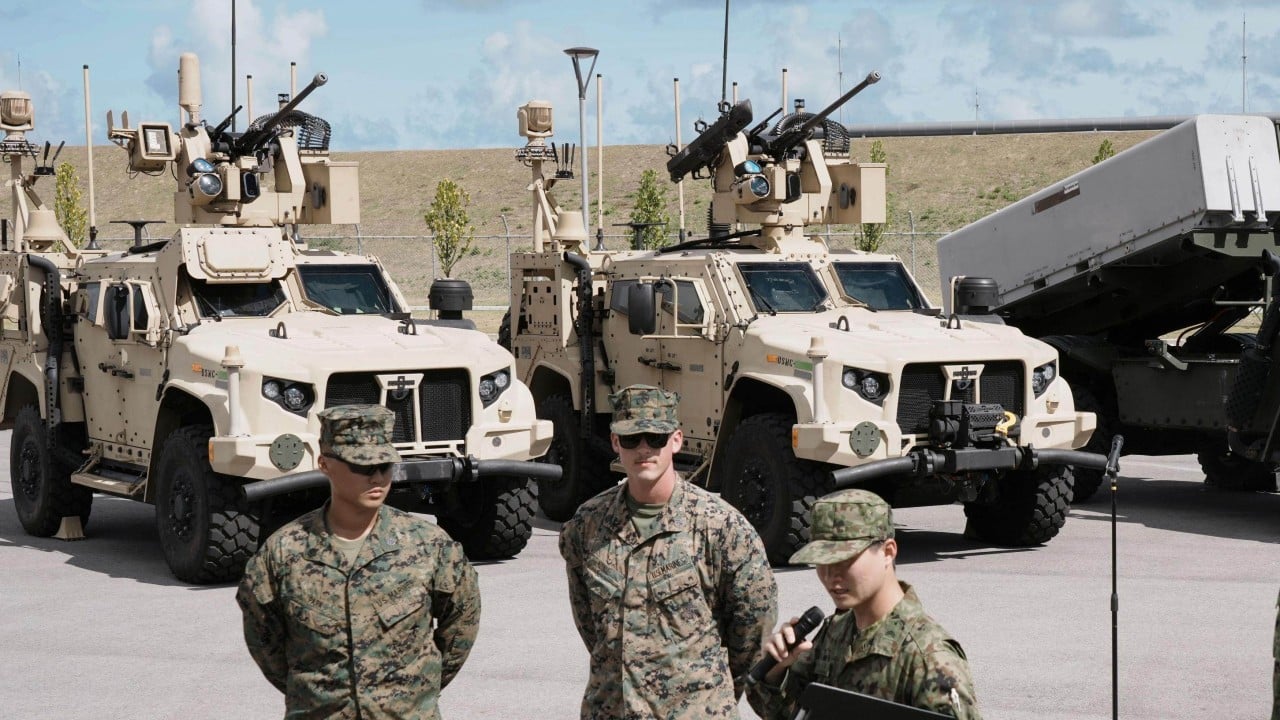
The cargo ramp of the military transport groaned open against the coastal wind of Yonaguni Island. Just one hundred and ten kilometers from the northeastern coast of Taiwan, the physical reality of great power competition arrived quietly on the back of a tactical vehicle.
The deployment of the Navy-Marine Expeditionary Ship Interdiction System, widely known as NMESIS, to Japan's westernmost territory marks a significant shift in regional military posture. For decades, strategic planning in the western Pacific relied on heavy surface fleets, massive air wings, and fixed island bases that could be targeted with mathematical precision. Today, that doctrine is giving way to something far more elusive. Mobile, low-profile, and hard to pin down, these systems change how militaries think about maritime control. Meanwhile, you can explore other events here: The Smoke on the Cobbles and the Sound of a Generation Breaking Its Silence.
To understand why this specific hardware deployment matters, you have to look past the political posturing and examine the mechanics of modern island defense. Yonaguni is small. It is vulnerable. Yet, it sits directly adjacent to vital maritime chokepoints that connect the East China Sea to the wider Pacific.
When the U.S. Marine Corps rolled the NMESIS launchers onto the island, they did not bring a traditional artillery battery. They brought an uncrewed, Joint Light Tactical Vehicle-based platform carrying twin Naval Strike Missiles. To explore the full picture, we recommend the excellent report by The New York Times.
The engineering behind the setup is straightforward. A small crew can drive the launcher into position, power down the vehicle, and step back. The launcher can be operated remotely, firing its payload over the horizon before crews pack up and relocate. This "shoot-and-scoot" capability is designed to counter modern reconnaissance-strike complexes. If an adversary does not know where the launcher is parked beneath the trees or inside a local ravine, destroying it becomes an exercise in frustration.
Geographically, Yonaguni offers a clear line of sight toward the waters surrounding Taiwan. With a reported operational range of roughly one hundred and fifteen miles, the system can reach naval traffic moving through key international straits and operating zones.
This operational shift is not happening in a vacuum. It represents the culmination of years of structural changes within the U.S. Marine Corps, spearheaded by force design initiatives that traded heavy tanks and traditional artillery for lighter, anti-ship capabilities. The Corps is transforming from a second land army into a specialized naval expeditionary force meant to deny maritime space to adversaries.
Critics of these deployments point out an obvious risk. By placing advanced anti-ship missiles on front-line islands, regional nations risk turning inhabited communities into immediate targets during a crisis. Local residents on Yonaguni and neighboring islands have voiced concerns over becoming focal points for escalation. Strategic analysts also question the logistical tail required to sustain these remote batteries under contested conditions. Resupplying a scattered network of island-hopping missile teams across hundreds of miles of open water requires a secure supply chain that cannot be taken for granted in a modern conflict.
Yet proponents argue that deterrence relies on uncertainty. If an opposing fleet must account for hidden, land-based missile systems capable of striking from unexpected angles, its operational freedom is severely constrained. Sea denial becomes cheaper and easier to scale than building multi-billion-dollar surface combatants.
The hardware is now on the ground. The exercises will test communication links, logistics nodes, and interoperability between American and Japanese forces. But the broader implications will echo across diplomatic channels for years, reshaping the defensive architecture of the first island chain one mobile launcher at a time.
This video provides additional context and visual overviews regarding the deployment of the NMESIS anti-ship system to Yonaguni Island.