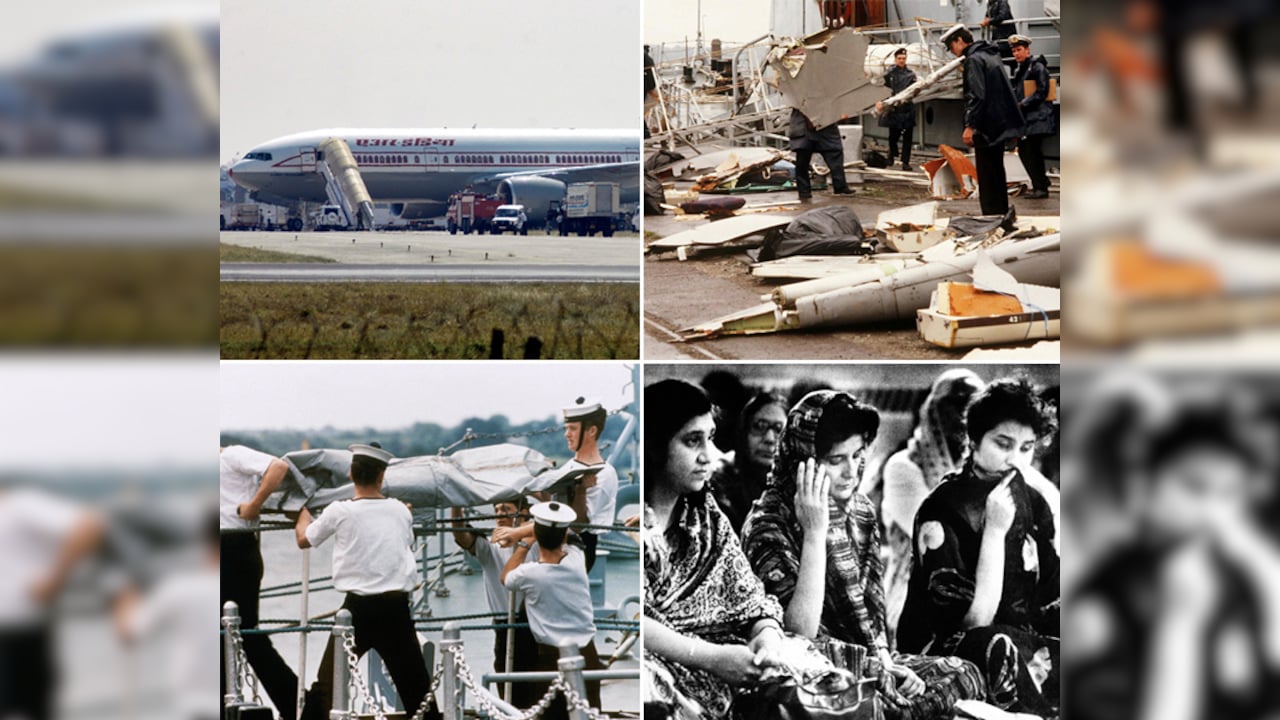
The formal winding down of the Royal Canadian Mounted Police inquiry into the 1985 bombing of Air India Flight 182 is not merely a bureaucratic closure; it represents a textbook case study in institutional friction, intelligence-to-evidence legal barriers, and the systemic decay of state accountability. When an investigative apparatus declares that all operational avenues are exhausted, analysts must look beyond the immediate announcement to deconstruct the structural mechanics that permitted the deadliest act of mass murder in Canadian history to dissolve into legal ambiguity.
The Information Bottleneck: Intelligence Versus Evidence
At the core of the Air India failure lies a fundamental misalignment between intelligence collection and criminal prosecution standards. In 1985, the Canadian Security Intelligence Service and the Royal Canadian Mounted Police operated across institutional silos characterized by cultural distrust, poor communication protocols, and incompatible mandates. For a different view, consider: this related article.
Intelligence agencies operate on predictive threat mitigation, gathering raw signals intercepts, informant whispers, and behavioral patterns to prevent catastrophic events. Criminal trials, conversely, demand admissible evidence meeting strict constitutional thresholds of chain-of-custody, hearsay exemptions, and open disclosure.
When wiretaps capturing conspiratorial chatter are treated as operational intelligence rather than preserved for evidentiary weight, vital investigative momentum stalls. The operational seam between gathering knowledge of a plot and securing convictions in a court of law created a permanent vulnerability. Security services possessed fragments of actionable warning regarding threats to aviation security, yet these fragments failed to cohere into a prosecutable case before the tragedy unfolded over the Atlantic off the coast of Ireland. Further reporting regarding this has been shared by The Guardian.
The Structural Cost Function of Inter-Agency Seams
The friction between federal police and security intelligence created a cascading series of administrative failures. Bureaucratic competition often supersedes cooperative intelligence sharing when organizational mandates lack a unified command structure.
- Information Isolation: Analysts in security intelligence retained threat indicators without transferring operational context to frontline investigators who understood criminal evidentiary thresholds.
- Resource Fragmentation: Initial investigative deployments suffered from decentralized jurisdiction, dividing focus between provincial police detachments and federal authorities without a centralized task force empowered to compel inter-agency cooperation.
- Witness Preservation Deficits: Potential informants within extremist networks faced intimidation or social isolation, while state protection frameworks lacked the sophistication required to secure high-value cooperation in insular diaspora communities.
This architecture of separation meant that warning signs—such as suspicious ticket purchases, luggage routing anomalies, and known associates testing explosive devices in remote British Columbia forests—were evaluated in isolation. Each discrete failure of communication lowered the overall probability of interdiction, resulting in a system-wide collapse of protection for 329 innocent passengers and crew.
Judicial Standard of Proof and Evidentiary Degradation
Decades after the initial tragedy, the pursuit of justice encountered the harsh reality of temporal decay. Criminal investigations rely heavily on physical preservation, witness recollection, and digital or documentary integrity.
When key physical evidence rests thousands of meters underwater or is compromised during initial recovery phases, the burden of proof shifts entirely to testimonial evidence. Over time, key witnesses pass away, memory degrades, and surviving suspects exploit statutory limitations or constitutional rights against self-incrimination.
The 2005 acquittals of major accused figures highlighted the severe difficulty of retrofitting historical intelligence into modern criminal indictments. Courts require proof beyond a reasonable doubt, a standard that raw intelligence logs—often redacted for source protection or contaminated by improper handling—cannot satisfy. The judicial system functioned precisely as designed to protect individual rights, but the investigative architecture leading to the courtroom had already been fatally compromised decades prior by operational blunders.
The Strategic Fallout of Administrative Attrition
Announcing the suspension of an active investigation after forty years signals a definitive institutional capitulation to time. While authorities emphasize that new, credible tips will always trigger review, the practical reality of an inactive file is the reallocation of human capital and investigative focus away from historical accountability.
This creates a severe trust deficit between the state and the victims' families. Trust in public security infrastructure is predicated on persistence; when an investigation closes due to a lack of living targets or actionable leads rather than a definitive legal resolution, it communicates that catastrophic institutional failures carry no lingering administrative cost.
State legitimacy is eroded when citizens observe that mass casualty events can outlive the investigative appetite of the government responsible for preventing them. The precedent set by the handling of the Kanishka bombing establishes a dangerous baseline: that systemic investigative paralysis can effectively run out the clock on justice.
The Required Calibration for Modern State Security Frameworks
To prevent future iterations of this operational failure, modern counter-terrorism architecture must institutionalize structural integration between intelligence and law enforcement from inception.
Intelligence-led policing requires dedicated fusion centers where threat analysts and criminal investigators operate under a unified legal framework, ensuring that intercepted communications are documented with evidentiary standards in mind from day one. Furthermore, independent oversight mechanisms must possess continuous auditing authority over inter-agency communication channels, eliminating the turf wars that historically crippled complex investigations.
When modern security threats emerge across transnational networks, the state must maintain specialized, standing cold-case task forces equipped with archival continuity, ensuring that institutional memory does not retire alongside the original investigators. Only by removing the administrative boundaries between threat prediction and criminal prosecution can accountability survive the passage of time.