The annual worldwide threats hearings starting this Wednesday in Washington were supposed to be a routine display of American oversight. Instead, they have become a high-stakes autopsy of a military campaign. Director of National Intelligence Tulsi Gabbard and CIA Director John Ratcliffe face a Congress demanding to know if the United States was led into a war with Iran based on a phantom.
The central crisis involves a missile strike on an Iranian elementary school that killed more than 165 people. Early reports suggest the Defense Intelligence Agency (DIA) provided the White House with targeting data that was months out of date. Lt. Gen. James H. Adams, the DIA director, will be forced to explain under oath how a modern military with unparalleled surveillance capabilities could commit such a catastrophic error. This is not just a failure of coordination. It is a symptom of an intelligence community currently at war with itself.
The internal fracture became public Tuesday when Joe Kent, the director of the National Counterterrorism Center, resigned in protest. Kent, a veteran and long-time proponent of "America First" policies, did not leave quietly. He explicitly stated that Iran posed no imminent threat to the U.S. and suggested the administration was pushed into the conflict by external political pressure. His departure is a blow to the narrative that the intelligence community is unified behind the "Operation Epic Fury" campaign.
The Nuclear Disconnect
There is a widening gap between what the spies see and what the politicians say. In previous testimony, DNI Gabbard stated that the intelligence community continues to assess that Iran is not building a nuclear weapon. She noted that while enrichment levels are high, there is no evidence that Supreme Leader Ali Khamenei has authorized the weaponization of that material.
President Trump has dismissed these findings, stating he "does not care" what the assessments say and maintaining that Iran was "very close" to a bomb. This disconnect creates a dangerous environment for analysts. If the commander-in-chief publicly ignores the findings of his own agencies, the incentive to provide objective, unvarnished data evaporates. Analysts are now being pressured to rework assessments to fit a pre-determined policy goal, a practice that historically leads to strategic disaster.
Radicalization and the New Homeland Threat
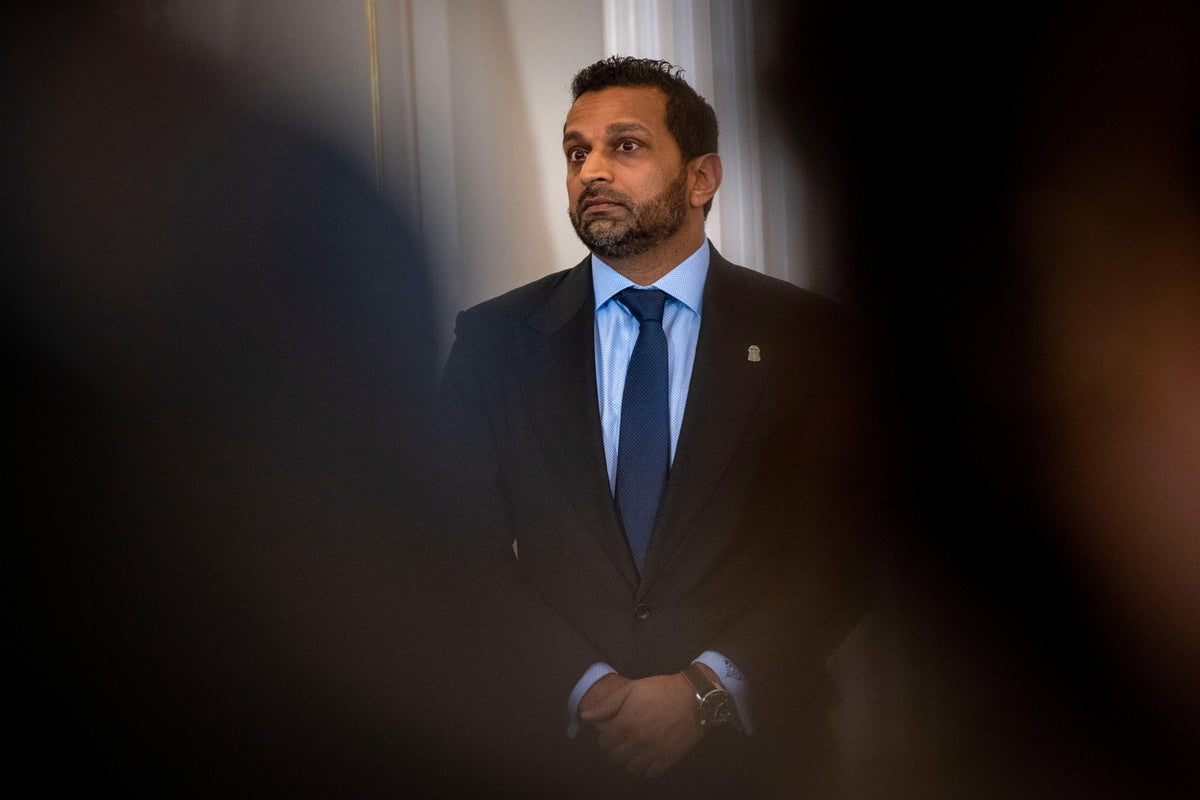
While the focus remains on the air campaign over Tehran, the FBI is struggling to manage a surge in domestic instability. FBI Director Kash Patel enters these hearings under a cloud of scrutiny. In his first year, Patel has fired dozens of career agents, leading to an exodus of institutional knowledge. Critics argue this purge has left the bureau "blind" at the exact moment the threat of domestic blowback from the Iran war is peaking.
The evidence of this threat is concrete and growing.
- A gunman in Texas recently killed two people while wearing clothing adorned with Iranian revolutionary symbols.
- Two men were arrested in New York with high-powered explosives intended for a protest.
- Attacks on a Michigan synagogue and a Virginia university have pushed local law enforcement to their limits.
The FBI maintains it is working around the clock, but the numbers suggest otherwise. With a depleted workforce and a leadership team often distracted by internal politics, the "homeland" is more vulnerable than it has been in years. The hearings will likely expose how much of the bureau's counterterrorism capacity has been diverted to internal investigations and loyalty checks.
The Strait of Hormuz and the Tech Gap
The war is also testing the limits of American maritime dominance. While the U.S. has established air superiority, the Strait of Hormuz remains a graveyard for global trade. Iran has deployed swarms of low-cost, one-way attack drones and sophisticated naval mines that have effectively choked the waterway.
The U.S. response has relied on expensive, high-end platforms like the B-1 bomber to strike mine warehouses. It is a mismatch of economics. Iran is using $20,000 drones to tie down billion-dollar carrier groups. Intelligence officials will be asked why the U.S. was unprepared for this asymmetric reality, especially after years of observing similar tactics in other regional conflicts.
The technological failure extends to the cyber realm. Last week, an Iranian-linked hacker group crippled a major U.S. healthcare company. This was not a sophisticated breach of a defense contractor; it was a targeted hit on civilian infrastructure designed to create political pressure. The intelligence community’s failure to prevent these "soft target" attacks shows a focus on traditional state-on-state warfare while the actual war is being fought in hospital servers and at local bars.
The Accountability Vacuum
The most significant danger revealed by these hearings may not be the war itself, but the erosion of the mechanisms meant to prevent it. When the National Counterterrorism Center head resigns because he cannot "in good conscience" support the justification for war, the system is failing.
Senators will likely press Gabbard on why she has remained largely silent as the conflict escalated. Her social media posts have deferred entirely to the president’s "decision-making," a move that critics say abdicates the DNI's role as the provider of objective truth. If the DNI becomes a mere echo of the White House, the "Worldwide Threats" assessment becomes a marketing brochure rather than a security document.
The hearings this week are a test of whether Congress can still exercise its oversight role or if it has become a theater for pre-approved talking points. With 165 Iranian civilians dead from a bad data point and six U.S. service members killed in the opening weeks, the cost of being wrong has never been higher.
Watch for whether any committee members ask for the specific raw intelligence that supposedly showed an "imminent" threat. If that data isn't produced, the resignation of Joe Kent will look less like a political stunt and more like a warning.
Ask me to break down the specific DIA targeting failures that led to the Iranian school strike.