The screen at Gate B12 didn’t flicker. It didn’t stutter. It simply changed. One moment, the crisp blue text promised a 4:15 PM departure to Chicago; the next, it wore the jagged, crimson brand of Canceled.
Sarah didn’t scream. She didn’t even sigh. She just looked at her seven-year-old son, who was currently mid-bite into a soggy $14 turkey sandwich, and felt a cold, familiar hollow open up in her chest. This wasn't just a missed flight. It was a missed rehearsal dinner, a missed connection with an aging father, and a $400 Uber ride to a hotel that probably didn't have any rooms left.
Sarah is a hypothetical composite, but her exhaustion is documented in the hard data of 2024 and 2025. When we read headlines about "travel woes" or "chaos in the clouds," we tend to think of weather. We blame the thunder. We blame the snow. But the truth is far more structural, far more human, and significantly more difficult to fix than a passing storm.
The Ghost in the Cockpit
The modern aviation industry is running on a "just-in-time" philosophy that has finally run out of time. For decades, the system was a marvel of efficiency. We trimmed the fat. We optimized the routes. We turned airplanes around in thirty minutes like they were stock cars at a pit stop.
But you can only lean out a system so far before it becomes brittle.
The primary fracture isn't the planes themselves; it's the people required to fly and fix them. We are currently facing a deficit of thousands of pilots and even more critical—and often overlooked—maintenance technicians. When a single sensor on a Boeing 737 or an Airbus A320 reports a fault, the entire logistical ballet grinds to a halt. In the past, a "spare" aircraft might have been idling in a nearby hangar. Today, that spare is already in the air, filled to 98% capacity, trying to make up for a delay three cities away.
Consider the math of a cascading delay. If a flight from Atlanta to Dallas is delayed by sixty minutes due to a late-arriving crew, that crew then misses their legal "duty time" window. They "time out." Federal regulations, designed to keep us from falling out of the sky due to exhaustion, dictate they must sleep. Suddenly, the Dallas to Denver leg has no pilots. The Denver to Seattle leg has no pilots. One hour of turbulence in Georgia creates a thousand stranded souls in Washington state.
The Architecture of Frustration
Why does it feel more aggressive lately? Why do the gates feel like pressure cookers?
It’s the density. We are packing more human beings into the same amount of airspace that existed twenty years ago. The Federal Aviation Administration (FAA) is currently wrestling with an aging technology stack. They are navigating a sky filled with 5G interference concerns, private space launches that close down massive swaths of territory, and a resurgence of post-pandemic travel demand that caught the world flat-footed.
We are flying through a bottleneck.
The Hidden Cost of the Low-Fare Promise
We demanded $49 cross-country flights, and the market provided them. But those fares came at a silent cost: the removal of the "buffer." To keep prices at 1990s levels despite 2026 fuel costs, airlines stripped away the redundancies.
- Crews are stretched: Pilots are flying the maximum allowable hours.
- Infrastructure is ancient: Air traffic control centers are sometimes using tech that belongs in a museum.
- Customer Service is automated: The person you need to talk to has been replaced by a chatbot that doesn't understand why you need to get to your sister’s wedding.
This isn't just an inconvenience. It’s a tax on our collective mental health. We arrive at the airport not with the excitement of travel, but with a defensive crouch, waiting for the other shoe to drop.
The Atmosphere of Anxiety
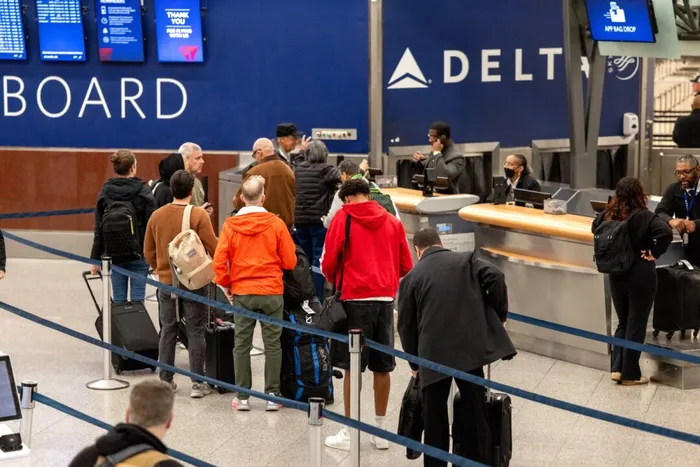
Back at Gate B12, Sarah isn't thinking about the FAA's NextGen modernization delays or the pilot retirement age. She is looking at her phone, watching the "estimated wait time" for customer service climb from 40 minutes to four hours.
There is a specific kind of helplessness that occurs in an airport. It is a liminal space where your agency is stripped away. You cannot leave. You cannot move forward. You are a captive of a spreadsheet managed by someone in a corporate office three states away who sees you as a "load factor" rather than a person.
The "woes" reported in the news are often framed as a series of unfortunate events. A computer glitch here, a storm there. But if we look closer, we see a pattern of systemic fragility. We have built a world that requires perfection to function. And the world is never perfect.
Reclaiming the Journey
Is there a way out? Or are we destined to spend our holidays sleeping on yoga mats in Terminal 3?
The solution requires a fundamental shift in how we value the act of movement. It requires an investment in the "boring" parts of flight: air traffic control staffing, vocational schools for mechanics, and perhaps a collective realization that a $40 flight is only a bargain if it actually takes off.
Some airlines are beginning to realize that "resilience" is a better marketing term than "efficiency." They are starting to pad schedules. They are hiring ahead of the curve. But these are small ripples in a very large ocean. Until the industry prioritizes the human buffer—the extra pilot, the standby plane, the empowered gate agent—the red text will continue to haunt our screens.
Sarah eventually got home. It took three days, two bus rides, and a missed week of work. She doesn't remember the name of the airline anymore; she just remembers the feeling of the fluorescent lights at 3:00 AM.
The next time you book a ticket, look past the price. Look at the layover times. Look at the historical on-time performance. We are no longer just buying a seat; we are gambling on the stability of a giant, invisible machine.
Sometimes the machine works perfectly, and the clouds look like marbled silk beneath the wing. But other times, the machine breaks, and you are reminded that the sky doesn't care about your schedule.
The plane is on the tarmac, the engines are quiet, and the only sound is the soft, rhythmic tapping of thousands of fingers on glass screens, searching for a way home.